Egyptian PantheonCreature
Ammit
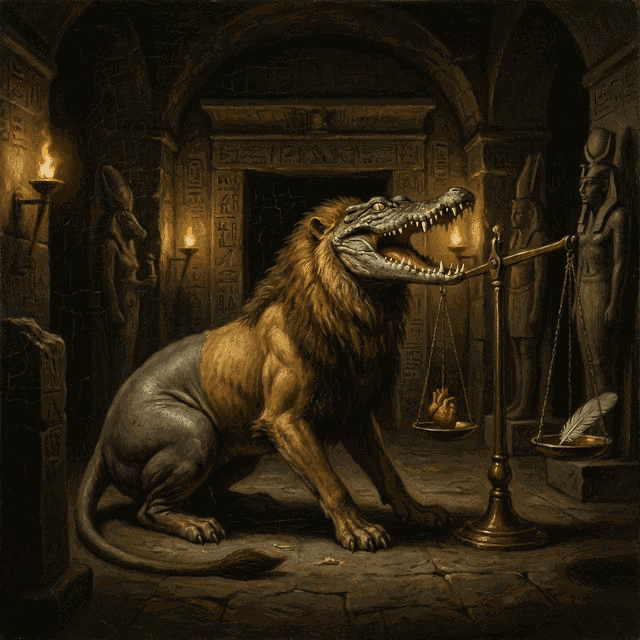
- Soul Consumption
- Heart Detection
- Eternal Hunger
The Devourer of the Dead, a demon with the head of a crocodile, torso of a lion, and hindquarters of a hippopotamus. She consumes the hearts of those found unworthy in the Hall of Judgment.
About Ammit
Eater of the Unjust Heart
Ammit waits beside the balance in the Hall of Two Truths. If the heart outweighs Maat's feather, she eats it; the person dies a second death. She compounds crocodile, lion, and hippopotamus — Egypt's three most lethal waterside animals — into one judicial mouth.
She is not worshipped. Spell 125 of the Book of the Dead is a plea not to meet her.
In the vignette
Ammit's name means 'Devourer of the Dead'. She appears in the judgment vignettes of New Kingdom Book of the Dead papyri, most famously the Papyrus of Ani in the British Museum, crouching by the scale beside Thoth as the heart is weighed. She has no temple or offerings, and no Egyptian text tells a story about her: her whole existence is the threat of the second death in that one scene.
Quick answers about Ammit
- What is Ammit?
- The Devourer of the Dead, a demon with the head of a crocodile, torso of a lion, and hindquarters of a hippopotamus. She consumes the hearts of those found unworthy in the Hall of Judgment.
- Where does Ammit live?
- The atlas lists Ammit's habitat as The Hall of Two Truths.
- What abilities does Ammit have?
- The atlas lists these abilities for Ammit: Soul Consumption, Heart Detection, and Eternal Hunger.
Sources and further reading
Source notes
These references are recorded in the catalog. Their passage wording and translation have not been checked, so quotations are not displayed here.
- Book of the Dead, Spell 125 (judgment scene)
About this entry
By Elizabeth Stein for Mythos Atlas. About the author. Editorial notes are grounded in the site's cited sources and can be challenged through the contact page.
The danger rating is an editorial shorthand for how the myths portray the creature, not a claim made by the sources.
Keep exploring
One myth a week, with its sources in a short email. The sign-up form is just below.