Egyptian PantheonCreature
Apep
- Hypnotic Gaze
- Chaos Magic
- Infinite Length
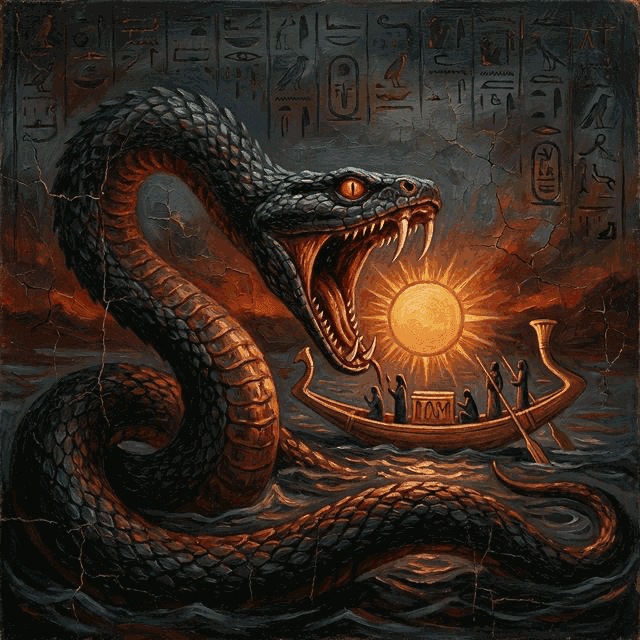
The serpent of chaos and eternal enemy of Ra. He attempts to swallow the sun barge every night as it travels through the Duat, threatening to plunge the world into eternal darkness.
About Apep
The Night Serpent
Apep (Apophis) is the chaos snake who waits in the Duat for Ra's night bark. Temple books of overpowering Apep prescribe spitting, trampling, and burning wax images so the sun can rise. He is not a god one petitions; he is the enemy the liturgy has to kill every night.
Coffin and underworld books picture him already speared, because the rite assumes the danger is real until dawn.
Overthrowing Apep
The Bremner-Rhind papyrus (British Museum, c. 4th century BCE) preserves the Book of Overthrowing Apep, a temple ritual in which priests named the serpent, wrote his name on papyrus or modelled him in wax, then spat on, trampled, stabbed, and burned the figure. In the Amduat and Book of Gates, Apep lies in the path of the night barque in the seventh hour and is bound and cut by Isis, Serqet, and the other gods; in some scenes Set himself spears him from the prow.
Quick answers about Apep
- What is Apep?
- The serpent of chaos and eternal enemy of Ra. He attempts to swallow the sun barge every night as it travels through the Duat, threatening to plunge the world into eternal darkness.
- Where does Apep live?
- The atlas lists Apep's habitat as The Duat (Underworld).
- What abilities does Apep have?
- The atlas lists these abilities for Apep: Hypnotic Gaze, Chaos Magic, and Infinite Length.
Sources and further reading
Source notes
These references are recorded in the catalog. Their passage wording and translation have not been checked, so quotations are not displayed here.
- Bremner-Rhind Papyrus (Book of Overthrowing Apep)
About this entry
By Elizabeth Stein for Mythos Atlas. About the author. Editorial notes are grounded in the site's cited sources and can be challenged through the contact page.
The danger rating is an editorial shorthand for how the myths portray the creature, not a claim made by the sources.
Keep exploring
One myth a week, with its sources in a short email. The sign-up form is just below.