Egyptian PantheonCreature
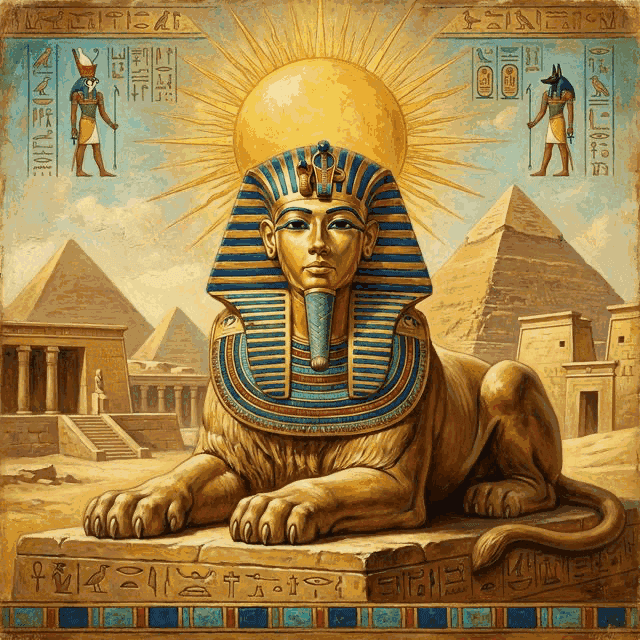
Egyptian Sphinx
- Guardian Presence
- Eternal Vigilance
- Divine Protection
A benevolent guardian with the body of a lion and head of a pharaoh. Unlike its Greek counterpart, it protects sacred sites and represents royal power and divine wisdom.
About Egyptian Sphinx
The Recumbent King
Egyptian sphinxes are royal bodies: lion trunk, pharaoh's head, often bearded, set as avenue guardians (Luxor, Karnak) or as the Great Sphinx of Giza facing the rising sun. They do not pose riddles. Greek travelers mapped their own Theban monster onto the type.
Inscriptions call the Giza figure Hor-em-akhet, Horus in the Horizon. The Theban riddler and this recumbent king are different animals of thought.
The Dream Stela
Between the Great Sphinx's paws stands the granite Dream Stela of Thutmose IV (c. 1400 BCE). It tells how the young prince fell asleep in the Sphinx's shadow while hunting, and the god, as Horemakhet-Khepri-Ra-Atum, promised him the kingship if he cleared away the sand that was choking him. The stela is royal propaganda, but it shows that by the New Kingdom the Sphinx itself was worshipped as a form of the sun god.
Quick answers about Egyptian Sphinx
- What is Egyptian Sphinx?
- A benevolent guardian with the body of a lion and head of a pharaoh. Unlike its Greek counterpart, it protects sacred sites and represents royal power and divine wisdom.
- Where does Egyptian Sphinx live?
- The atlas lists Egyptian Sphinx's habitat as Giza Plateau.
- What abilities does Egyptian Sphinx have?
- The atlas lists these abilities for Egyptian Sphinx: Guardian Presence, Eternal Vigilance, and Divine Protection.
In the museums
Egyptian Sphinx in art
Real objects in public collections, released into the public domain by the museums that hold them. Dates refer to when each object was made. Objects made within the tradition come first, later depictions after.
 (opens the museum record)
Ancient object
Sphinx of Amenhotep III, possibly from a Model of a Temple (opens the museum record)
A faience sphinx bearing the name of Amenhotep III, possibly from a model temple. Egyptian sphinxes combined a lion's body with a royal human head to guard sacred sites.
 (opens the museum record)
Ancient object
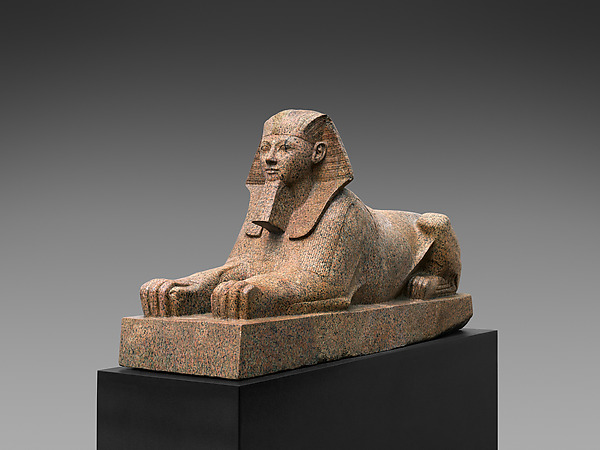
Sphinx of Hatshepsut (opens the museum record)
A granite sphinx carved with the features of Queen Hatshepsut, one of the best-known royal sphinxes in the museum's Egyptian collection.
Sources and further reading
Source notes
These references are recorded in the catalog. Their passage wording and translation have not been checked, so quotations are not displayed here.
- Dream Stele of Thutmose IV, Giza
About this entry
By Elizabeth Stein for Mythos Atlas. About the author. Editorial notes are grounded in the site's cited sources and can be challenged through the contact page.
The danger rating is an editorial shorthand for how the myths portray the creature, not a claim made by the sources.
Keep exploring
One myth a week, with its sources in a short email. The sign-up form is just below.