Aztec PantheonCreature
Cihuateteo
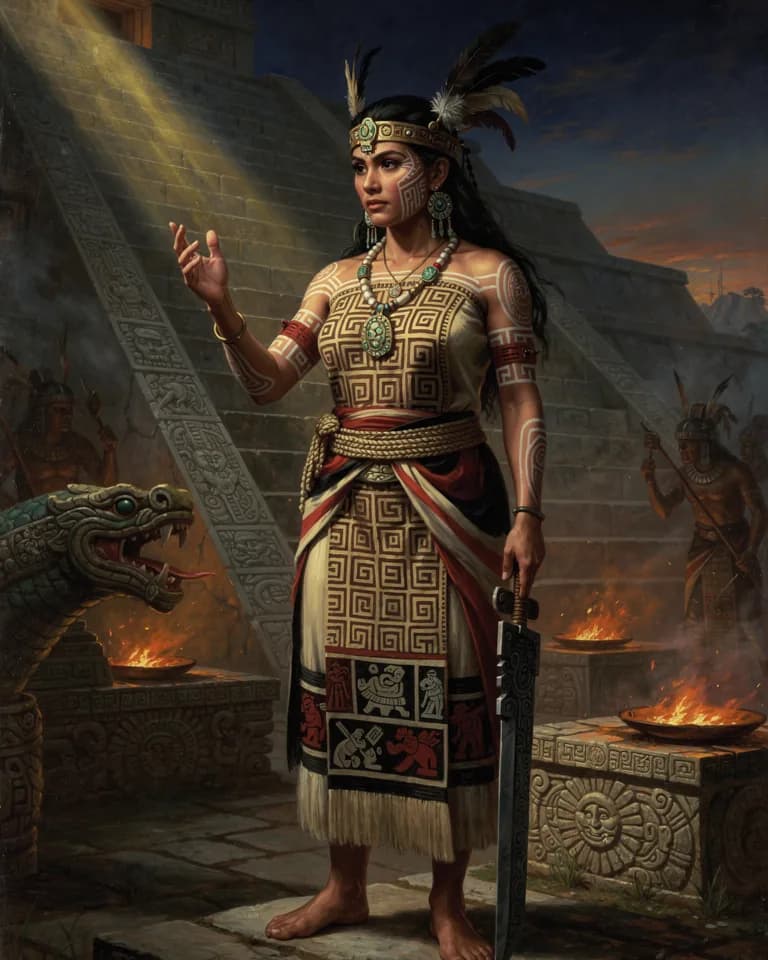
- Accompanying the sun to its setting
- Causing paralysis and seizures in children
- Haunting crossroads
The spirits of women who died in childbirth, honoured by the Mexica as warriors who accompanied the sun from noon to sunset, and feared because on certain days of the calendar they descended to crossroads to strike children with sickness.
About Cihuateteo
Women who died as warriors
Sahagún's Nahua informants, recorded in the Florentine Codex, compared a woman who died in her first childbirth to a warrior who died in battle: she had fought and been taken. Such women became cihuateteo, 'goddess women' (also cihuapipiltin, 'noblewomen'), and went to the western paradise, Cihuatlampa, 'the place of women'. Just as dead warriors escorted the sun from dawn to noon, the cihuateteo carried it from noon down to its setting. Book 6 describes the midwife's address to the dead mother, and Book 1 the cihuapipiltin.
Feared at the crossroads
Their honour made them dangerous. On particular days in the ritual calendar they were believed to descend to earth and gather at crossroads, where they could strike children with paralysis or seizures, and parents kept children indoors on those days. Small shrines at crossroads received offerings to them. Young warriors, Sahagún adds, sought the hair or fingers of a woman who had died this way as talismans for battle, so her husband and kin guarded her burial.
In stone
Several carved stone figures of cihuateteo, with clawed hands and skull faces, survive in museum collections from the Tenochtitlan area.
Sources and further reading
Source notes
These references are recorded in the catalog. Their passage wording and translation have not been checked, so quotations are not displayed here.
- Bernardino de Sahagún, Florentine Codex, Book 1 and Book 6
About this entry
By Elizabeth Stein for Mythos Atlas. About the author. Editorial notes are grounded in the site's cited sources and can be challenged through the contact page.
The danger rating is an editorial shorthand for how the myths portray the creature, not a claim made by the sources.