Norse PantheonCreature
Draugr
- Size Manipulation
- Superhuman Strength
- Dark Magic
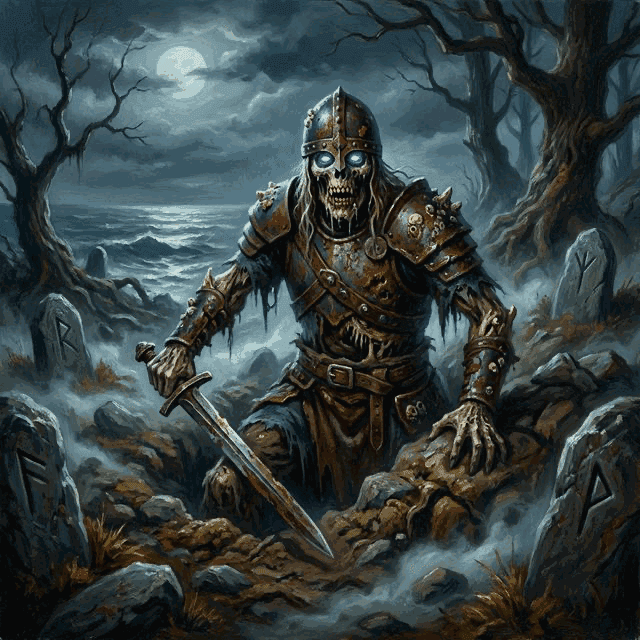
Undead warriors who guard their burial mounds and treasure with supernatural strength. They possess dark magic and can increase their size, bringing death to any who disturb their rest.
About Draugr
The Mound-Dweller
Icelandic sagas treat the draugr as a physically present corpse that walks, swells, and kills from inside its howe. Grettir fights Glam; other tales burn or behead the body to stop it. This is not a Greek shade: it has weight, stench, and legal aftermath.
The corpus is saga prose, not Eddic verse. Treasure-guarding is a motif; the terror is the neighbor who will not stay buried.
Glámr and the curse
The most famous draugr fight is in Grettis saga (chapters 32 to 35): the shepherd Glámr, killed by an evil spirit, haunts Thórhallsstaðir until Grettir wrestles him to the ground. Before Grettir beheads him, Glámr curses him with fear of the dark and failing luck, and the curse shapes the rest of the outlaw's life. Eyrbyggja saga describes another draugr, Þórólfr Twist-foot, who has to be dug up and burned before the haunting stops.
Quick answers about Draugr
- What is Draugr?
- Undead warriors who guard their burial mounds and treasure with supernatural strength. They possess dark magic and can increase their size, bringing death to any who disturb their rest.
- Where does Draugr live?
- The atlas lists Draugr's habitat as Burial Mounds.
- What abilities does Draugr have?
- The atlas lists these abilities for Draugr: Size Manipulation, Superhuman Strength, and Dark Magic.
Sources and further reading
Source notes
These references are recorded in the catalog. Their passage wording and translation have not been checked, so quotations are not displayed here.
- Grettis saga (medieval Icelandic prose)
About this entry
By Elizabeth Stein for Mythos Atlas. About the author. Editorial notes are grounded in the site's cited sources and can be challenged through the contact page.
The danger rating is an editorial shorthand for how the myths portray the creature, not a claim made by the sources.
Keep exploring
One myth a week, with its sources in a short email. The sign-up form is just below.