Norse PantheonCreature
Jormungandr
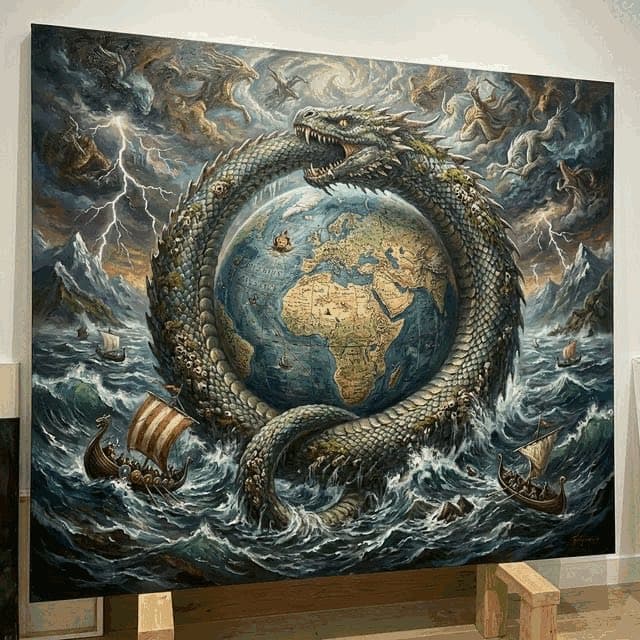
- Venomous Breath
- World-Encircling Size
- Ocean Control
The World Serpent, child of Loki, so massive it encircles Midgard and grasps its own tail. Destined to battle Thor at Ragnarok, where they will slay each other.
About Jormungandr
The Midgard Serpent
Jormungandr is Loki's second monstrous child, cast by Odin into the sea that rings Midgard until the serpent bites its own tail. Thor fishes for him with an ox-head; Hymir cuts the line. At Ragnarok they kill each other: venom and hammer.
The creature record matches the deity-adjacent lore: one body, ocean-wide, waiting for the last tide.
Thor's fishing trip
The fishing episode is told in the Eddic poem Hymiskviða and by Snorri in Gylfaginning, and it was carved on stones in Scandinavia and England: the Altuna runestone in Sweden and the Gosforth fishing stone in Cumbria show Thor in a boat with the ox-head bait. At Ragnarök, Snorri says, Thor kills the serpent but walks only nine steps before falling dead from its venom.
Quick answers about Jormungandr
- What is Jormungandr?
- The World Serpent, child of Loki, so massive it encircles Midgard and grasps its own tail. Destined to battle Thor at Ragnarok, where they will slay each other.
- Where does Jormungandr live?
- The atlas lists Jormungandr's habitat as The Ocean Surrounding Midgard.
- What abilities does Jormungandr have?
- The atlas lists these abilities for Jormungandr: Venomous Breath, World-Encircling Size, and Ocean Control.
Sources and further reading
Source notes
These references are recorded in the catalog. Their passage wording and translation have not been checked, so quotations are not displayed here.
- Prose Edda, Gylfaginning (trans. Anderson)
About this entry
By Elizabeth Stein for Mythos Atlas. About the author. Editorial notes are grounded in the site's cited sources and can be challenged through the contact page.
The danger rating is an editorial shorthand for how the myths portray the creature, not a claim made by the sources.
Keep exploring
One myth a week, with its sources in a short email. The sign-up form is just below.