Canaanite Pantheon (Ugarit)Creature
Tunnan
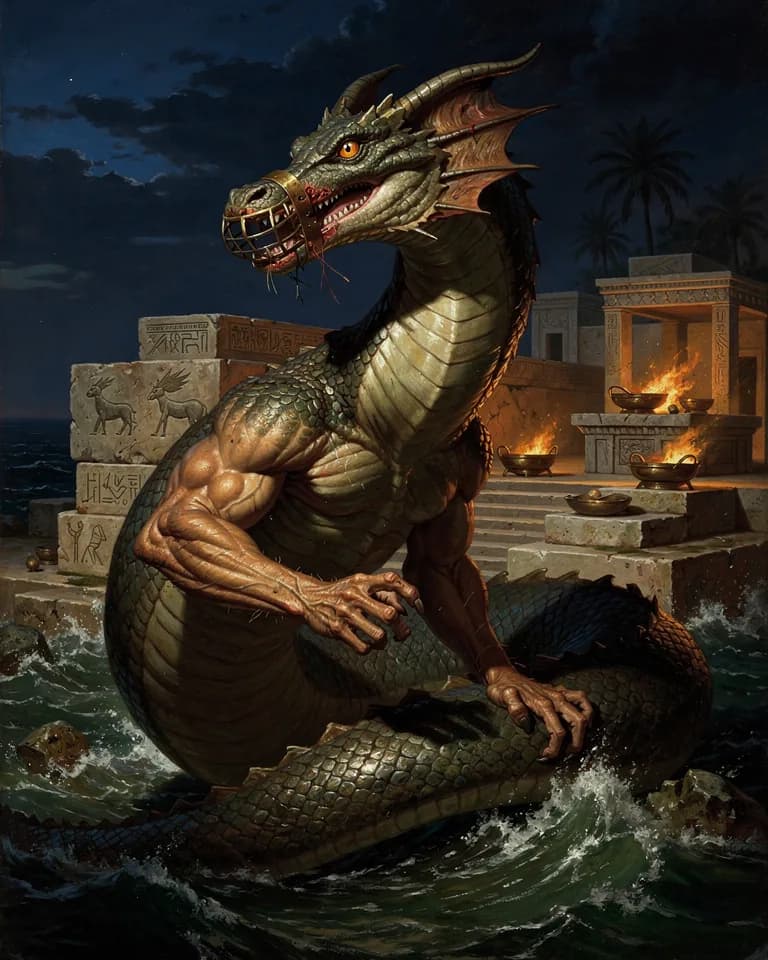
- a sea-dragon of the chaotic waters
- must be muzzled or bound
A sea-dragon named among the monsters that the goddess Anat boasts of having muzzled and destroyed; the Ugaritic counterpart of the biblical tannin.
About Tunnan
Anat's boast
Tunnan (tnn) appears in Anat's speech in KTU 1.3 III, when she lists the enemies of Baal she has defeated: she has destroyed Yam, El's beloved, finished off River, muzzled Tunnan, and destroyed the twisting serpent. The verb usually translated "muzzled" or "bound" suggests a creature that had to be restrained rather than simply killed. Another Ugaritic passage associates Tunnan with the sea and with Baal's victory as well.
A group of sea-monsters
Ugaritic poetry does not describe Tunnan in detail; it belongs to a group of chaos creatures associated with Yam, the Sea, including Litan and the twisting serpent. Whether these are separate creatures or several names for one monster is debated.
Tannin
The Hebrew word tannîn, "sea-monster" or "dragon", corresponds to Ugaritic tnn. In Genesis 1:21 God creates the great tanninim, and in Isaiah 51:9 the arm of the Lord pierces the tannin. As with Litan and Leviathan, the Ugaritic texts show the older mythological background of a word that biblical writers used in their own way.
Sources and further reading
Source notes
These references are recorded in the catalog. Their passage wording and translation have not been checked, so quotations are not displayed here.
- Baal Cycle, KTU 1.3 III
About this entry
By Elizabeth Stein for Mythos Atlas. About the author. Editorial notes are grounded in the site's cited sources and can be challenged through the contact page.
The danger rating is an editorial shorthand for how the myths portray the creature, not a claim made by the sources.