Canaanite Pantheon (Ugarit)
Anat
ʿnt(ʿAnatu)
Also known as Virgin Anat (btlt ʿnt), Yabamat Liʾmim, Anath
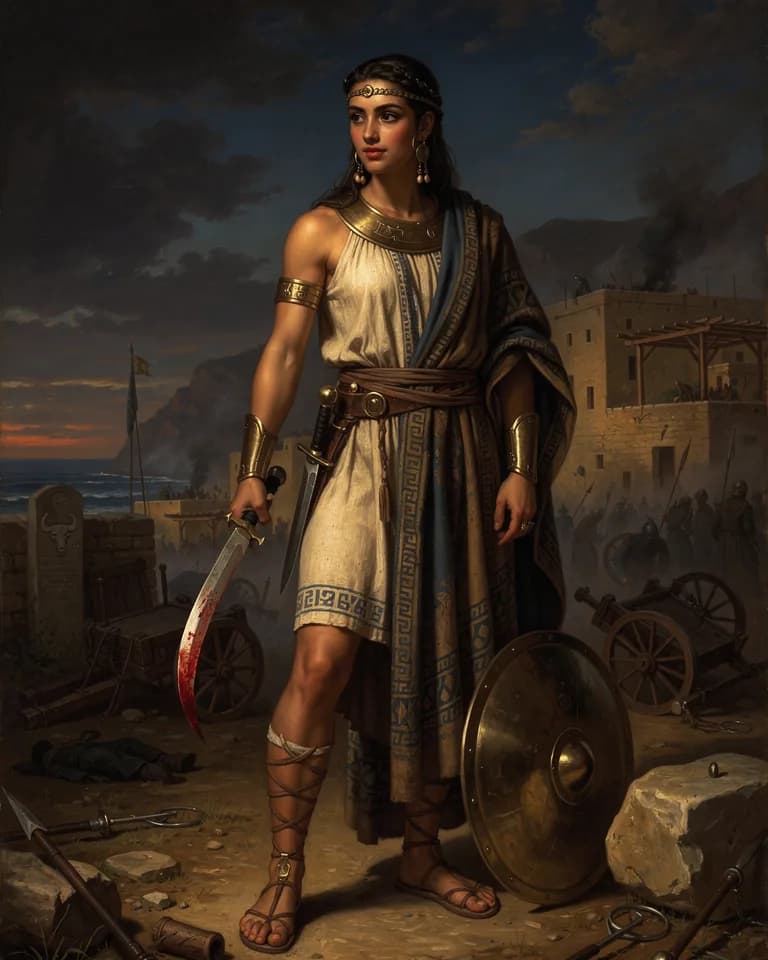
- war
- hunting
- loyalty to Baal
The young warrior goddess of Ugarit, Baal's sister and fiercest ally, who wades through battle, bullies El into granting Baal a palace, finds Baal's body, and destroys Mot.
About Anat
The warrior
Anat is the most violent figure in Ugaritic poetry. In the Baal Cycle (KTU 1.3 II) she fights two armies, heaping up heads and hands, wading knee-deep and then neck-deep in the blood of warriors, before washing herself with dew and rain. She boasts that she has already defeated Yamm, the dragon Tunnan, and the twisting serpent. Her usual epithet, "Virgin Anat" (btlt ʿnt), marks her as a young, unmarried woman, and the texts are more interested in her ferocity than in any maternal role.
Baal's ally
Anat is called Baal's sister and acts as his champion. When Baal needs a palace she goes to El and threatens to smash his grey head until it runs with blood unless he consents (KTU 1.3 V). When Baal dies she searches the land for him, carries his body to Zaphon with the help of the sun-goddess Shapash, buries him, and mourns. Then she seizes Mot and destroys him as a farmer destroys grain: splitting, winnowing, burning, grinding, and sowing him in the field (KTU 1.6 II).
Anat and Aqhat
In the Epic of Aqhat, Anat covets the bow that the craftsman god gave the young Aqhat. She offers him riches and even immortality; he refuses and tells her that bows are for warriors. With El's reluctant permission she has him killed by her henchman Yatpan, and the land suffers drought as a result. The poem does not present her as a simple villain; she seems to regret the bow's loss, which breaks in the killing.
Beyond Ugarit
Anat was worshipped in Egypt in the New Kingdom, where Ramesses II named a daughter Bint-Anat, and in a bilingual inscription from Cyprus she is equated with the Greek Athena.
Across traditions
Parallel figures
Figures who play a role like Anat's in other traditions.
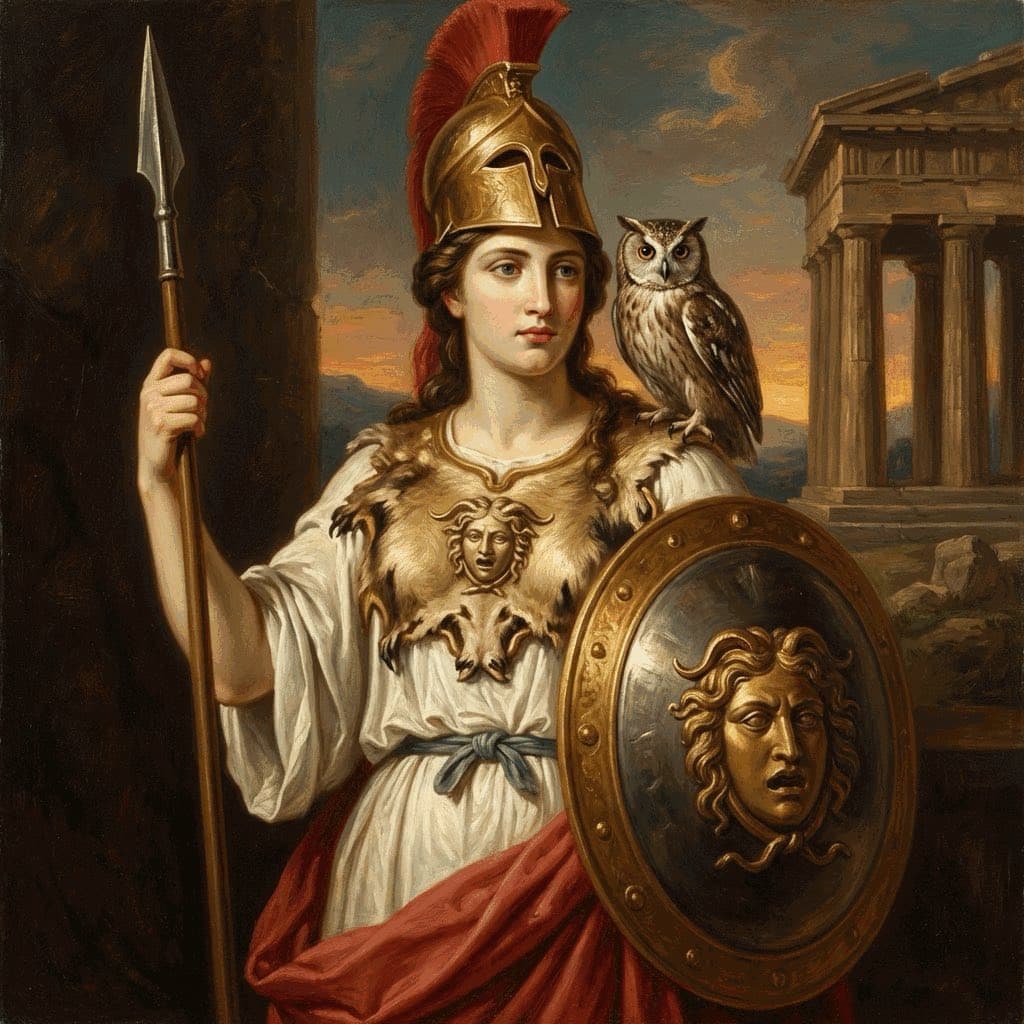 GreekAthena
A Phoenician-Greek bilingual inscription from Cyprus equates Anat with Athena; both are unmarried warrior goddesses.
Compare Anat and Athena side by side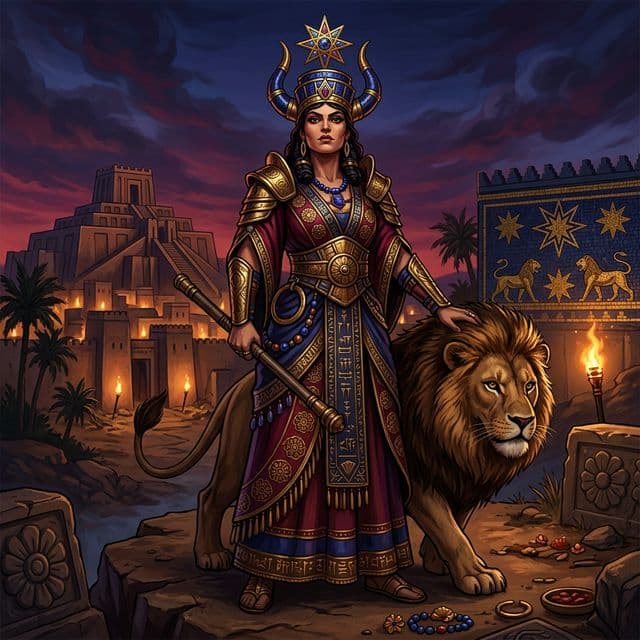 MesopotamianInanna
Both are young goddesses of war whose ferocity is a central part of their mythology; they are distinct figures, not equated in the Ugaritic texts.
Compare Anat and Inanna side by side
Worship and cult
Temples, festivals, and practices recorded for Anat
Anat receives offerings in Ugaritic ritual lists; her cult spread to New Kingdom Egypt.
Family
Anat's family at a glance
- Who are Anat's siblings?
- Siblings of Anat recorded in the atlas: Baal (Baʿlu Haddu).
In the atlas
Where Anat appears
Sources and further reading
Source notes
These references are recorded in the catalog. Their passage wording and translation have not been checked, so quotations are not displayed here.
- Baal Cycle, KTU 1.3 II
- Baal Cycle, KTU 1.6 II
Appears in
Ancient and classical works featuring this figure.
Baal's warrior ally who finds his body and destroys Mot (KTU 1.3; 1.6 I-II)
The Epic of Aqhat (KTU 1.17-1.19)
covets the bow and arranges Aqhat's death (KTU 1.17 VI; 1.18)
Further reading
Anat's battle and her destruction of Mot
The Epic of Aqhat (KTU 1.17-1.19)
Anat and the bow of Aqhat
- Day, Peggy L. "Anat." In Dictionary of Deities and Demons in the Bible (2nd ed., Brill, 1999).
About this entry
By Elizabeth Stein for Mythos Atlas. About the author. Editorial notes are grounded in the site's cited sources and can be challenged through the contact page.
Parallels are editorial comparisons across traditions: a shared role does not, by itself, establish a shared origin.
Family relationships come from the atlas's kinship records. Ancient sources often disagree on divine genealogy.
Genealogy
Family tree
Anat's parents, consorts, children and rivals, as recorded in the atlas.