Hittite PantheonCity
Urkeš (Tell Mozan)
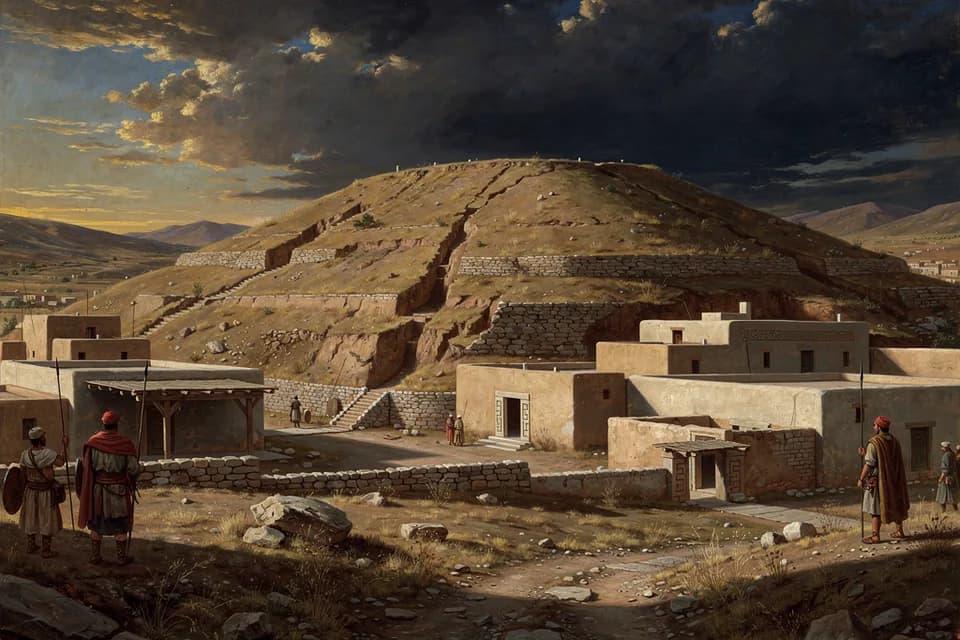
The ancient Hurrian city in northeastern Syria that the Kumarbi cycle names as Kumarbi's home, identified with the mound of Tell Mozan.
About Urkeš (Tell Mozan)
Kumarbi's city
In the Hurrian songs preserved at Hattusa, Kumarbi is the god of Urkeš: in the Song of Ullikummi he takes counsel in his mind and sets out from his city of Urkeš to plan Teššub's downfall. Hurrian tradition regarded Urkeš as an ancient and venerable city, and a Hurrian foundation inscription of its early kings has been found.
Tell Mozan
Excavations at Tell Mozan in northeastern Syria, directed by Giorgio Buccellati and Marilyn Kelly-Buccellati from 1984, identified the site as Urkeš through inscribed seal impressions naming its kings (endan). Finds include a large temple terrace and a deep underground stone structure that the excavators interpret as a ritual pit (ābi) for communicating with the underworld, the kind of pit Hurrian rituals used to call up the Former Gods.
Not a Hittite city
Urkeš was never part of the Hittite kingdom; it belongs on this site because the Hurrian myths the Hittites translated place Kumarbi there. It is a reminder that the Kumarbi cycle comes from a different world from native Anatolian tradition.
On the map
Urkeš (Tell Mozan) among other places of the Hittite Pantheon.
Sources and further reading
Source notes
These references are recorded in the catalog. Their passage wording and translation have not been checked, so quotations are not displayed here.
- Song of Ullikummi, CTH 345, trans. H. A. Hoffner Jr., Hittite Myths
About this entry
By Elizabeth Stein for Mythos Atlas. About the author. Editorial notes are grounded in the site's cited sources and can be challenged through the contact page.
Coordinates mark where the myths place a site, or where the tradition locates it today. Mythic realms are left off the map or marked as symbolic placements.