Source recordAncient text
Samguk Yusa (Memorabilia of the Three Kingdoms)
Iryeon (Buddhist monk) · c. 1281-1289 · Literary Chinese
Ancient text
Samguk Yusa (Memorabilia of the Three Kingdoms)
Iryeon (Buddhist monk)
A collection of histories, legends, and Buddhist tales of Korea's ancient kingdoms compiled by the monk Iryeon, preserving the earliest surviving text of the Dangun myth (citing an older 'Old Record'), the birth of Silla's founder Bak Hyeokgeose, and the story of the flute Manpasikjeok.
About this work
A collection of histories, legends, and Buddhist tales of Korea's ancient kingdoms compiled by the monk Iryeon, preserving the earliest surviving text of the Dangun myth (citing an older 'Old Record'), the birth of Silla's founder Bak Hyeokgeose, and the story of the flute Manpasikjeok.
Where to start
Ha Tae-hung and Grafton Mintz's 1972 English translation is the standard complete version; begin with Book 1's opening entries on Gojoseon and the founders of the Three Kingdoms, then Book 2's Silla legends.
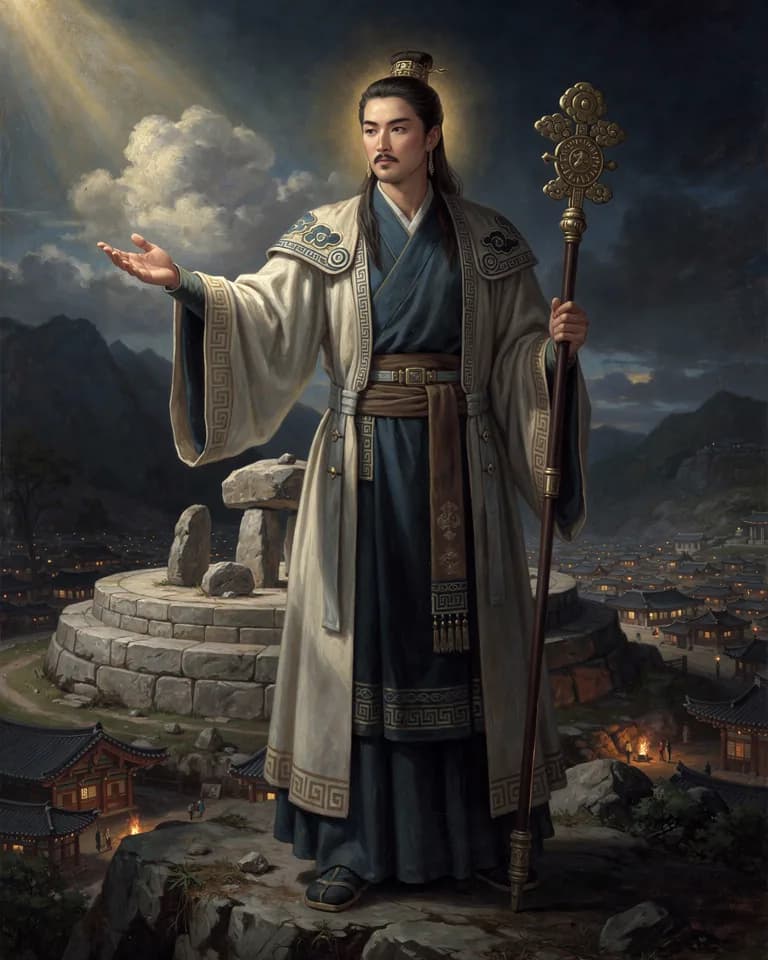
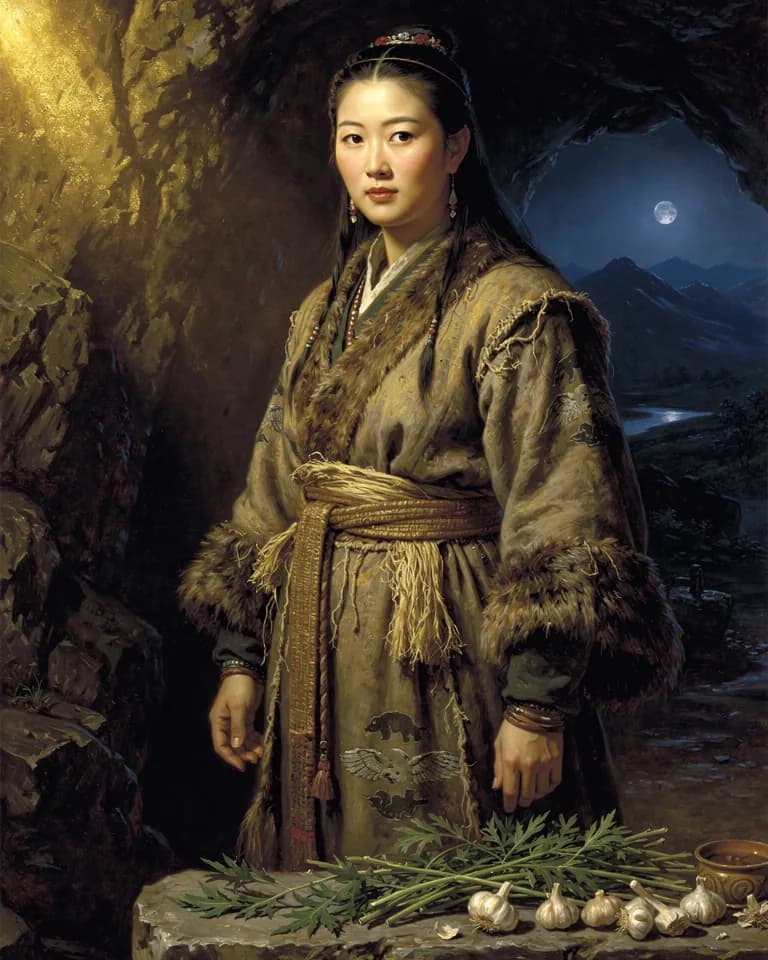
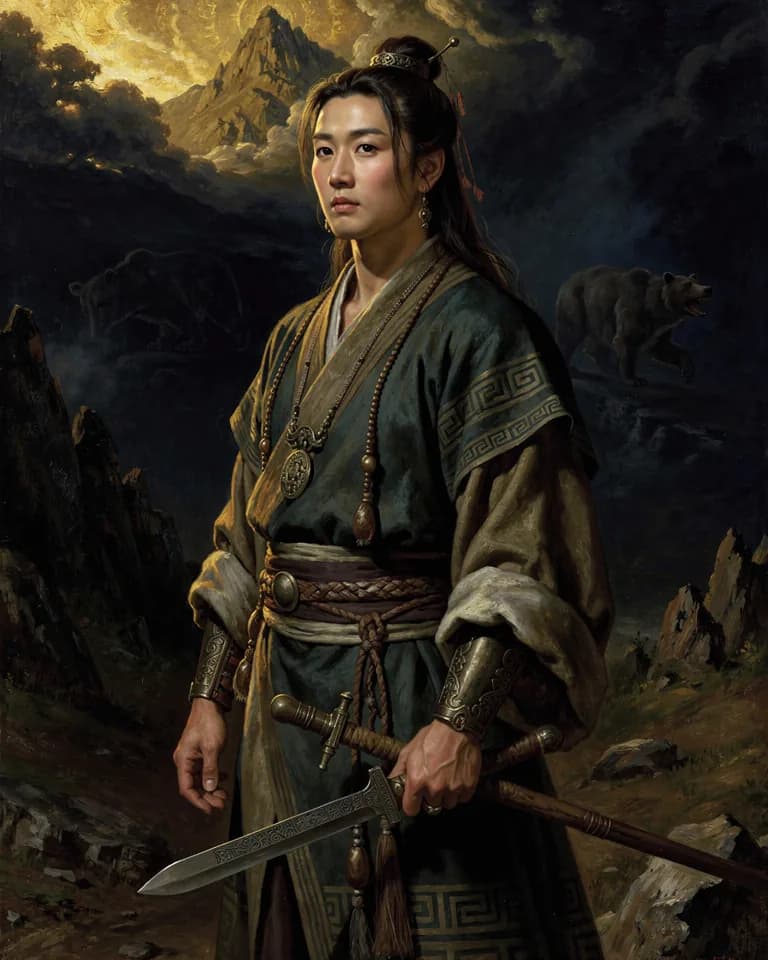
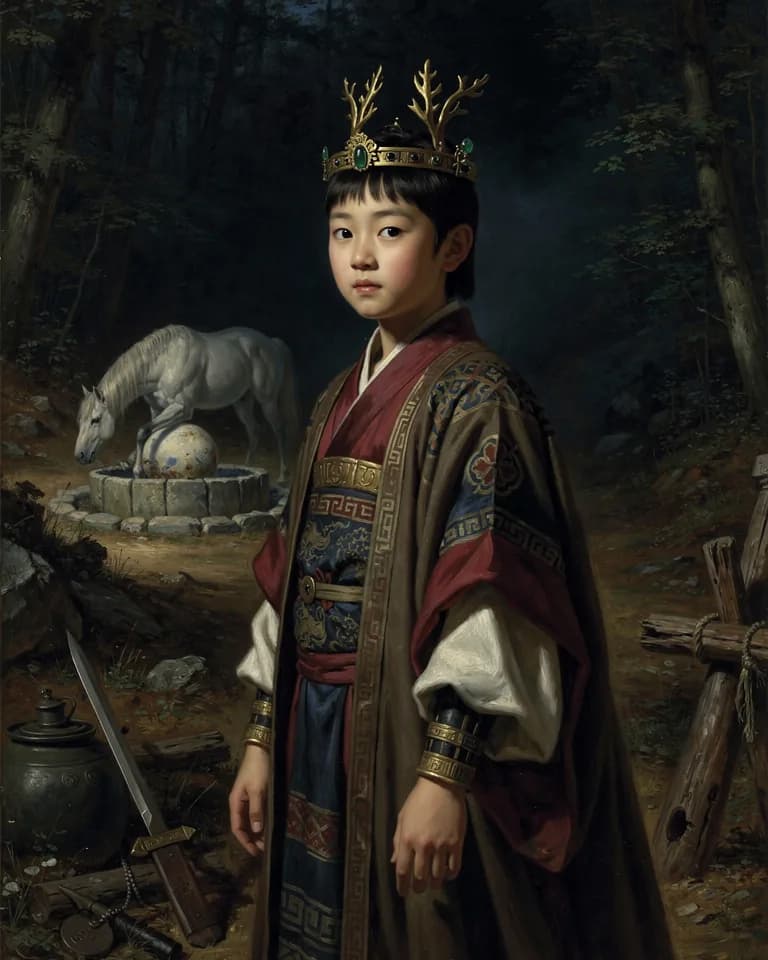
Figures in the text
Heroes and divinities who feature prominently, with where they appear.
Key scenes
Turning points of the work, in reading order.
The Bear and the Tiger
A bear and a tiger ask Hwanung to make them human; only the bear keeps the taboo of mugwort, garlic, and darkness, and becomes the mother of Dangun.
The Egg at Najeong
A white horse kneels by the Najeong well beside an egg from which the founder of Silla is born.
The Flute that Calms Ten Thousand Waves
A sea dragon gives King Sinmun a bamboo from which a flute is made that ends war, disease, drought, and storms.
Stories drawn from it
Retellings in the atlas that quote or cite this work.
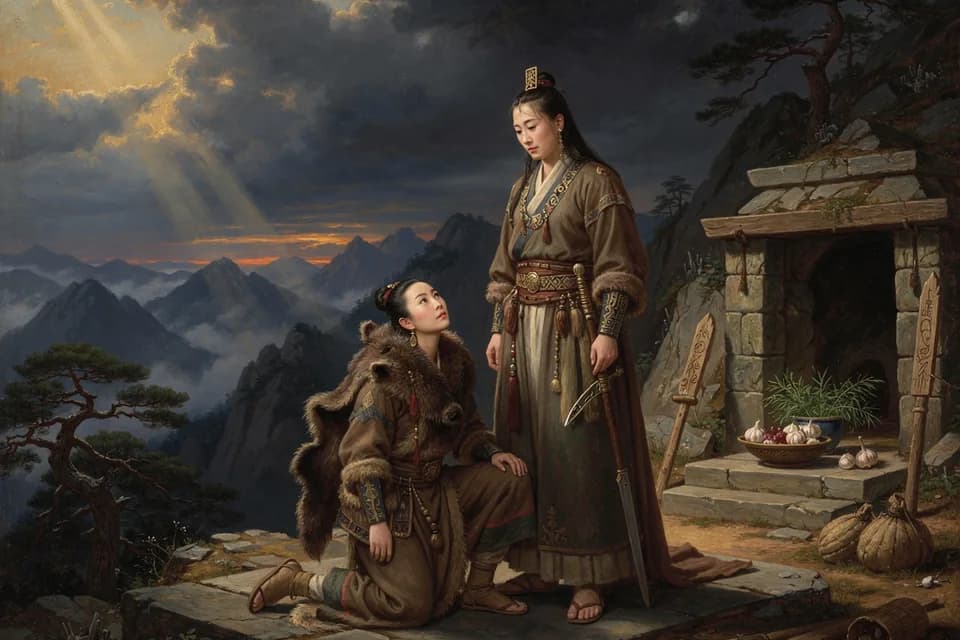 Dangun and the Bear WomanoriginThe son of the Lord of Heaven descends to Mount Taebaek to rule the human world; a bear who endures twenty-one days of darkness on mugwort and garlic becomes a woman, marries him, and bears Dangun, founder of the first Korean kingdom.
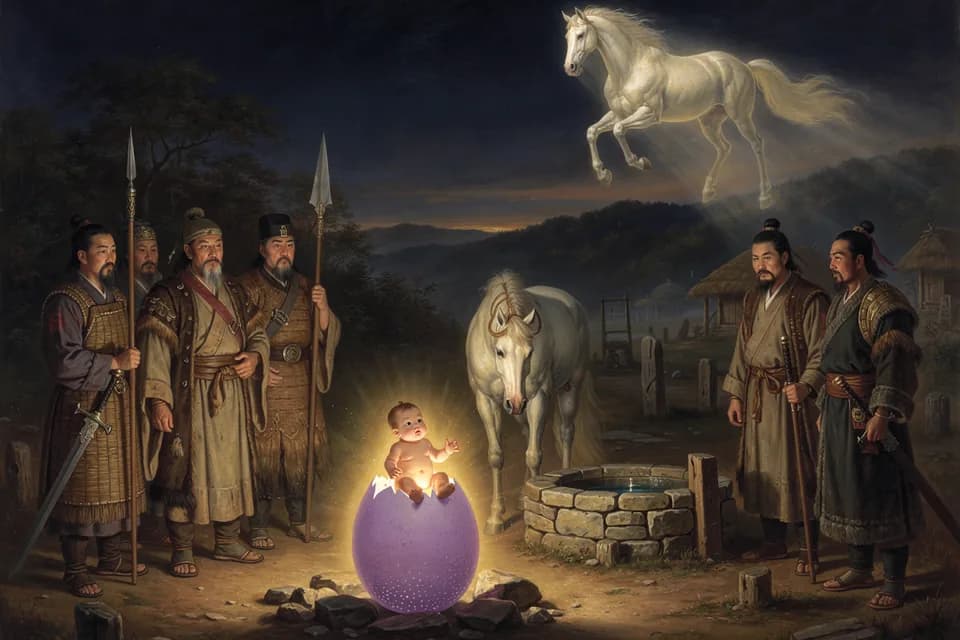 Bak Hyeokgeose and the Egg at NajeonglegendThe six village chiefs of the Gyeongju plain, seeking a king, see a white horse kneeling at the Najeong well beside a purple egg; the horse rises into heaven, and from the egg comes the radiant boy who will found Silla, crowned at thirteen with a queen born from a dragon.
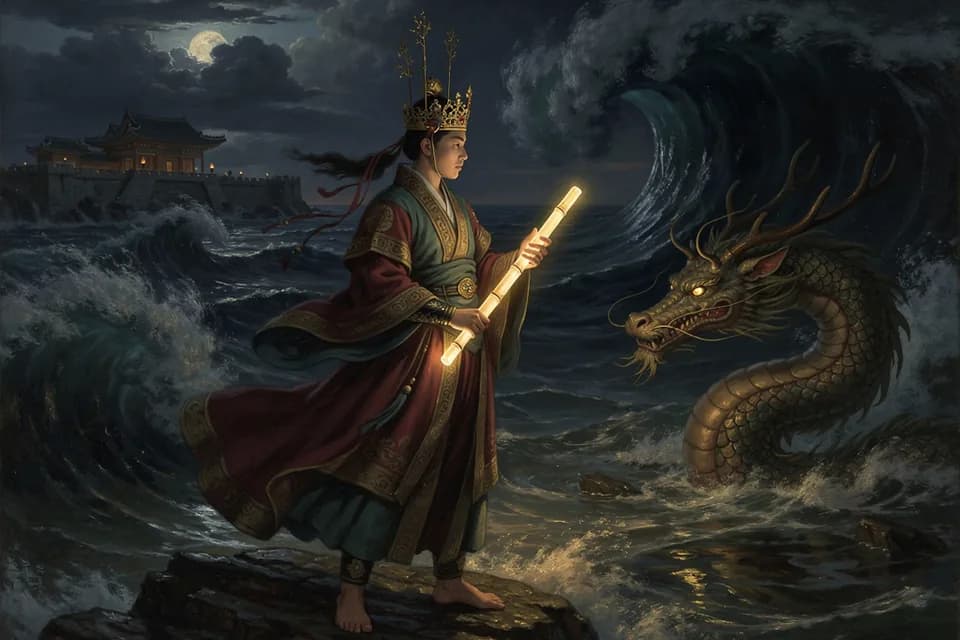 Manpasikjeok: The Flute That Calms Ten Thousand WaveslegendKing Munmu of Silla asks to be buried in the East Sea so he can become a dragon and guard the kingdom; his son receives from a sea dragon a bamboo that is two by day and one by night, and makes from it a flute that drives off enemies, heals the sick, brings rain, and stills the waves.
About this record
By Elizabeth Stein for Mythos Atlas. About the author. Editorial notes are grounded in the site's cited sources and can be challenged through the contact page.
Dates and authorship follow standard scholarly references; for many ancient works both are approximate or disputed.