Mythos Atlas

Side by sideParent and child

Ahura Mazda vs Zurvan

Ahura Mazda
Ahura MazdaPersian (Iranian)
Zurvan
ZurvanPersian (Iranian)

Ahura Mazda and Zurvan are recorded as parent and child in the Persian (Iranian) Tradition.

At a glance

Ahura Mazda and Zurvan compared
Ahura MazdaZurvan
TraditionPersian (Iranian) TraditionPersian (Iranian) Tradition
Domainscreation, wisdom, truth (asha), kingshiptime, fate, the origin of the two spirits
Symbolsfire, light, the skyinfinite time, the barsom twigs of sacrifice
Also calledOhrmazd, Auramazda, Hormozd, Wise LordZurvan Akarana (Infinite Time), Zamān

Where they meet

The atlas records no domain or symbol that Ahura Mazda and Zurvan share.

They are compared because of how the myths connect them, not because of what they rule.

Where they part

Only Ahura Mazda

Associated with creation, wisdom, truth (asha), and kingship.

Only Zurvan

Associated with time, fate, and the origin of the two spirits.

How each was worshipped

Ahura Mazda

Cult sites
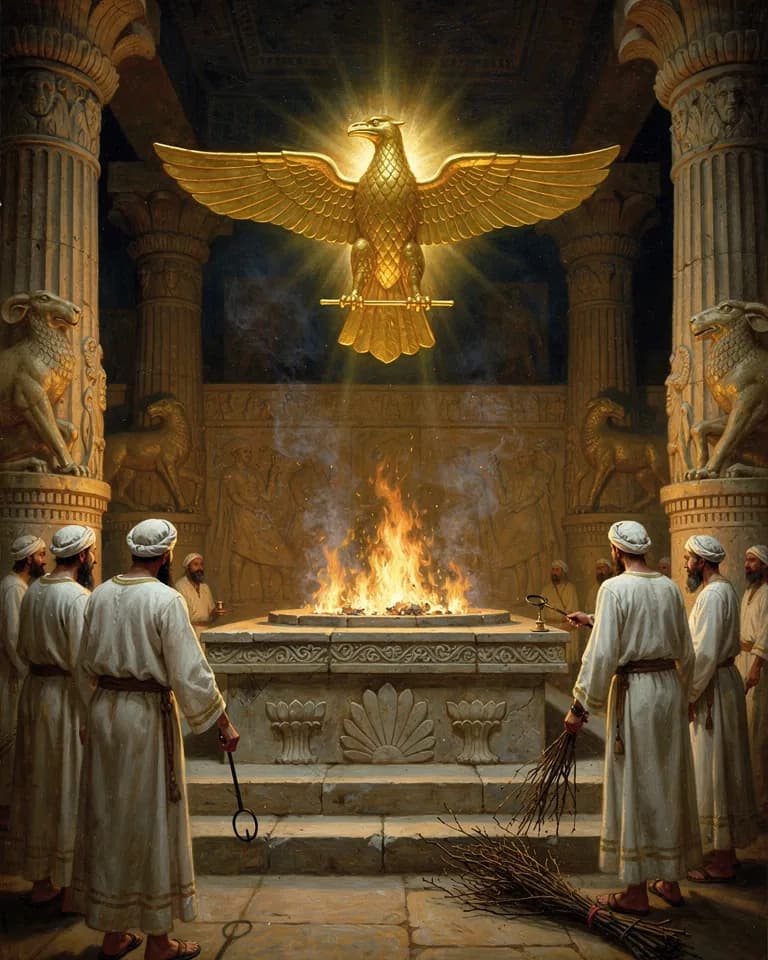
Zoroastrian fire temples, in which a consecrated fire is kept burning as the focus of worship; the highest grade, the Atash Behram, includes the fire at Yazd, Iran, and the Iranshah fire at Udvada, India.
Festivals
The six seasonal gahambars and Nowruz, the new year at the spring equinox.

Prayer five times a day in the presence of fire or light, with the Ahuna Vairya and Ashem Vohu prayers; the tying of the sacred cord (kusti) over the sacred shirt (sudreh). Herodotus reports that the ancient Persians sacrificed on mountaintops without temples or statues.

Zurvan

No cult is attested; Zurvanism appears as a theological current within Sasanian Zoroastrianism, known largely through its opponents.

The two figures

Persian (Iranian) Tradition

Ahura Mazda

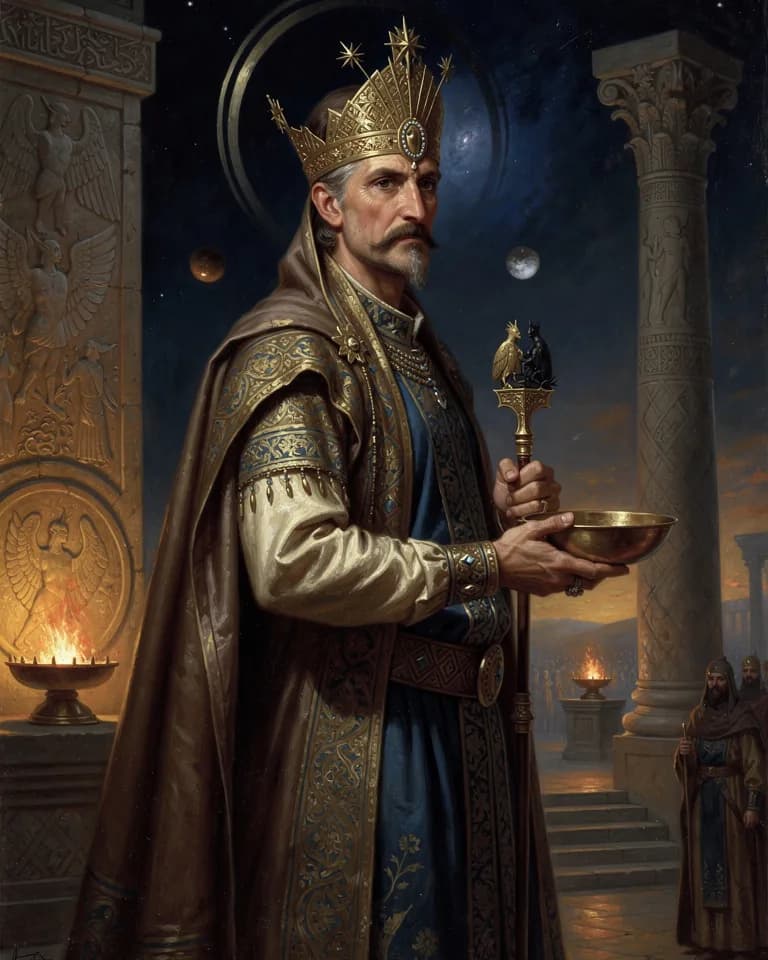
The Wise Lord, uncreated creator of the good world in Zoroastrianism, addressed by Zarathushtra in the Gathas and credited by the Achaemenid kings with their rule; opposed by the Hostile Spirit, Angra Mainyu.

Uncreated in orthodox Zoroastrianism. In the Sasanian-era Zurvanite current, known mainly from Christian and Armenian polemic, Ohrmazd and Ahriman are twin sons of Zurvan, Infinite Time.

Zarathushtra's hymns address Ahura Mazda as the creator who established the earth below and held up the sky, who ordered the paths of sun and stars, and who is the father of the good powers: Truth (*Asha*), Good Mind (*Vohu Manah*), and Devotion (*Armaiti*), whom one hymn calls his daughter. The Gathas are hymns of questioning and devotion rather than narratives; they present a world in which every being must choose between truth and the lie, and in which the Wise Lord will judge by that choice.

Read the full Ahura Mazda entry

Persian (Iranian) Tradition

Zurvan

Infinite Time, whom a Sasanian-era current of Zoroastrian thought made the father of both Ohrmazd and Ahriman, born as twins from his sacrifice and his doubt; known mainly from hostile Christian and Armenian writers, and rejected by later orthodoxy.

Uncreated, the first being in the Zurvanite myth.

The fullest account comes not from a Zoroastrian text but from the fifth-century Armenian Christian Eznik of Kolb, in his *Refutation of the Sects*, with parallels in Syriac Christian sources. Before anything existed, Zurvan offered sacrifice for a thousand years in order to have a son who would create heaven and earth. Then he doubted whether his sacrifice would bear fruit, and from his doubt Ahriman was conceived, while from the sacrifice Ohrmazd was conceived. Zurvan vowed that whichever son reached him first would be king. Ohrmazd, knowing this, told his brother; Ahriman tore open the womb and presented himself, and Zurvan, bound by his vow, gave him rule for nine thousand years, after which Ohrmazd would reign.

Read the full Zurvan entry
About this comparison

Comparisons pair figures that play a similar role across traditions, or that the myths connect within one. A shared role does not, by itself, establish a shared origin.