Side by sideParallel across traditions

Aphrodite vs Venus

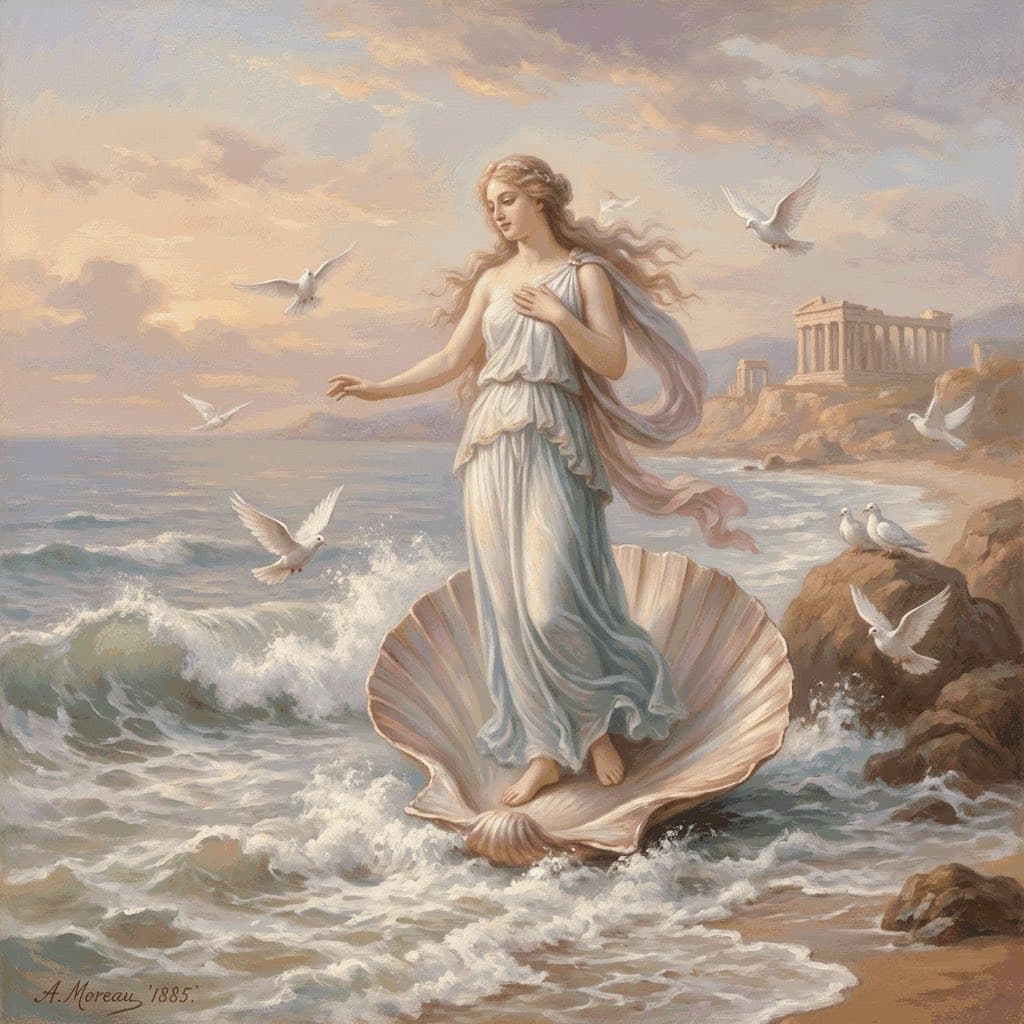
Aphrodite
AphroditeGreek
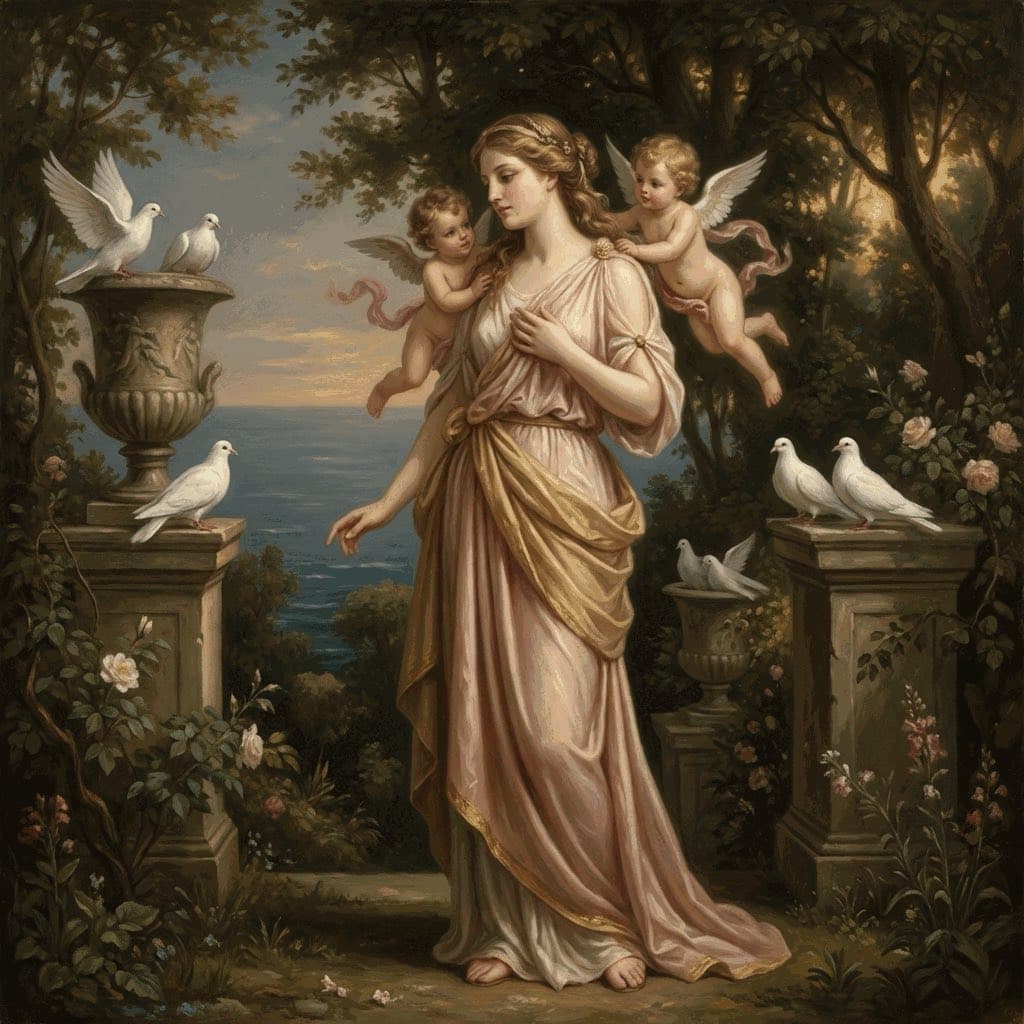
Venus
VenusRoman

Venus is the direct Roman equivalent, though in Rome she gained additional importance as divine ancestor of the Julian family.

At a glance

Aphrodite and Venus compared
AphroditeVenus
TraditionGreek PantheonRoman Pantheon
Domainslove, beauty, desire, sexualitylove, beauty, desire, fertility, victory
Symbolsdove, swan, rose, myrtle, sparrowdove, rose, myrtle, swan, sparrow
Also calledVenus, KyprisVenus Genetrix, Venus Victrix

Where they meet

Both are associated with love, beauty, and desire.

They share symbols: dove, swan, rose, myrtle, and sparrow.

  • dove
  • swan
  • rose
  • myrtle
  • sparrow

Where they part

Only Aphrodite

Associated with sexuality.

Only Venus

Associated with fertility and victory.

Why they are compared

Aphrodite is the direct Greek equivalent, goddess of love and beauty.

How each was worshipped

Aphrodite

Cult sites
Sanctuaries at Paphos and Amathus on Cyprus; Temple of Aphrodite on Acrocorinth; Aphrodite Pandemos at Athens
Festivals
Aphrodisia; Adonia

Cyprus is her oldest ground. Corinth mixed sailors, courtesans, and a high temple. Athens split Ourania from Pandemos: heavenly and of the whole people. Roses, doves, and the sea-foam story sit on top of a civic sex-and-luck cult.

Venus

Cult sites
Temple of Venus Genetrix in the Forum of Caesar; Temple of Venus Erycina on the Capitoline and later the Colline Gate; Temple of Venus Obsequens and Venus Verticordia
Festivals
Veneralia (1 April); Vinalia Rustica (19 August)

Myrtle and roses are hers. The Veneralia was a women's washing of her image. Augustus made Venus Genetrix a family ancestor, so state cult and Julian politics share a temple. She is luck in war as well as desire; generals vowed temples after victories.

The two figures

Greek Pantheon

Aphrodite

Goddess of love, beauty, and desire. Born from the sea foam after Cronus castrated Uranus and threw his genitals into the sea.

Aphrodite is the irresistible goddess of love and beauty. Though married to Hephaestus, she had many lovers, most notably Ares. She has the power to make anyone fall in love, a power that even Zeus cannot resist.

Read the full Aphrodite entry

Roman Pantheon

Venus

Goddess of love, beauty, desire, sex, and fertility. Mother of the Roman people through her son Aeneas, ancestor of Romulus. Patron goddess of the Julian family.

Venus corresponds to Greek Aphrodite. In Roman tradition, she was mother of Aeneas by the Trojan prince Anchises. Through Aeneas, she became the divine ancestress of the Roman people.

Venus is love, charm, and winning, but in Rome she is also a mother of a people. Through **Aeneas**, her son by Anchises, the Julian house claimed her blood. Julius Caesar dedicated a temple to **Venus Genetrix** in his forum; the political point was not subtle. What Greek myth tells as Aphrodite's dangerous sweetness, Rome also tells as ancestry.

Read the full Venus entry
About this comparison

Comparisons pair figures that play a similar role across traditions, or that the myths connect within one. A shared role does not, by itself, establish a shared origin.