Hittite PantheonCreature
Illuyanka
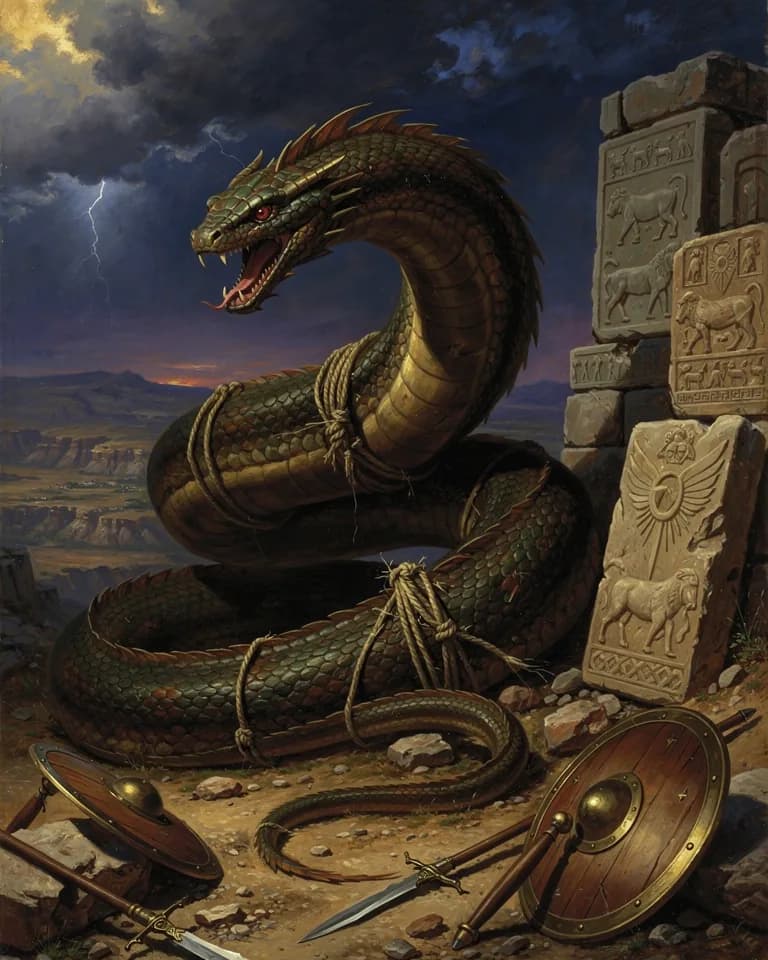
- defeats the Storm-god in their first encounter
- steals the Storm-god's heart and eyes (second version)
- enormous size and appetite
The great serpent of Anatolian myth that defeats the Storm-god before it is tricked, bound, and killed; its name is simply the Hittite word for 'serpent' or 'dragon'.
About Illuyanka
A serpent, not a name
Illuyanka is the Hittite common noun for "serpent" or "dragon"; the being in the myth is simply "the serpent". It appears in the two versions of the Illuyanka tales (CTH 321), which a priest of Nerik tells in connection with the Purulli festival.
Two defeats of the Storm-god
In both versions the serpent wins the first fight. In the first version it is then lured out of its hole with its children by the goddess Inara's lavish feast; they gorge themselves until they cannot squeeze back in, and the mortal Hupašiya ties them up for the Storm-god to kill. In the second version the serpent takes the Storm-god's heart and eyes, and gives them back only as a gift to the Storm-god's son, who has married the serpent's daughter; the restored Storm-god then kills the serpent at sea, and his son with it.
What it represents
Scholars have read Illuyanka as a figure of chaotic waters or of the forces that hold back spring growth, fitting the Purulli festival's place in the agricultural year, but the text itself offers no allegory. It is one of the oldest written examples of the storm-god's serpent enemy, a figure found from Ugarit's Litan to Norse Jörmungandr.
Sources and further reading
Source notes
These references are recorded in the catalog. Their passage wording and translation have not been checked, so quotations are not displayed here.
- Illuyanka tales, CTH 321, trans. H. A. Hoffner Jr., Hittite Myths
About this entry
By Elizabeth Stein for Mythos Atlas. About the author. Editorial notes are grounded in the site's cited sources and can be challenged through the contact page.
The danger rating is an editorial shorthand for how the myths portray the creature, not a claim made by the sources.