Finnish Tradition (Kalevala)
Ahti
Ahti
Also known as Ahto, Allon kuningas (King of the Waves)
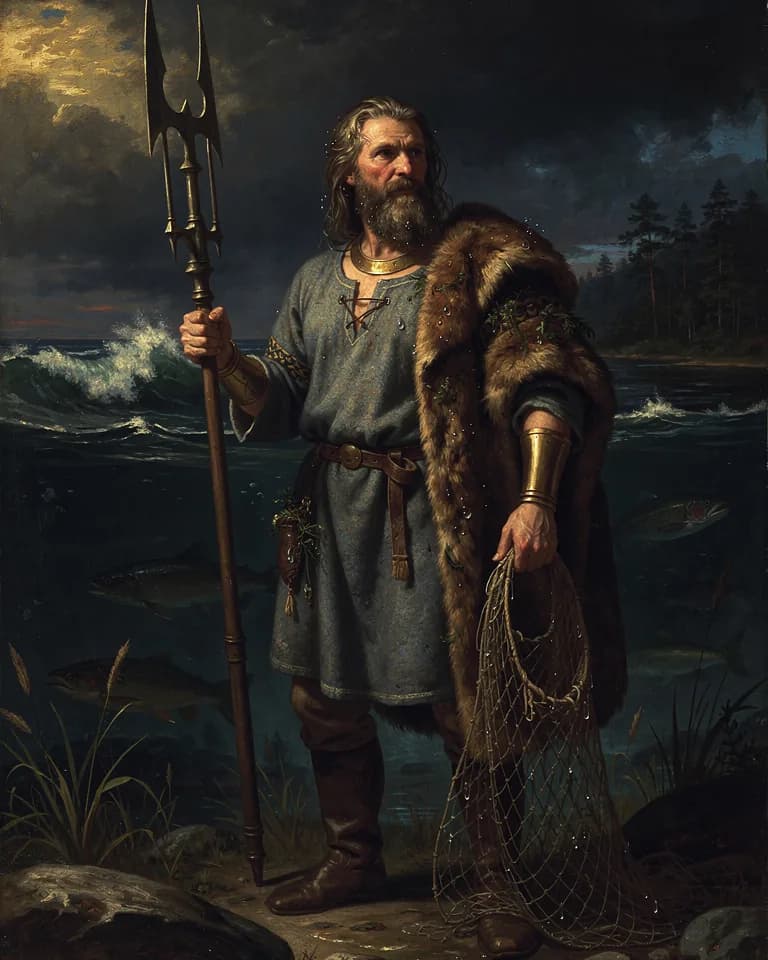
- the sea and waters
- fish and fishing
The god of waters and fish, named by Agricola in 1551 as the one who brought fish from the water, called king of the waves in the runo-songs, husband of Vellamo and lord of the underwater realm of Ahtola.
About Ahti
Attestation
Agricola's list of 1551 says that Ahti brought fish from the waters. Folk poetry calls him Ahto, king of the waves, with a beard of grass, ruling Ahtola, a rich realm beneath the water, with his wife Vellamo. Fishermen asked him for a good catch and took care not to offend him.
In the Kalevala
When Väinämöinen plays his new kantele (Rune 41), all creatures come to listen, and among them Ahto, king of the waves, rises from the water to hear. The Kalevala's hero Lemminkäinen is also called Ahti Saarelainen, 'Ahti the Islander', but he is a different figure from the water god, and the shared name is one of the knots Lönnrot inherited from folk tradition.
Waters in Finnish life
Finland has tens of thousands of lakes and a long coast; fishing was as important as hunting. Ahti and Vellamo were the water's counterparts to Tapio and Mielikki of the forest.
Origin story
No origin is told.
Across traditions
Parallel figures
Figures who play a role like Ahti's in other traditions.
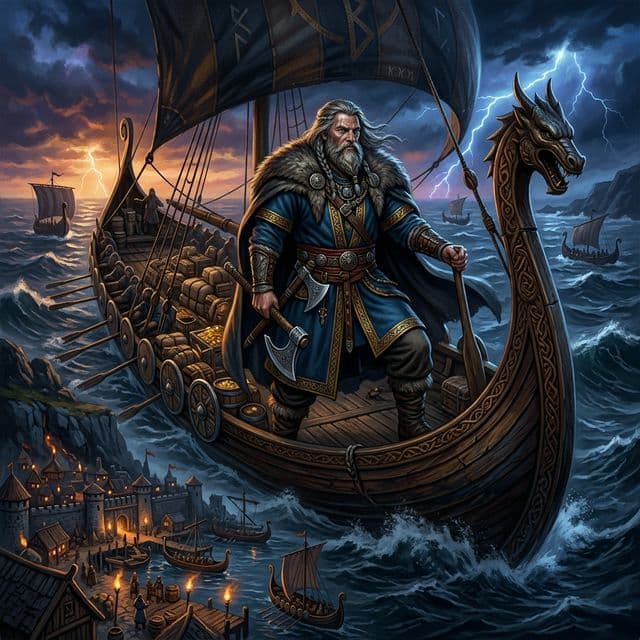 NorseNjord
Both are gods of the sea and its bounty invoked by fishermen; the comparison is typological.
Compare Ahti and Njord side by side
Worship and cult
Temples, festivals, and practices recorded for Ahti
Fishermen's prayers and charms for a good catch; offerings of the first fish or of small gifts to the water.
Family
In the atlas
Where Ahti appears
Sources and further reading
Source notes
These references are recorded in the catalog. Their passage wording and translation have not been checked, so quotations are not displayed here.
- Mikael Agricola, preface to Dauidin Psaltari (paraphrase)
- Kalevala, Rune 41 (paraphrase)
About this entry
By Elizabeth Stein for Mythos Atlas. About the author. Editorial notes are grounded in the site's cited sources and can be challenged through the contact page.
Parallels are editorial comparisons across traditions: a shared role does not, by itself, establish a shared origin.
Family relationships come from the atlas's kinship records. Ancient sources often disagree on divine genealogy.
Genealogy
Family tree
Ahti's parents, consorts, children and rivals, as recorded in the atlas.