Japanese
Izumo Province
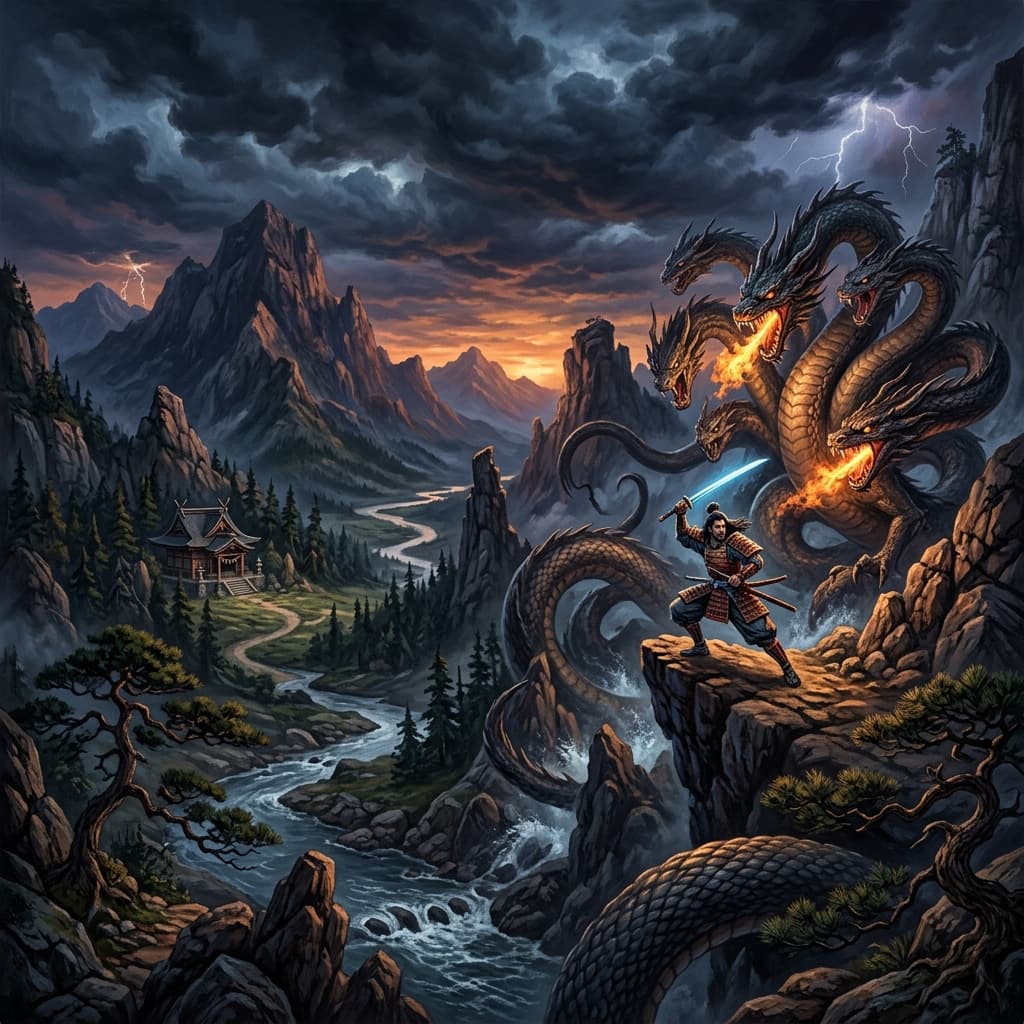
The earthly domain granted to Susanoo after his exile from heaven, where he slew the eight-headed serpent Yamata no Orochi.
Sacred Geography
Temples, realms and sacred sites, on the map and by tradition, type or era.
Catalog pictures are illustrations, not historical artworks. About our images
The earthly domain granted to Susanoo after his exile from heaven, where he slew the eight-headed serpent Yamata no Orochi.
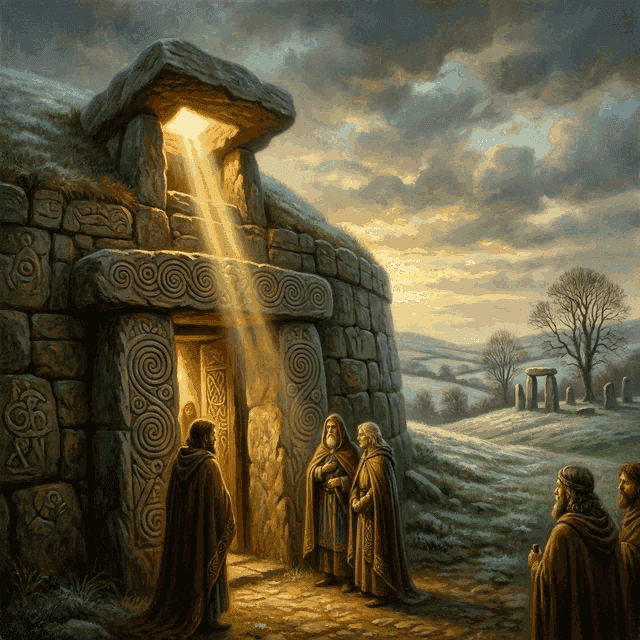
A grand prehistoric passage tomb and the home of the Dagda (and later Aengus). Associated with the winter solstice.
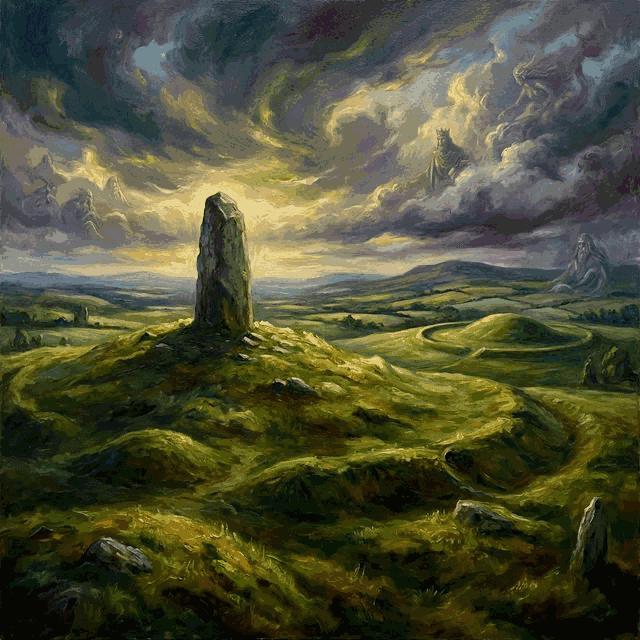
The Hill of Tara in County Meath, ancient ceremonial seat of the high kings of Ireland in medieval tradition, with the Lia Fáil, the stone said to cry out under the rightful king.
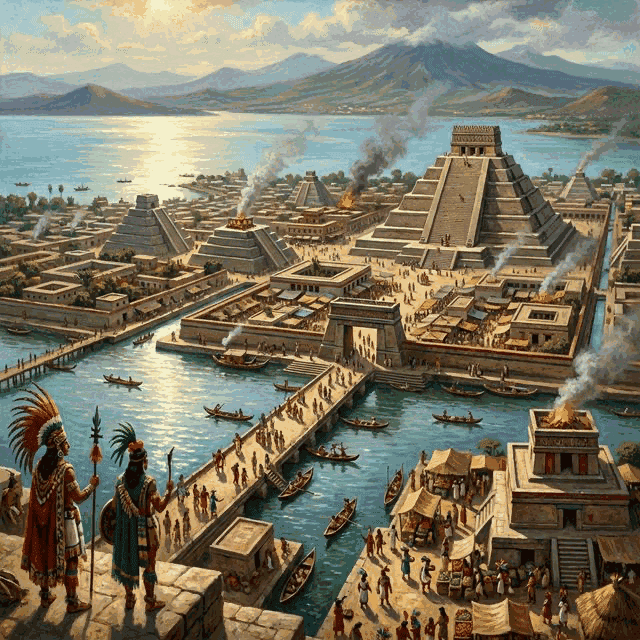
The Mexica capital on an island in Lake Texcoco, founded where Huitzilopochtli's sign of an eagle on a cactus appeared, and centred on the Templo Mayor; the heart of present-day Mexico City.
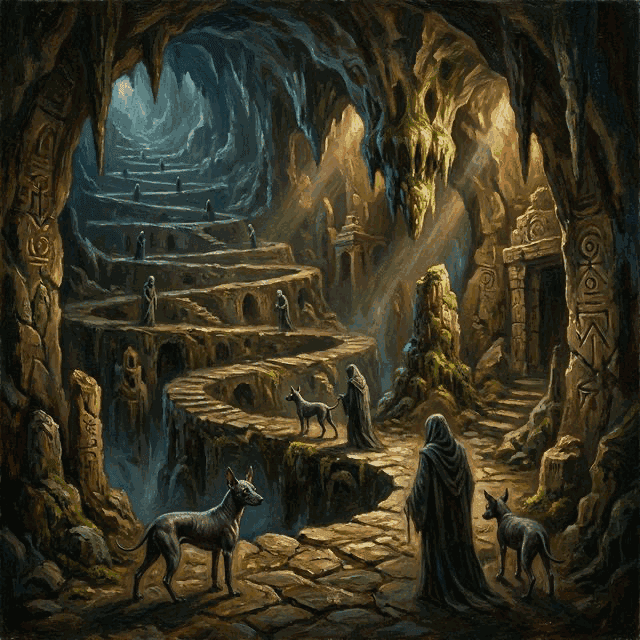
The nine-level underworld of Aztec mythology, a perilous four-year journey for the souls of the dead to reach Mictlantecuhtli.
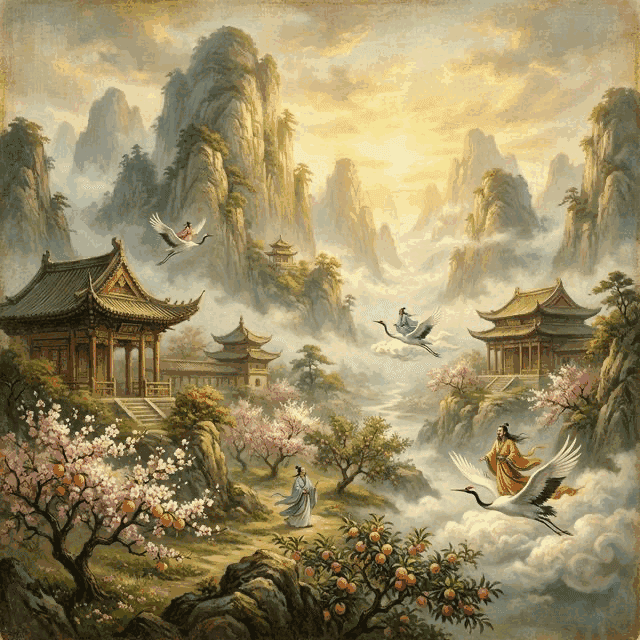
The mythical mountain paradise in the west, dwelling of Xiwangmu (Queen Mother of the West) and source of the peaches of immortality.
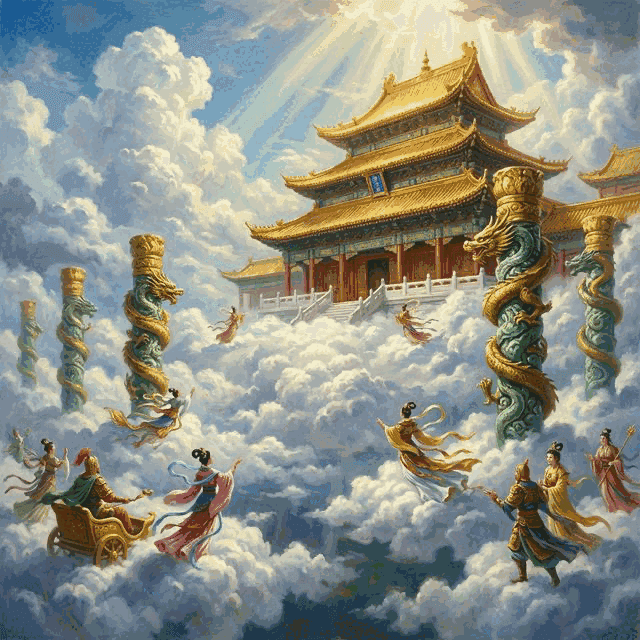
The opulent celestial court of the Jade Emperor, where the celestial bureaucracy governs all of heaven and earth. Also known as the Lingxiao Palace, it is the seat of divine government.
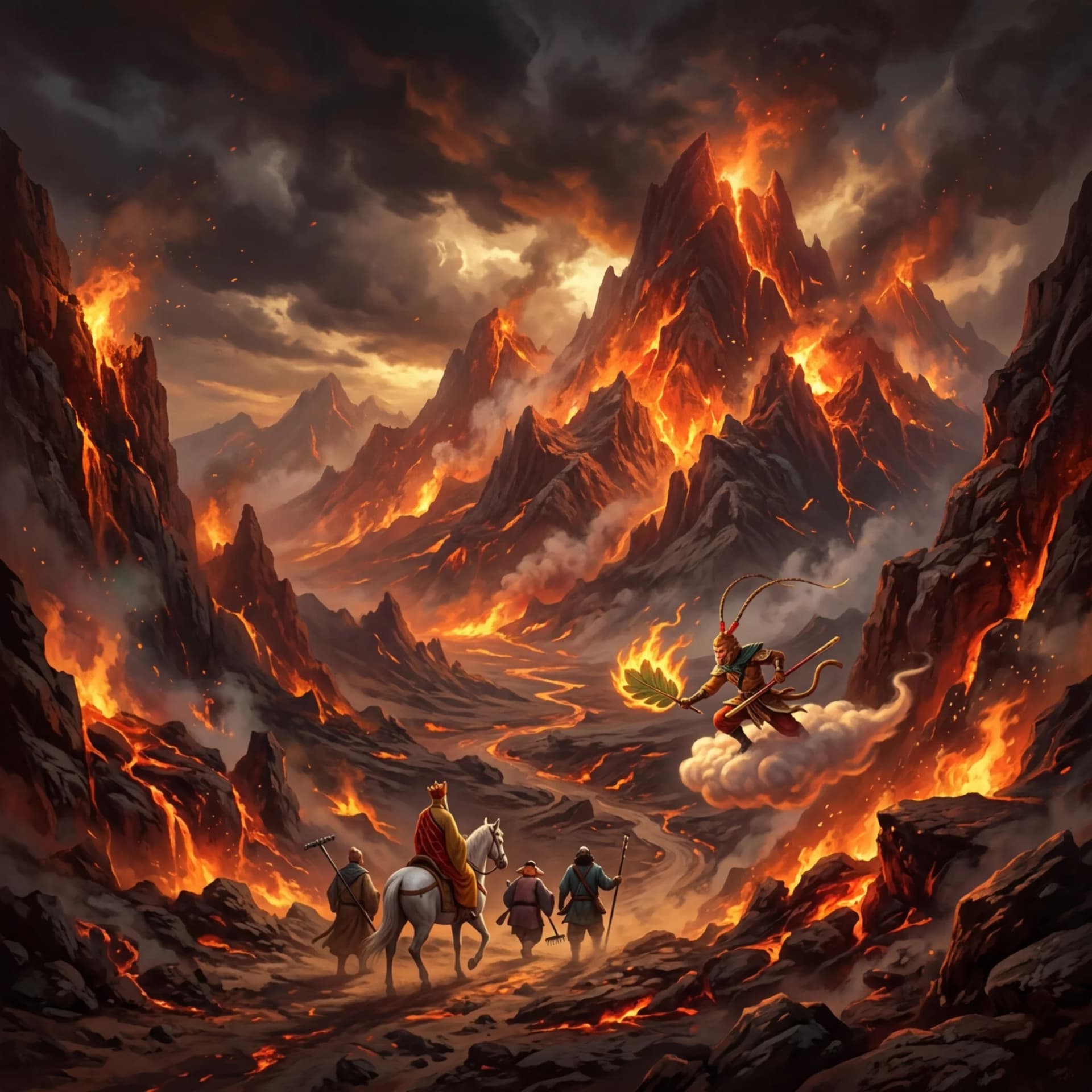
A range of scorching mountains created when Sun Wukong kicked over Laozi's alchemical furnace during his rampage in Heaven. The monk Tang Sanzang and his disciples had to obtain the Banana Leaf Fan from Princess Iron Fan to extinguish the flames and pass through.
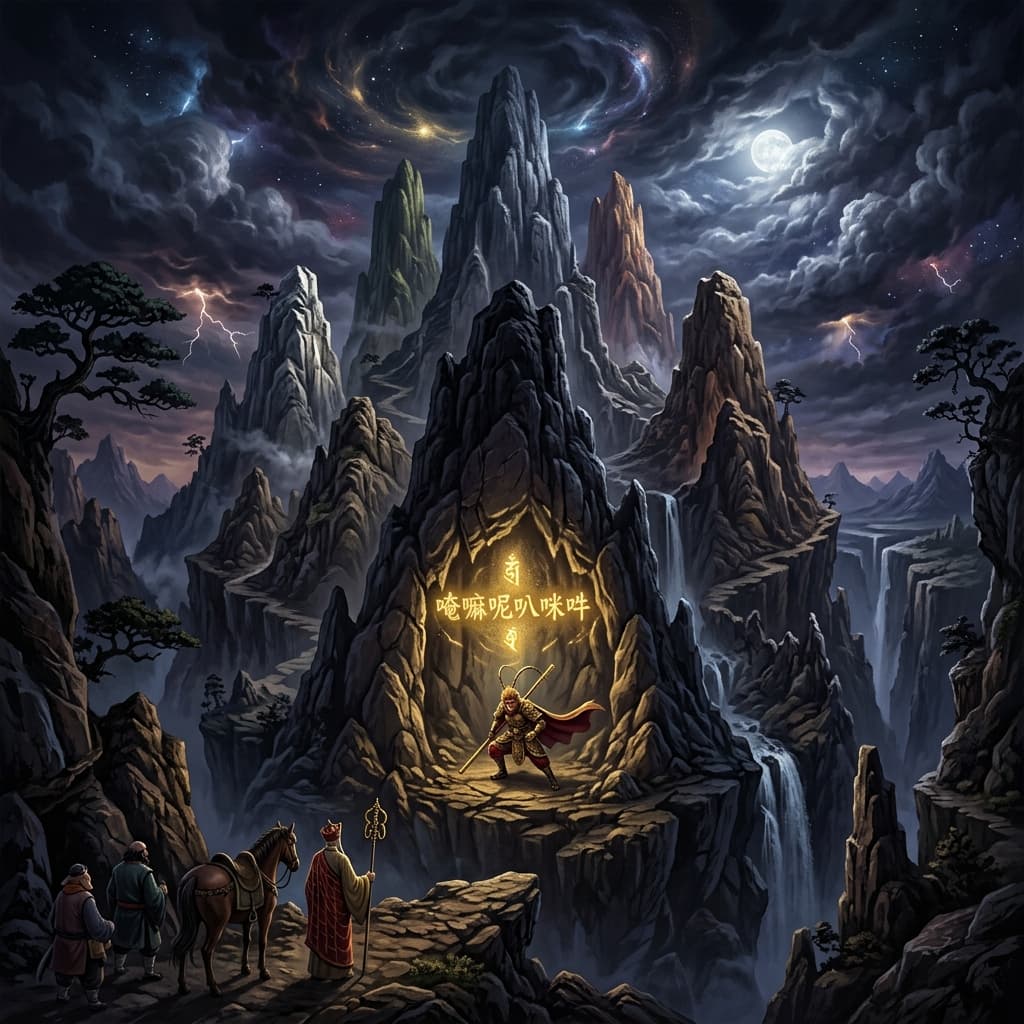
The mountain created by Buddha to imprison Sun Wukong for 500 years after his rebellion against Heaven. The Buddha placed a seal on the mountain, and only the destined pilgrim Tang Sanzang could release the Monkey King.
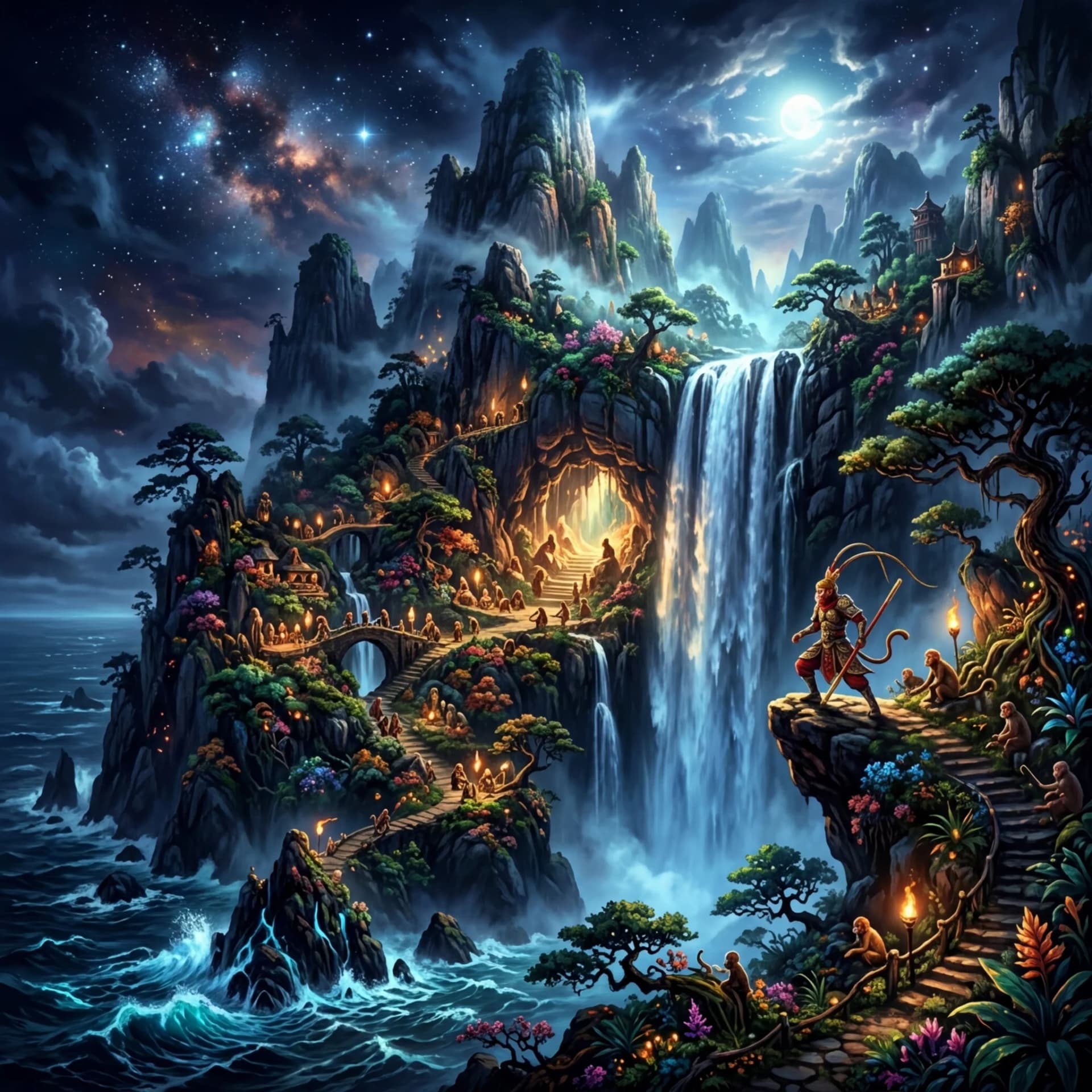
The mystical mountain in the Eastern Sea where Sun Wukong was born from a stone egg. Behind the Water Curtain Cave, he established his kingdom of monkeys and ruled as their king before seeking immortality.
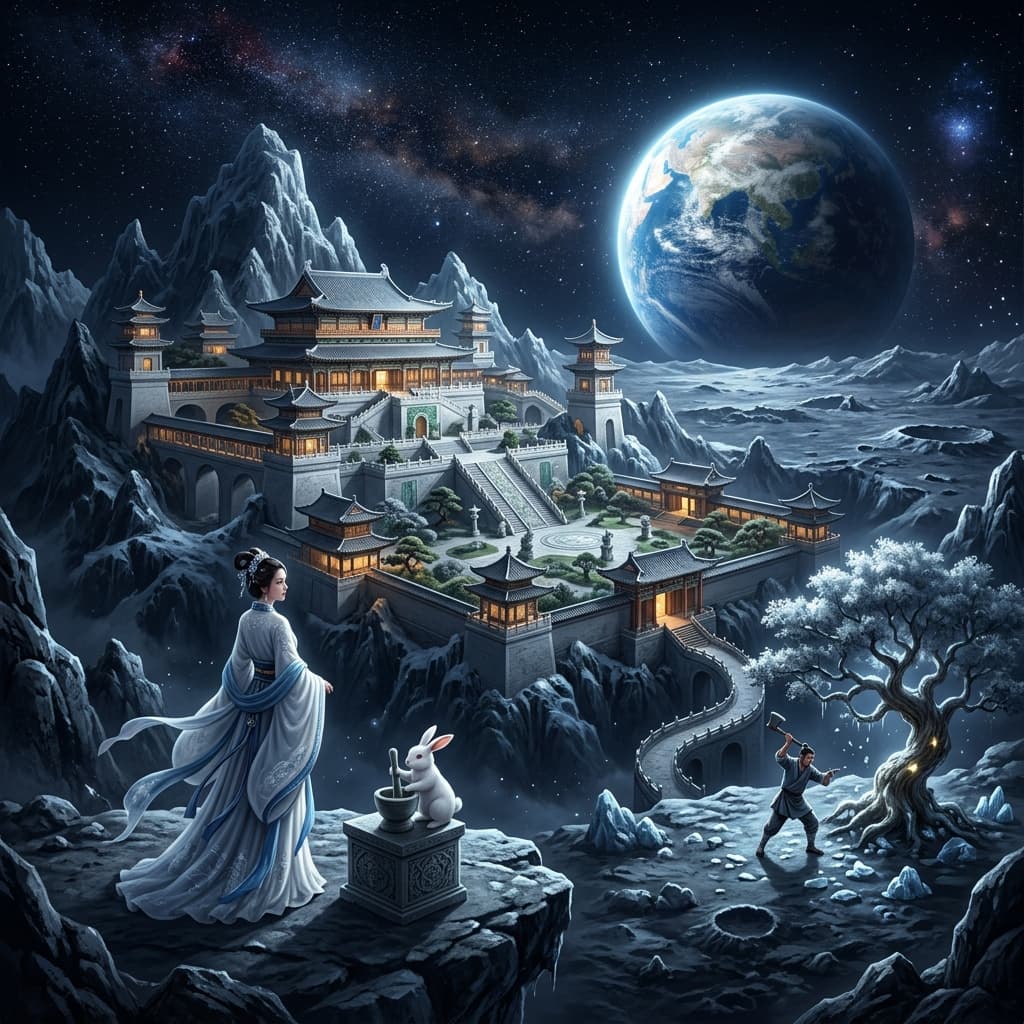
The Palace of Cold Vastness on the moon, where Chang'e lives in eternal solitude after drinking the elixir of immortality. She is accompanied only by the Jade Rabbit and the woodcutter Wu Gang.
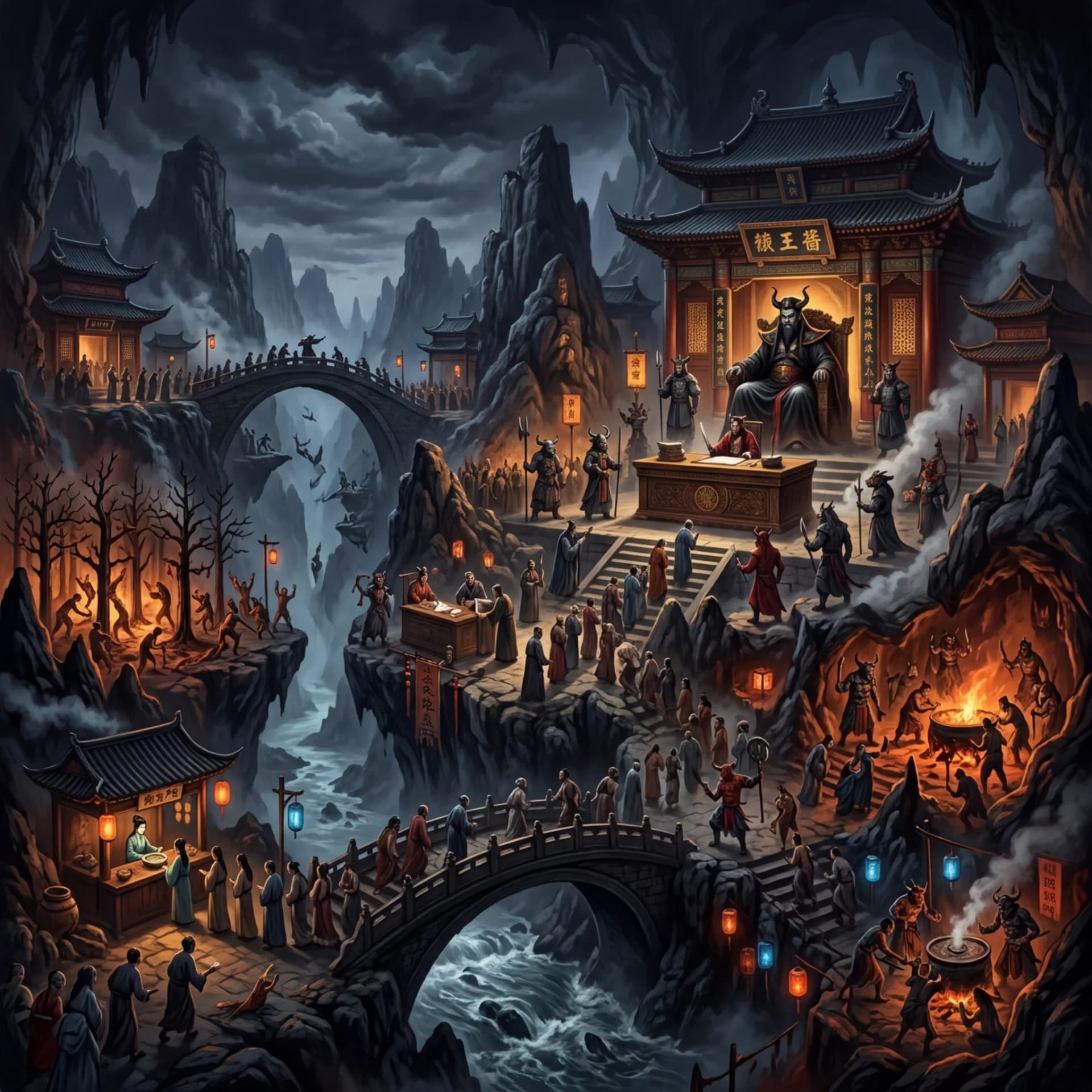
The realm of the dead where souls are judged by Yan Wang (King Yama) and punished or rewarded based on their earthly deeds. It contains multiple courts and hells, after which souls drink from the River of Oblivion before reincarnation.
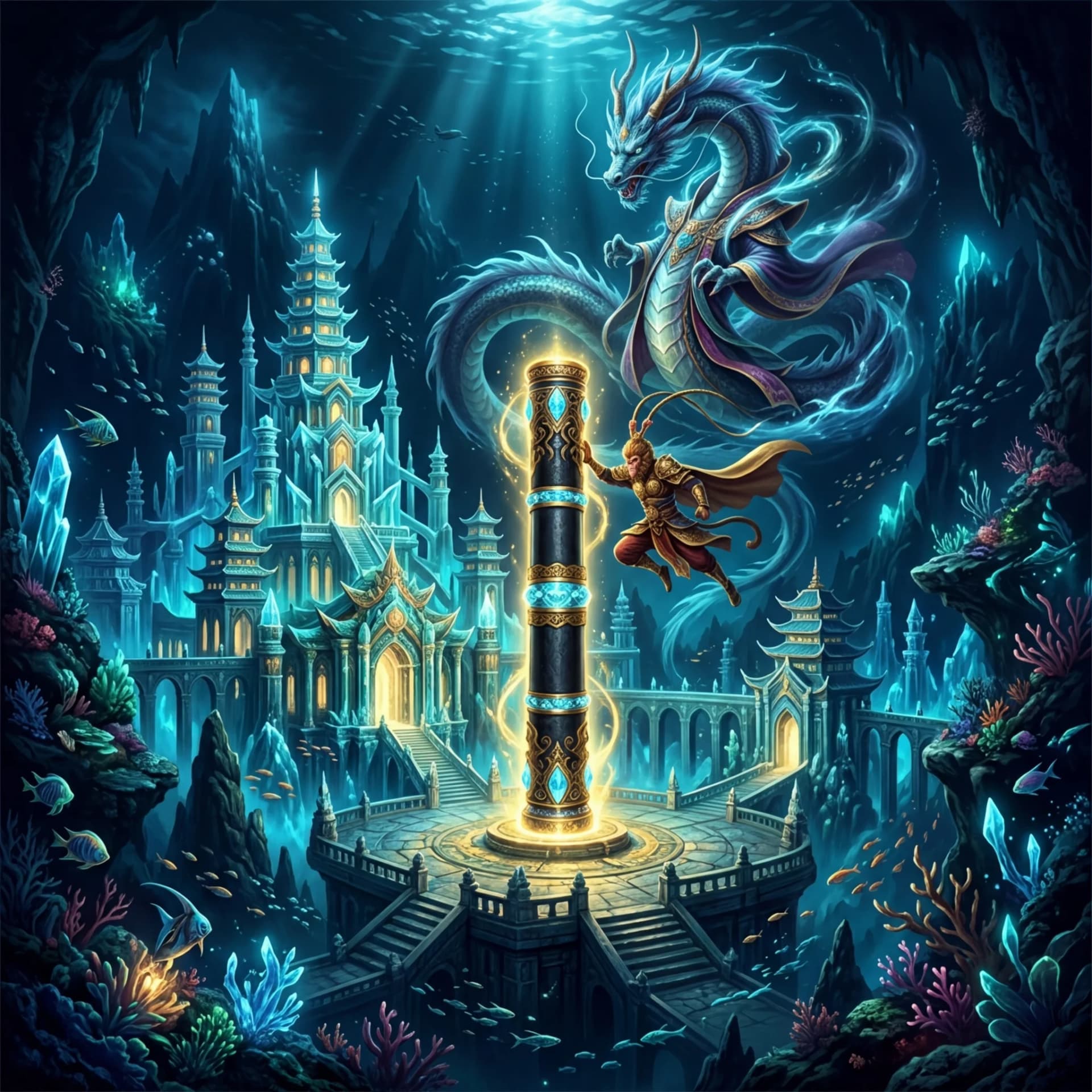
The underwater palace of Ao Guang, the Dragon King of the Eastern Sea. It was here that Sun Wukong obtained his famous weapon, the Ruyi Jingu Bang, originally a pillar used to measure sea depths.
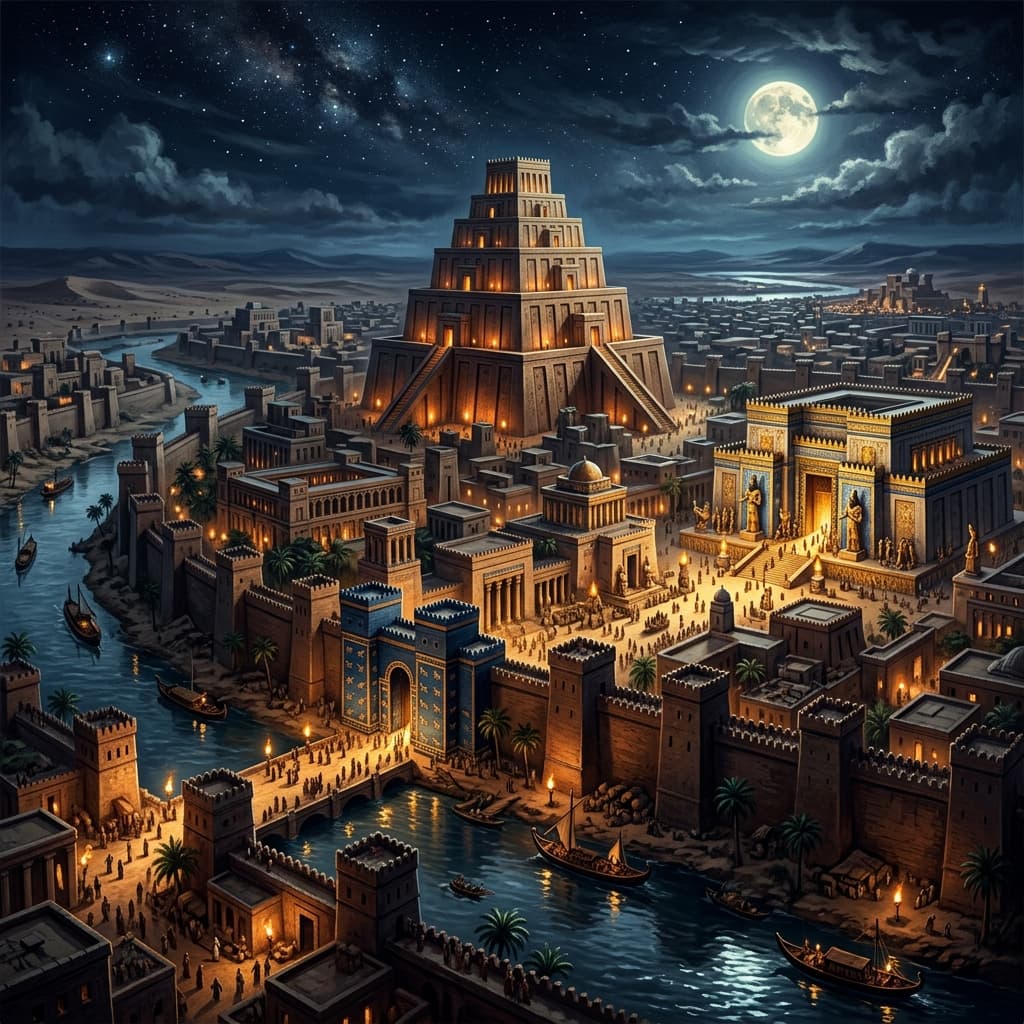
The great city of Marduk, center of the Babylonian Empire and home to the Esagila temple and the ziggurat Etemenanki. The name means 'Gate of the Gods' and the city was considered the axis mundi of the Mesopotamian cosmos.
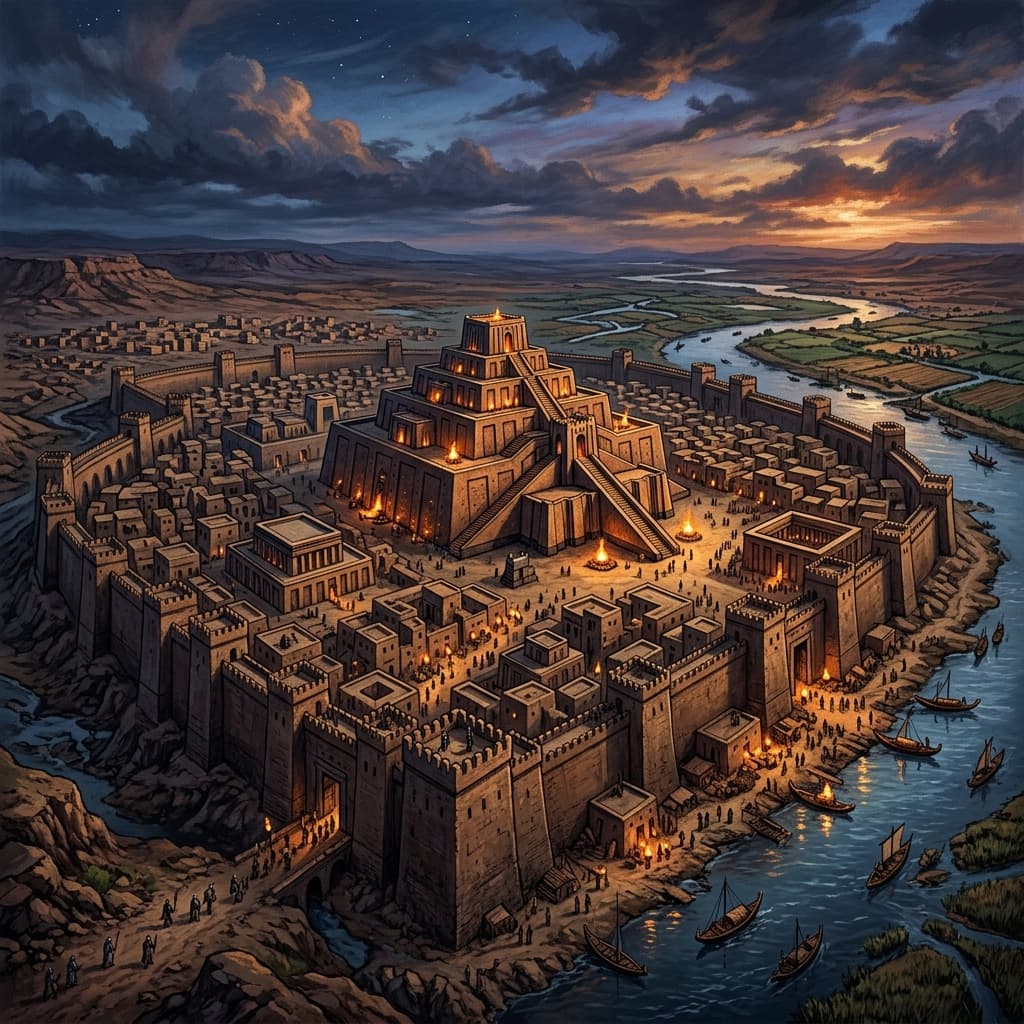
The city of Gilgamesh and Inanna, one of the first true cities in human history. Its mighty walls, said to be built by Gilgamesh himself, enclosed the great E-anna temple complex sacred to both Anu and Inanna.
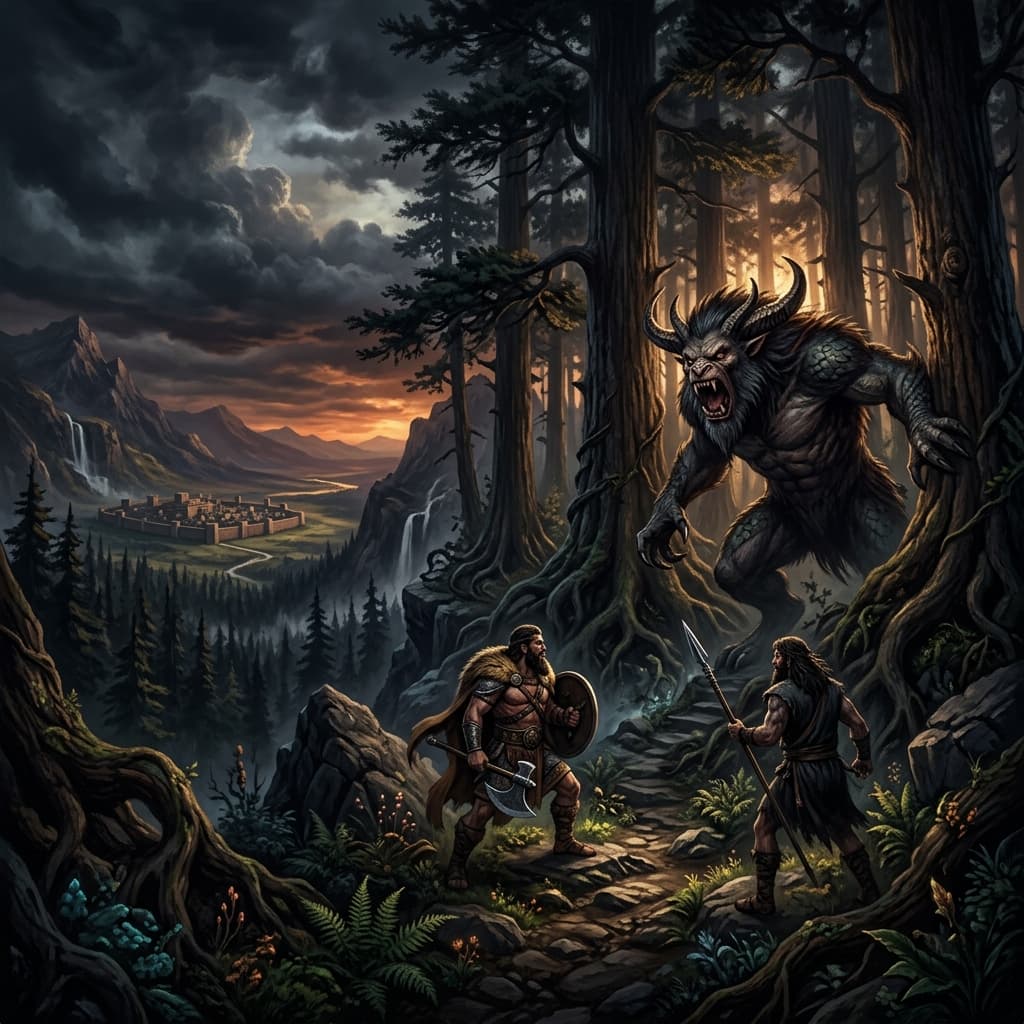
A vast primordial forest at the edge of civilization, guarded by the monster Humbaba appointed by Enlil. Gilgamesh and Enkidu ventured here to slay Humbaba and make their names immortal.
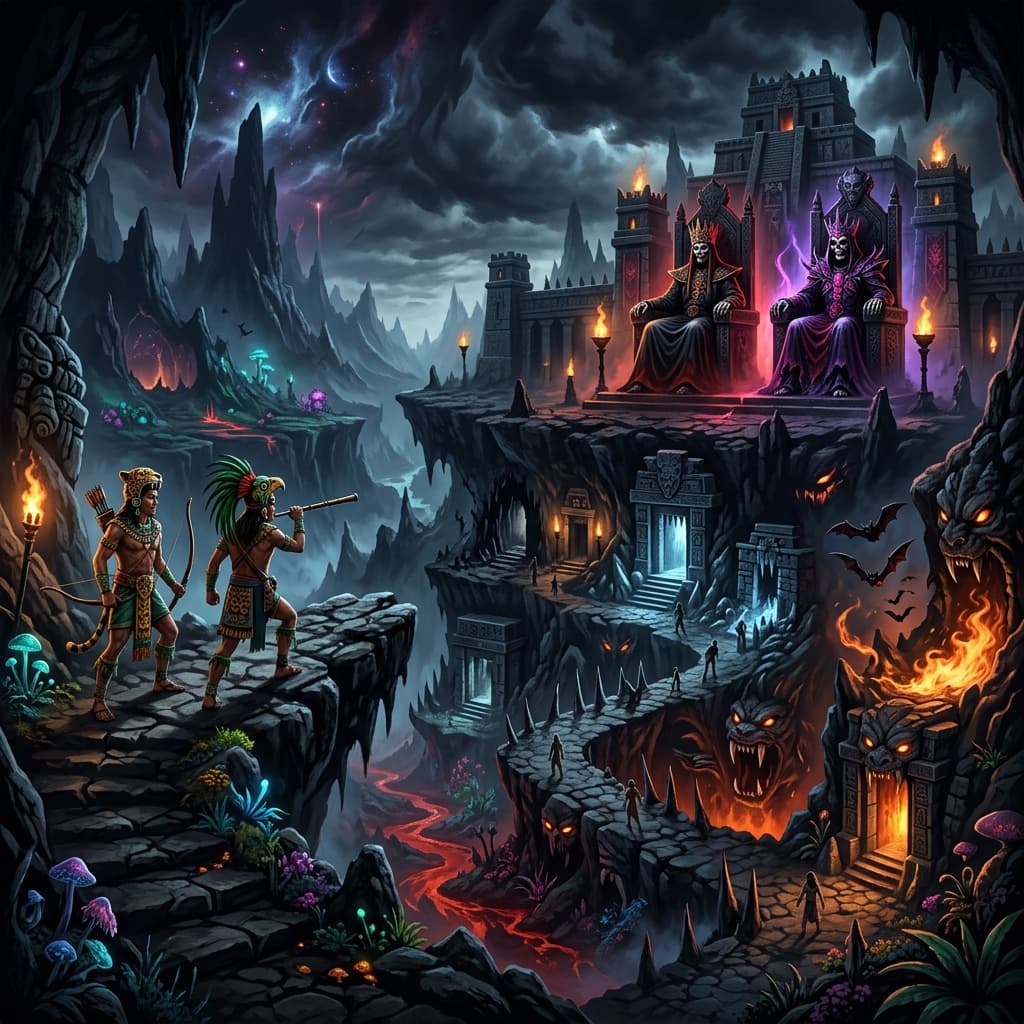
The Maya underworld, 'Place of Fear,' ruled by the death lords One Death and Seven Death. Souls must pass through houses of darkness, knives, cold, jaguars, fire, and bats. The Hero Twins descended here to defeat death itself.
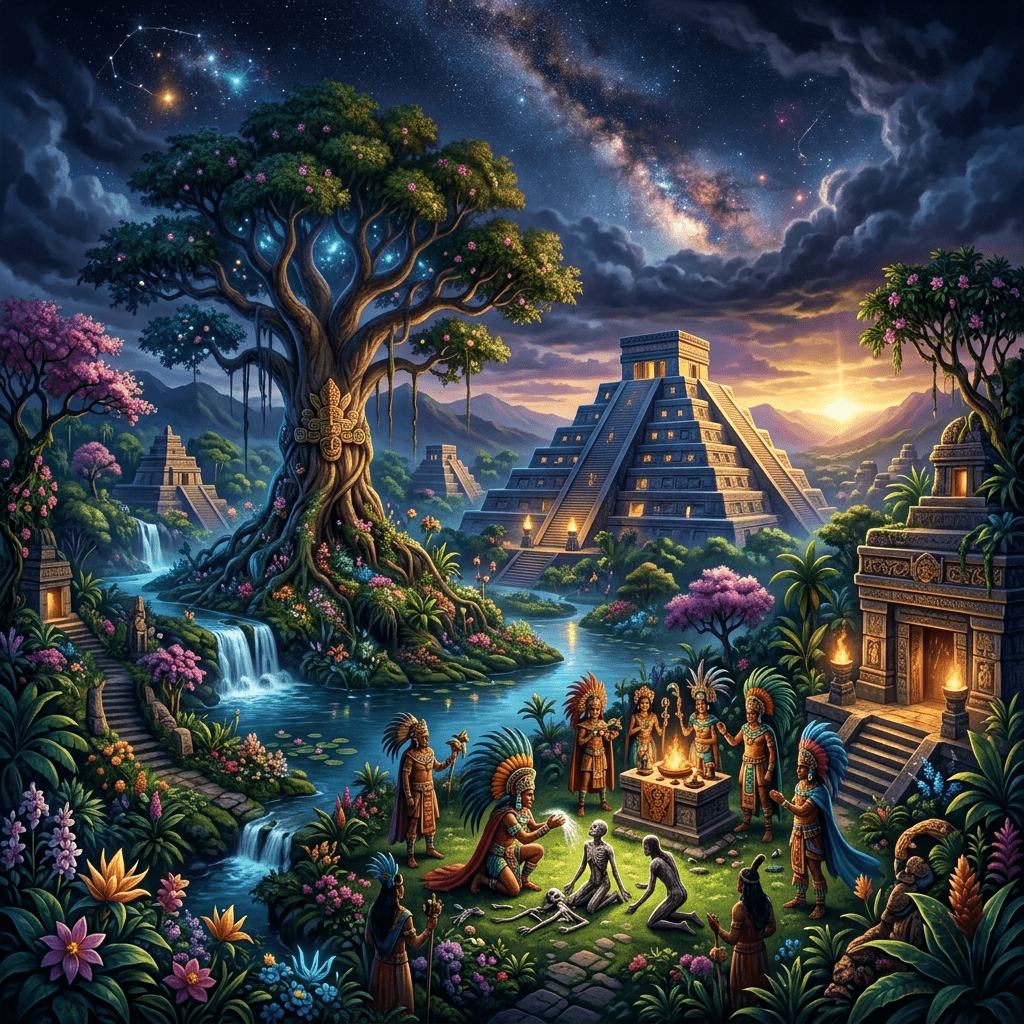
The Aztec paradise where the gods created humanity from the bones retrieved from Mictlan. A place of flowering trees and eternal spring, Tamoanchan represents the original state of creation before the current world age.
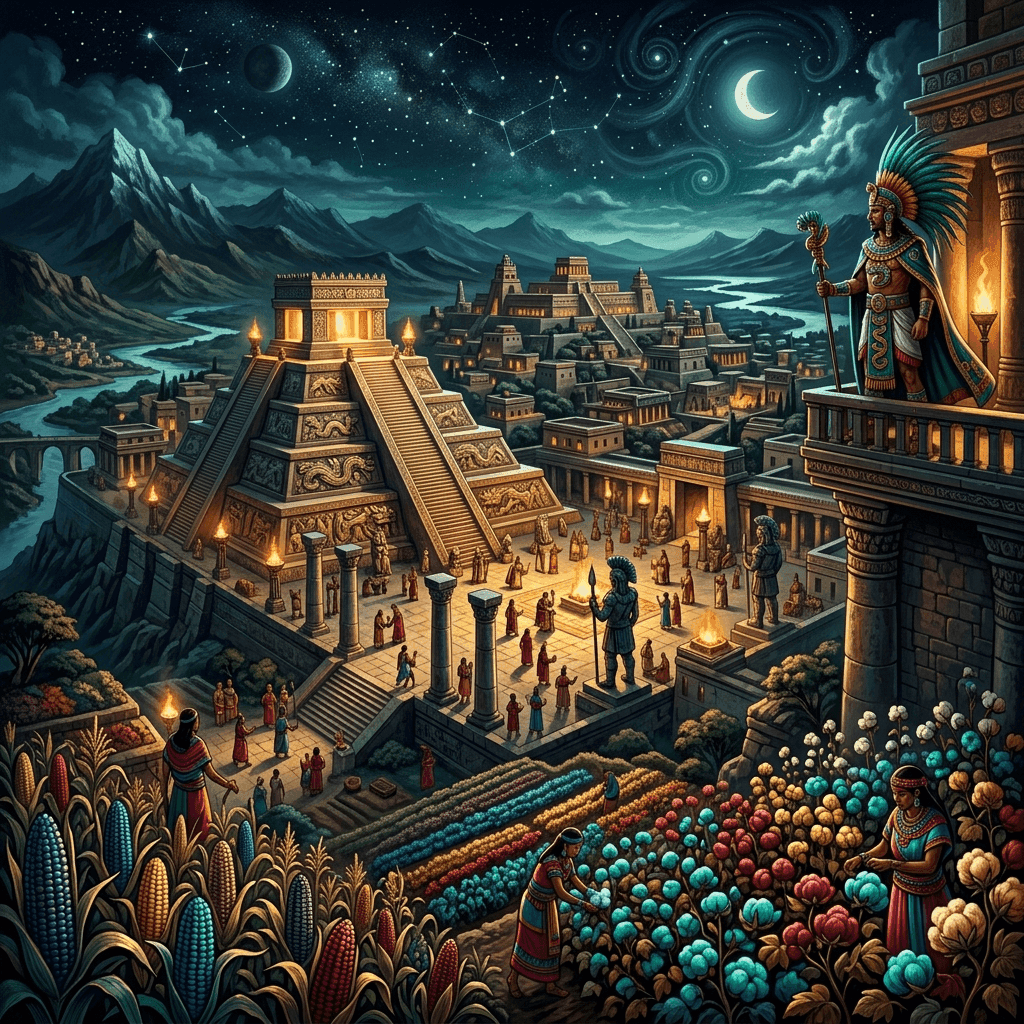
The legendary Toltec capital associated with Quetzalcoatl as priest-king. A place of artistic and cultural perfection where corn grew in brilliant colors and cotton grew already dyed. Quetzalcoatl was tricked into disgrace here by Tezcatlipoca.
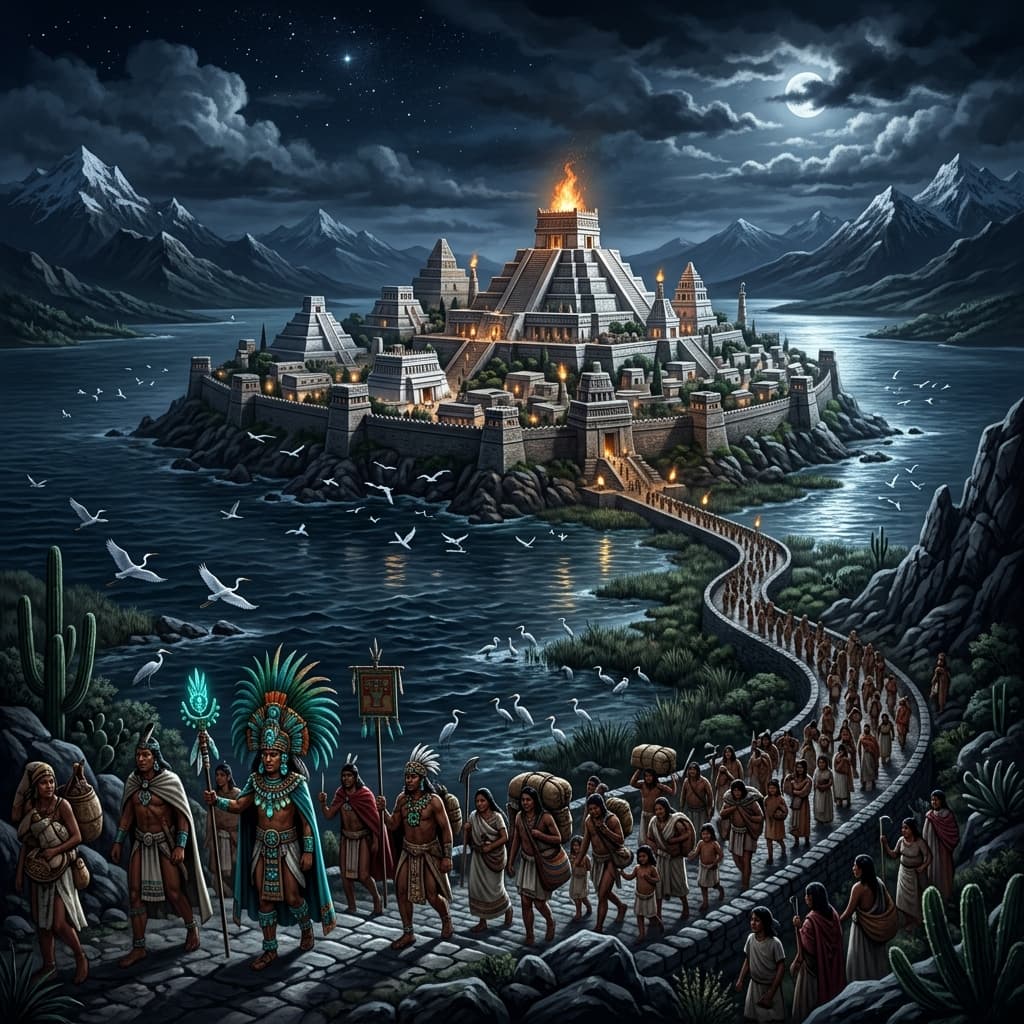
The mythical homeland of the Aztec people, 'Place of Whiteness' or 'Place of Herons.' From this island city, the Mexica began their long migration south, guided by Huitzilopochtli, until they found the eagle on the cactus that marked Tenochtitlan.
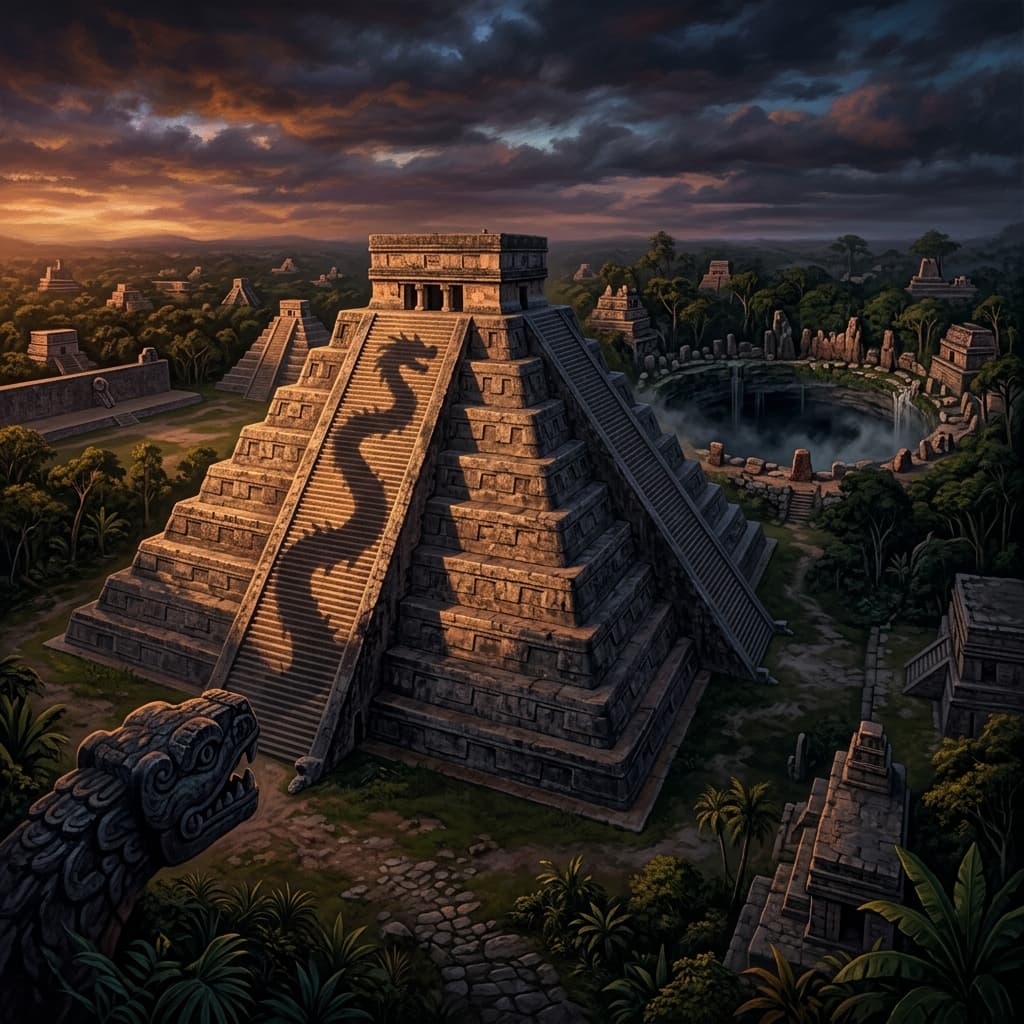
The great Maya-Toltec city dominated by El Castillo, the pyramid of Kukulkan. During the equinoxes, shadows create the illusion of a serpent descending the stairs. The cenote here received sacrificial offerings to Chaac.
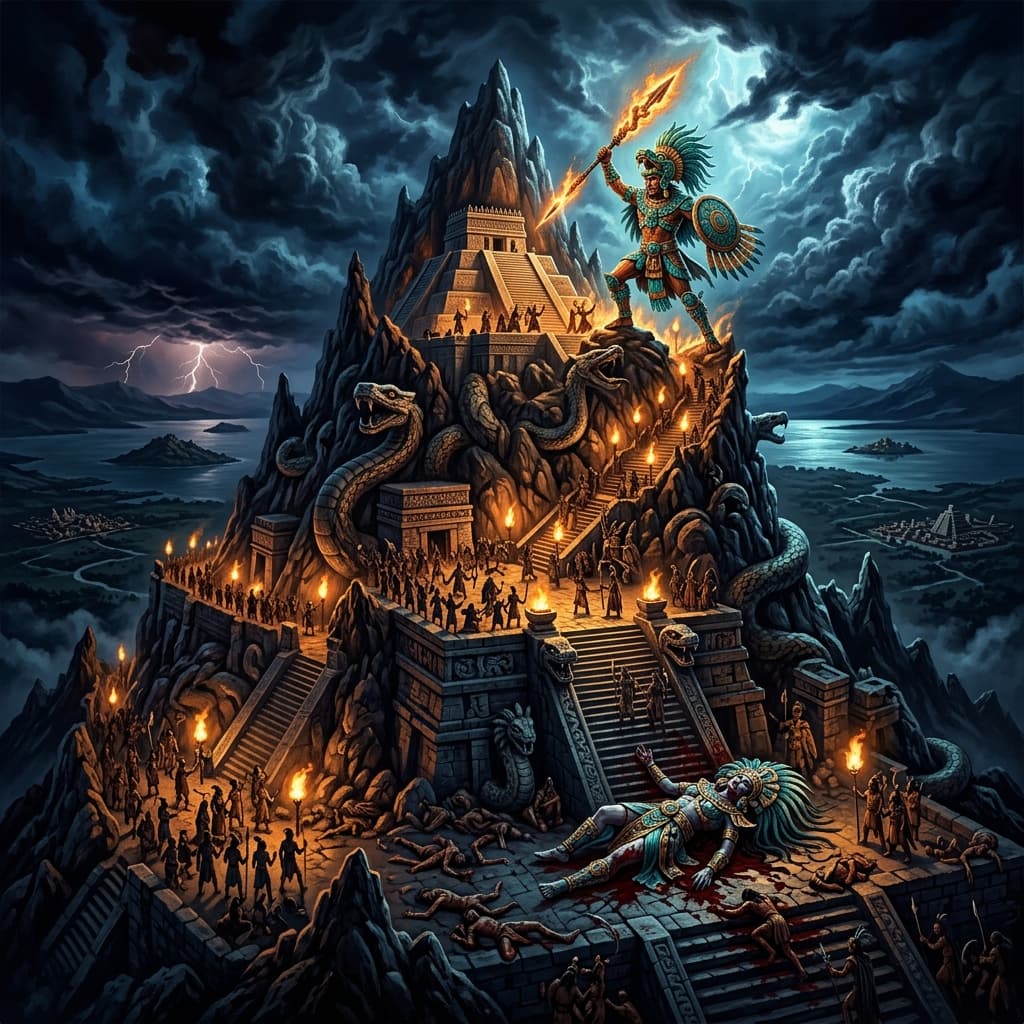
The mythical mountain where Huitzilopochtli was born fully armed to defeat his sister Coyolxauhqui and four hundred brothers. The Templo Mayor of Tenochtitlan was a recreation of this sacred mountain.
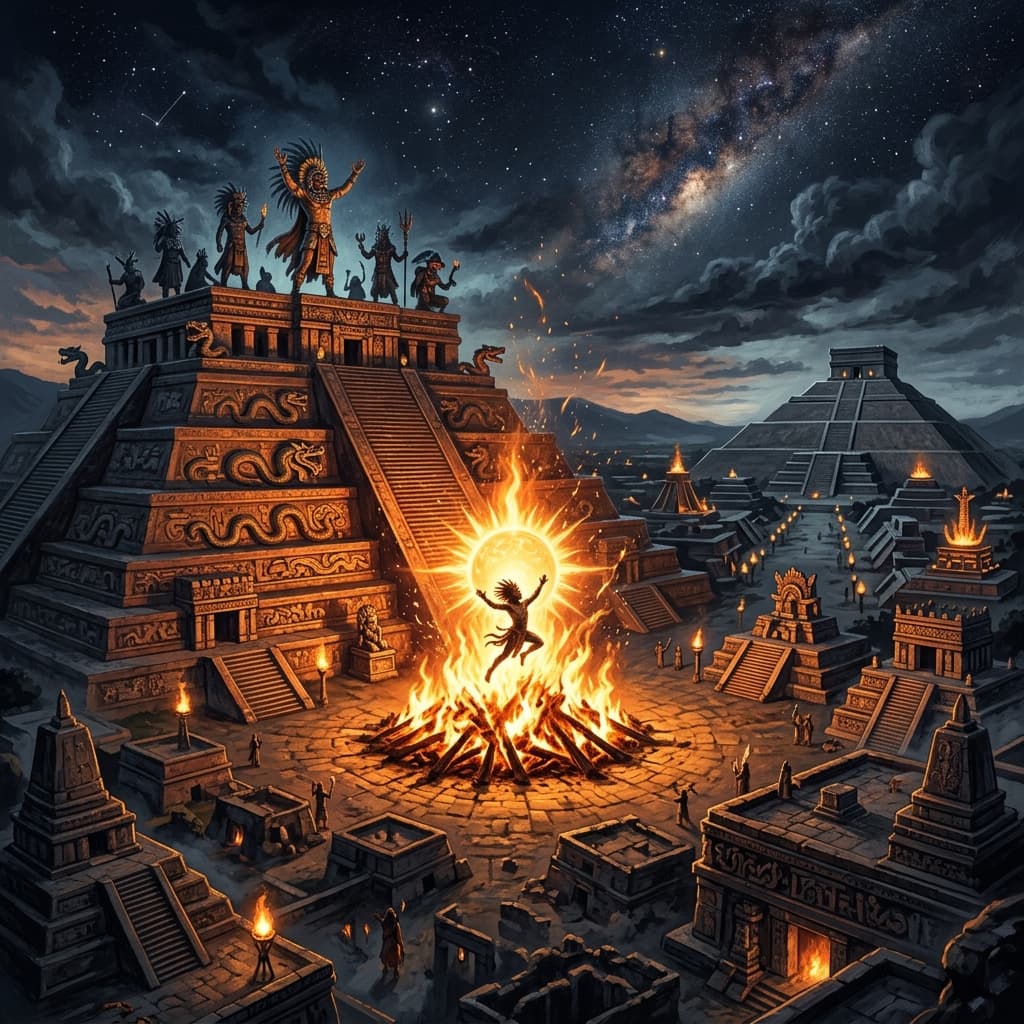
The 'Place Where Gods Are Made,' site of the Fifth Sun's creation. Here the gods gathered in darkness, and Nanahuatzin sacrificed himself in fire to become the sun. The Pyramid of the Sun and Pyramid of the Moon mark this sacred ground.
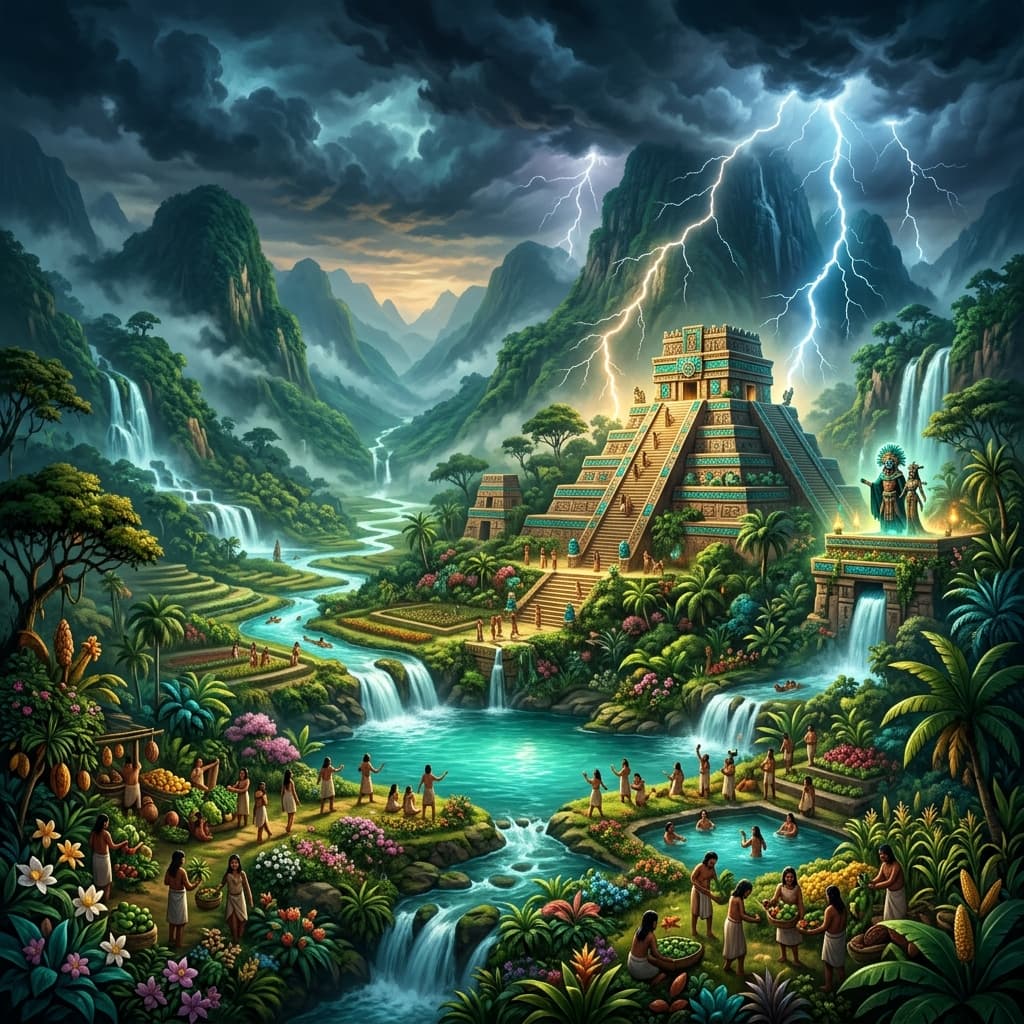
The earthly paradise ruled by Tlaloc, a place of eternal spring and abundance. Those who died by drowning, lightning, or water-related diseases went to Tlalocan rather than Mictlan, considered a blessed fate.
Showing 49–72 of 184