Source recordTranslation
Hittite Myths
Harry A. Hoffner Jr. (translator; ed. Gary M. Beckman) · 1990; 2nd ed. 1998 · Hittite (English translation)
Translation
Hittite Myths
Harry A. Hoffner Jr. (translator; ed. Gary M. Beckman)
The standard English translation of Hittite mythological texts, covering both the Anatolian myths preserved in rituals (the Illuyanka tales, the disappearance of Telipinu and other vanishing deities) and the Hurrian Kumarbi cycle translated into Hittite. Hoffner marks gaps and damaged passages throughout.
About this work
The standard English translation of Hittite mythological texts, covering both the Anatolian myths preserved in rituals (the Illuyanka tales, the disappearance of Telipinu and other vanishing deities) and the Hurrian Kumarbi cycle translated into Hittite. Hoffner marks gaps and damaged passages throughout.
Where to start
Start with the Illuyanka tales and the Disappearance of Telipinu, which are short and Anatolian; then read the Song of Kumarbi and the Song of Ullikummi together as a Hurrian cycle.
Figures in the text
Heroes and divinities who feature prominently, with where they appear.
Deities and immortals
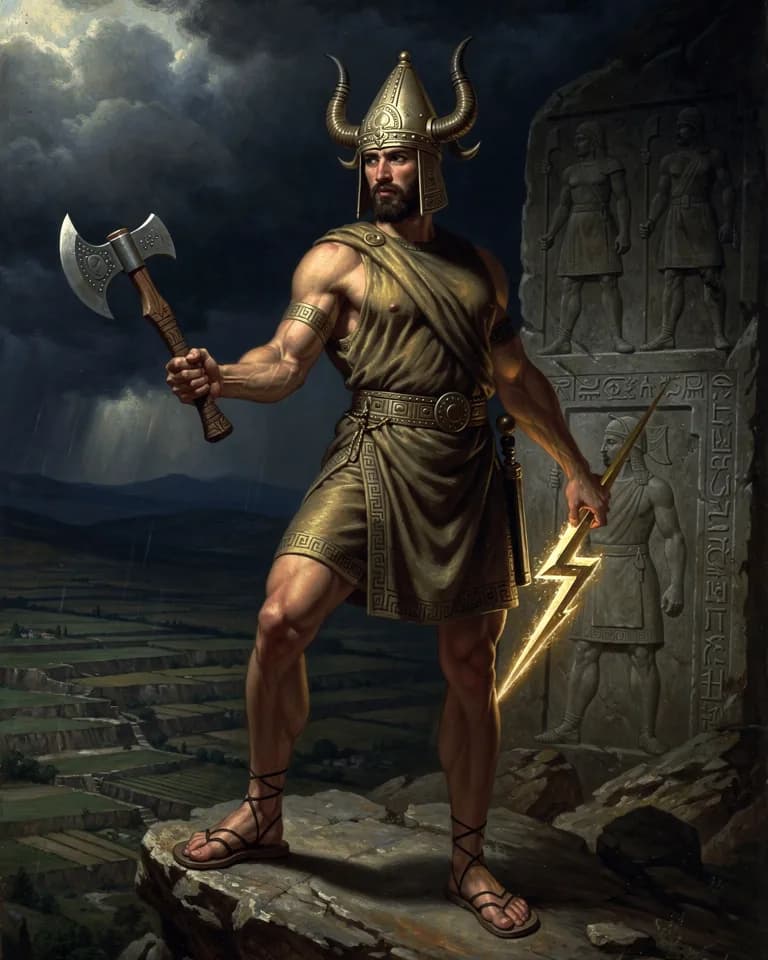 Tarhunna (the Storm-god of Hatti)Illuyanka tales (CTH 321); Kumarbi cycle (CTH 344-348)the Storm-god, defeated and then victorious against the serpent; the Hurrian Teššub of the Kumarbi cycle
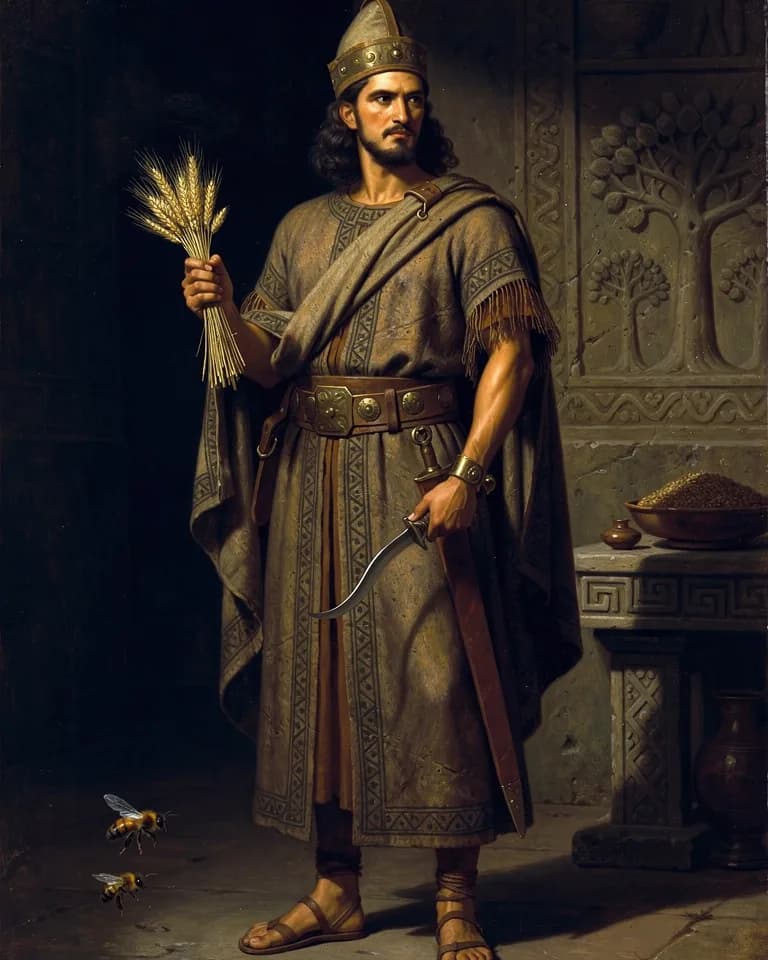 TelipinuThe Disappearance of Telipinu (CTH 324)the god whose angry departure starves the land
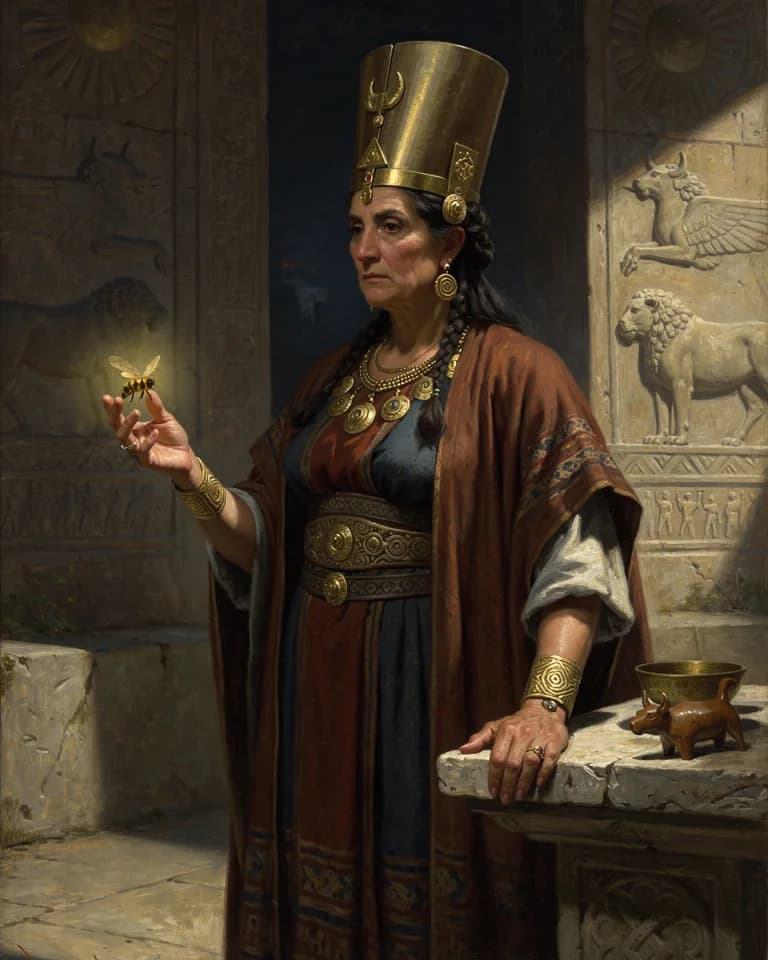 HannahannaThe Disappearance of Telipinu (CTH 324)the mother goddess who sends the bee to find Telipinu
 InaraIlluyanka tales, first version (CTH 321)prepares the feast that traps the serpent
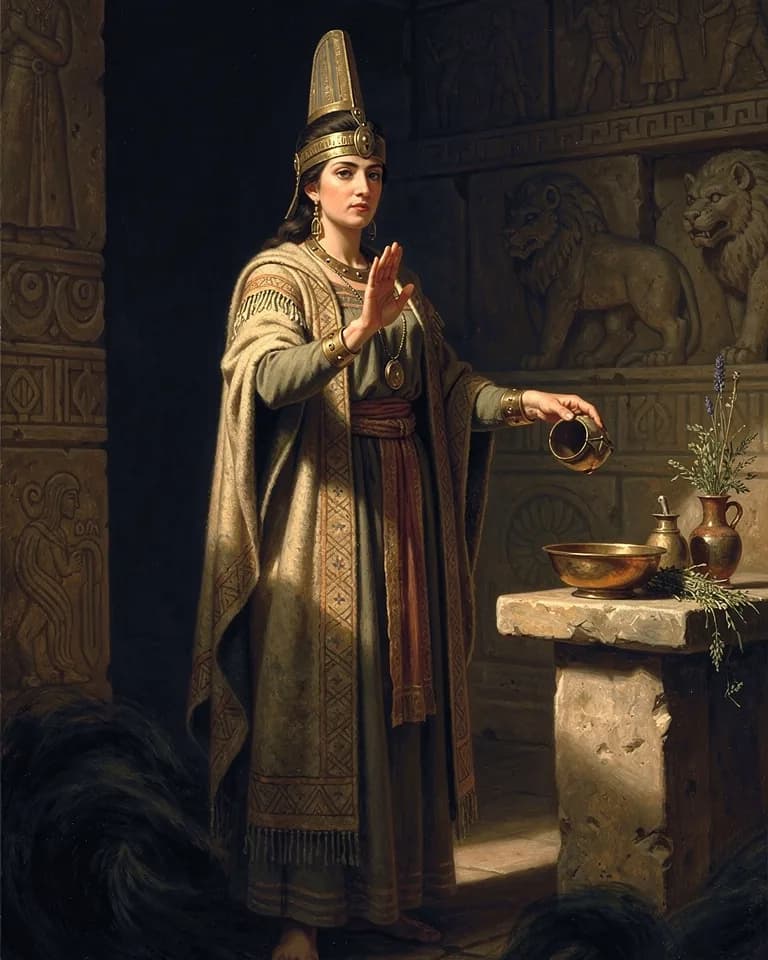 KamrušepaThe Disappearance of Telipinu (CTH 324)performs the rite that soothes Telipinu's anger
Key scenes
Turning points of the work, in reading order.
The Serpent at the Feast
Inara lays out a feast; the serpent and its children eat and drink until they cannot squeeze back into their hole, and the mortal Hupašiya binds them for the Storm-god.
The Bee Finds Telipinu
After the Sun-god's eagle and the Storm-god himself fail, Hannahanna's bee finds Telipinu asleep in a meadow near Lihzina and stings him awake.
Stories drawn from it
Retellings in the atlas that quote or cite this work.
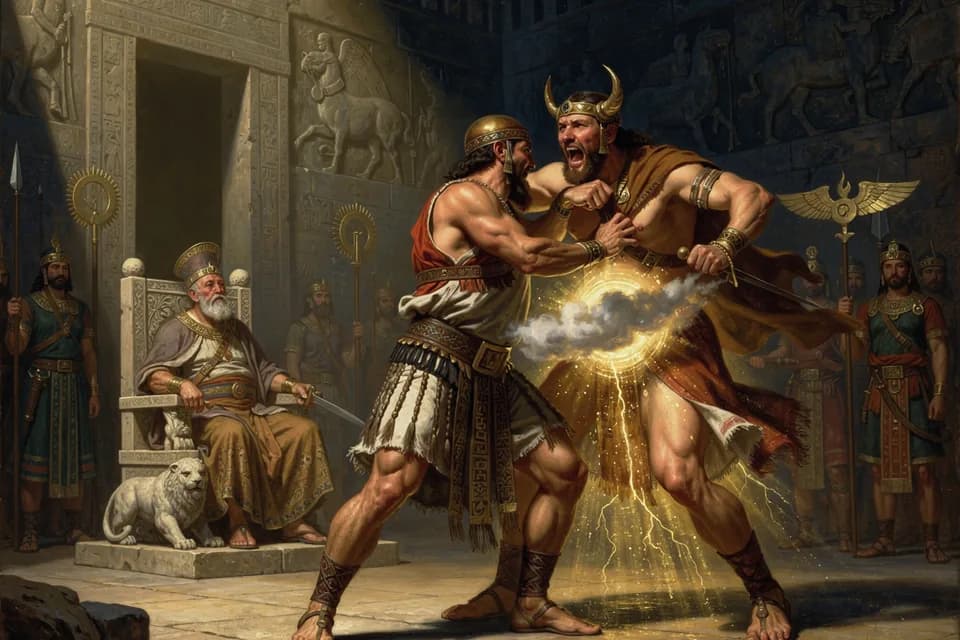 The Song of Kumarbi: Kingship in HeavencosmologyA Hurrian song, preserved in Hittite translation, in which kingship in heaven passes from Alalu to Anu to Kumarbi, who bites off Anu's loins and finds himself pregnant with the storm-god who will overthrow him.
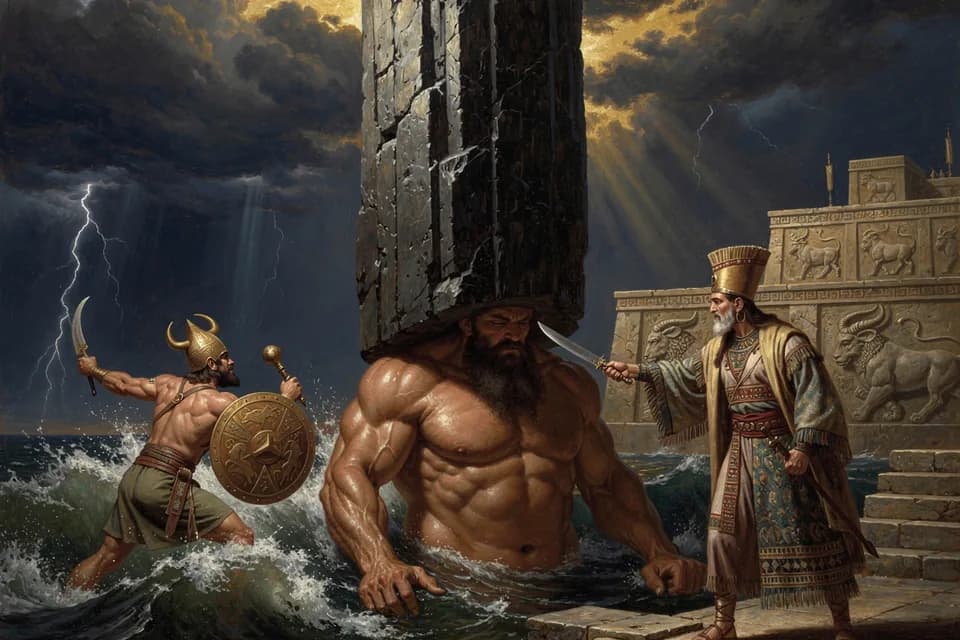 The Song of UllikummiwarKumarbi fathers a giant of basalt on a great rock and hides it on the shoulder of Upelluri in the sea, where it grows until it reaches heaven; Teššub is defeated until Ea cuts the monster from its base with the ancient copper tool that once separated heaven and earth.
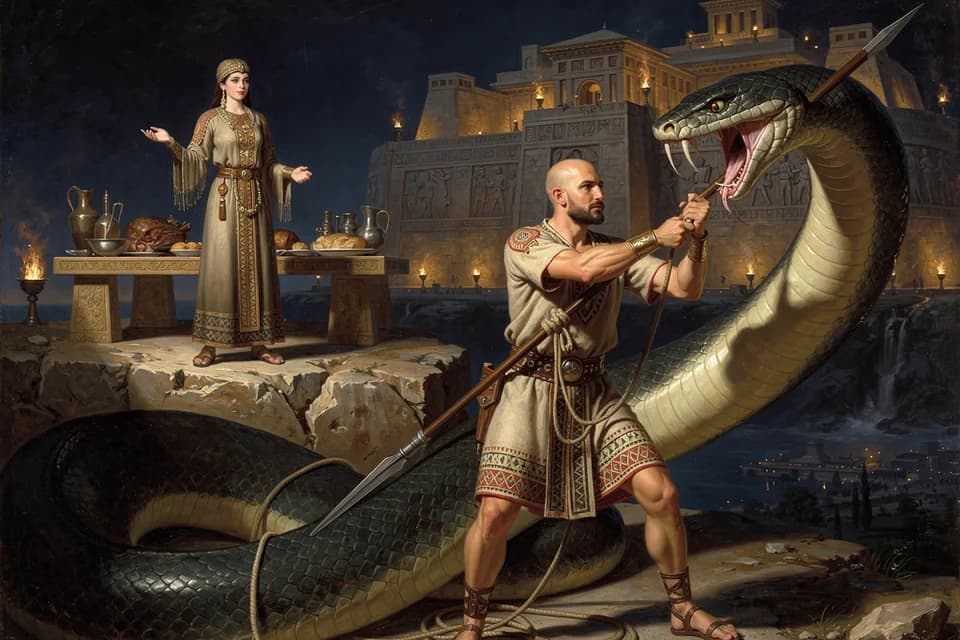 The Storm-god and the Serpent IlluyankawarTwo versions of an Anatolian myth recited at the Purulli festival of Nerik: in one the goddess Inara traps the serpent with a feast, in the other the Storm-god's son wins back his father's stolen heart and eyes.
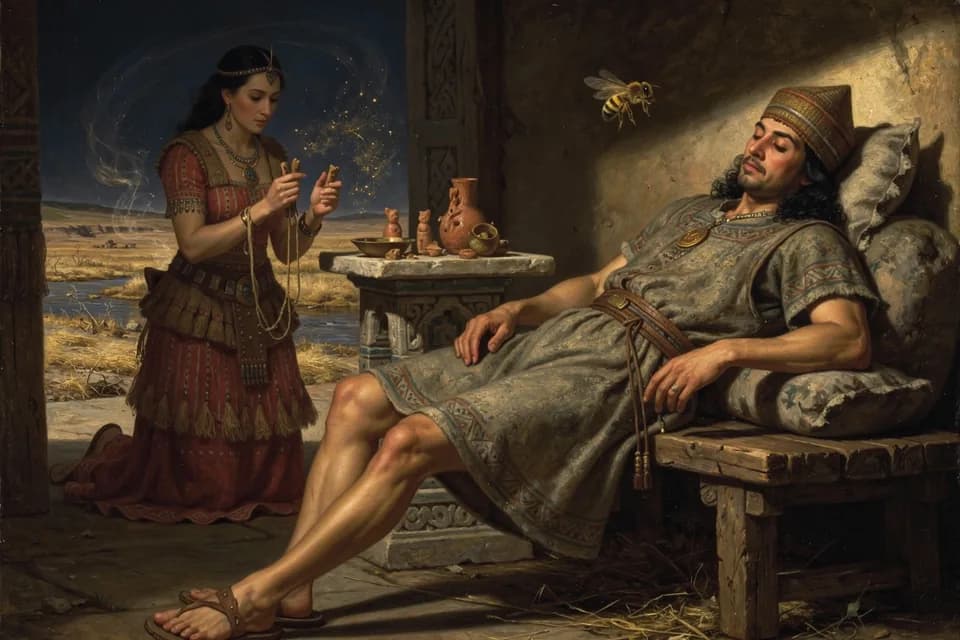 The Disappearance of TelipinumythThe farming god Telipinu leaves in anger and the land withers; after the gods' searches fail, Hannahanna's bee finds him asleep, and the goddess Kamrušepa's ritual locks his rage away in the Dark Earth.
About this record
By Elizabeth Stein for Mythos Atlas. About the author. Editorial notes are grounded in the site's cited sources and can be challenged through the contact page.
Dates and authorship follow standard scholarly references; for many ancient works both are approximate or disputed.