Persian
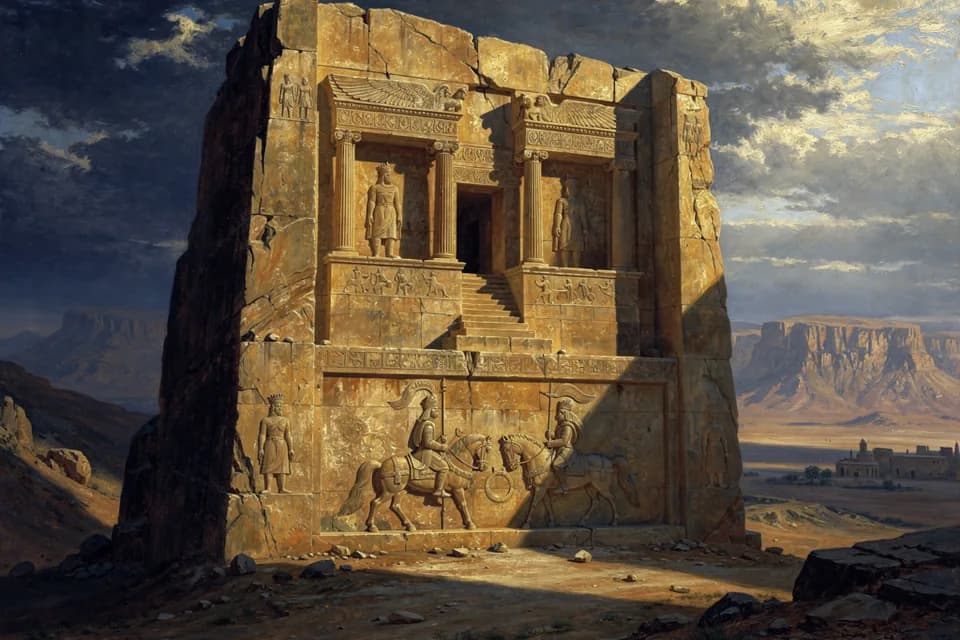
Naqsh-e Rostam
The cliff near Persepolis bearing the rock-cut tombs of Darius I and other Achaemenid kings and the Sasanian relief of Ardashir I receiving the ring of kingship from Ohrmazd, whose horse tramples Ahriman.
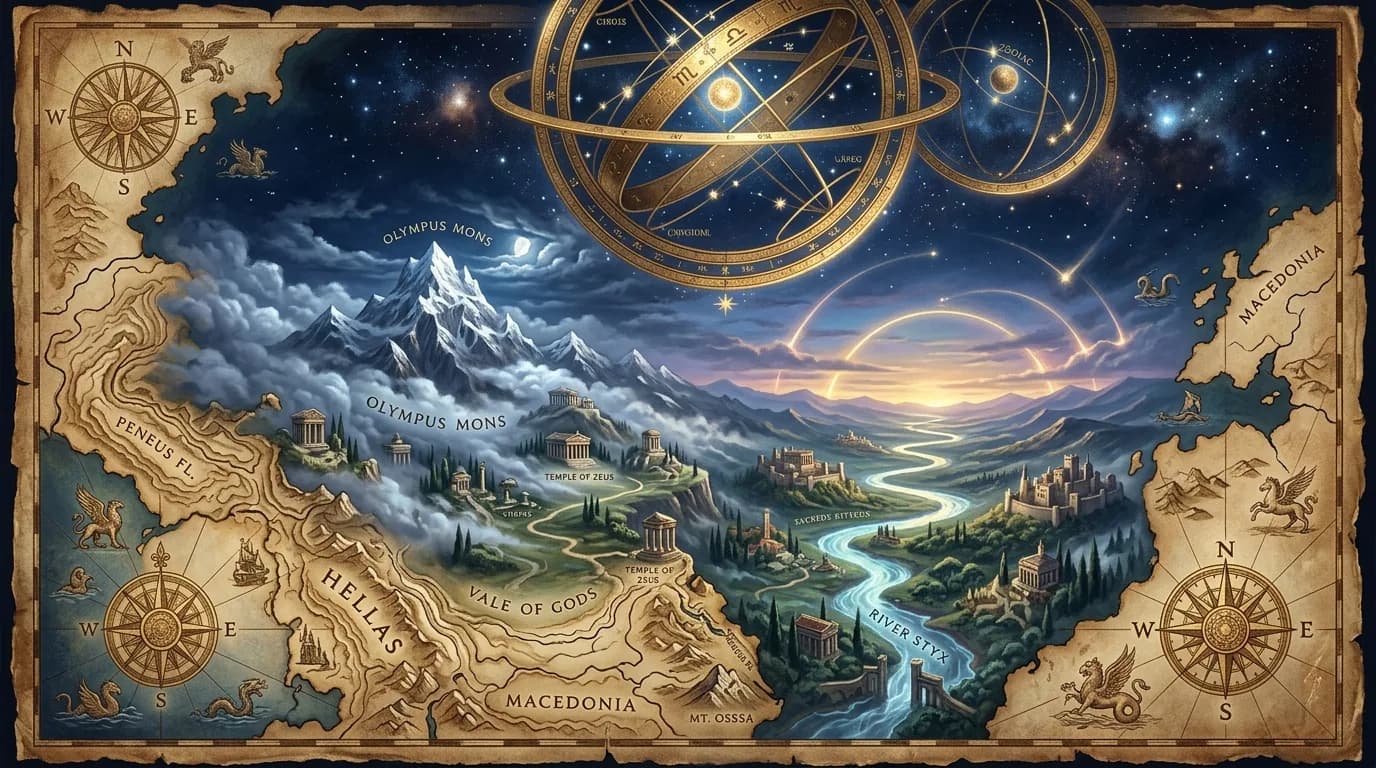
Sacred Geography
Temples, realms and sacred sites, on the map and by tradition, type or era.
Catalog pictures are illustrations, not historical artworks. About our images
The cliff near Persepolis bearing the rock-cut tombs of Darius I and other Achaemenid kings and the Sasanian relief of Ardashir I receiving the ring of kingship from Ohrmazd, whose horse tramples Ahriman.
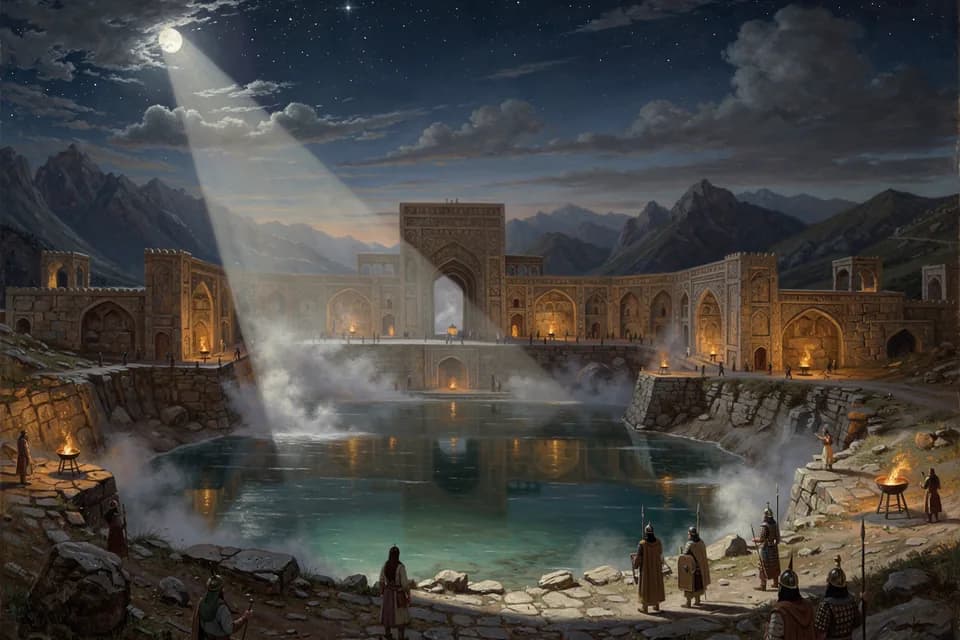
The Sasanian royal sanctuary in northwestern Iran built around a crater lake, home of Adur Gushnasp, the great fire of the warriors and kings, one of the three most sacred fires of Sasanian Zoroastrianism.
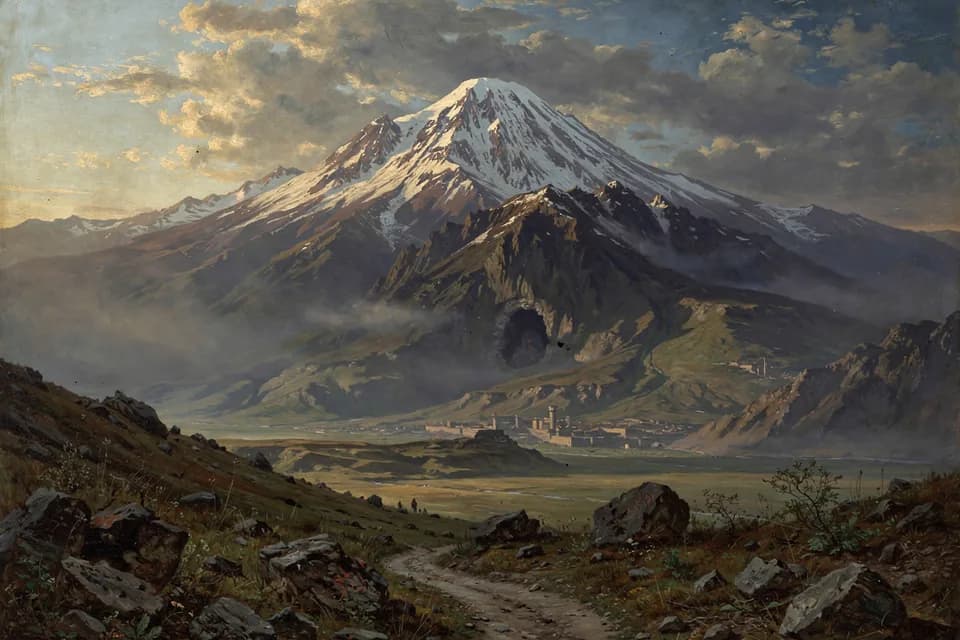
The volcanic peak in the Alborz range northeast of Tehran, the highest mountain in Iran, in which the Shahnameh's tyrant Zahhak lies chained in a cave, and which Middle Persian tradition connects with the binding of the dragon Azhi Dahaka.
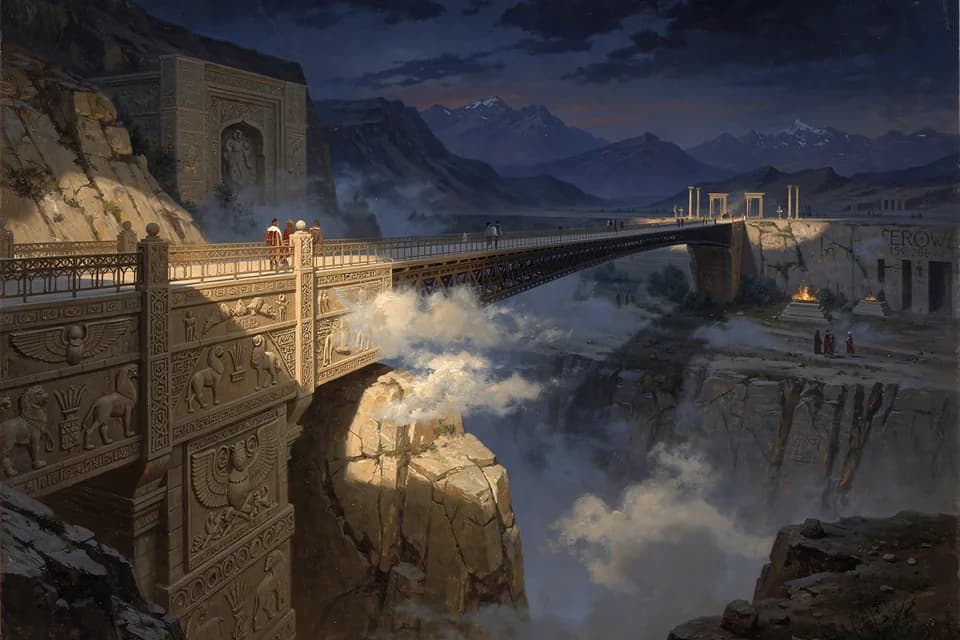
The Bridge of the Separator, which every soul must cross on the fourth dawn after death: broad for the righteous, who are met by a beautiful maiden, and narrow as a blade for the wicked, who fall into the House of the Lie.
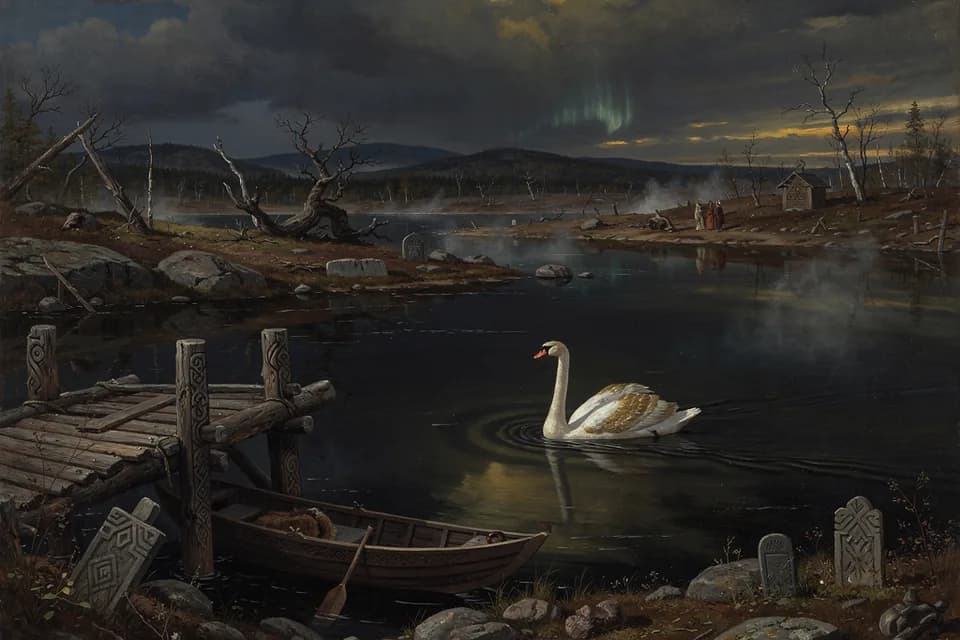
The land of the dead in Finnish tradition, ruled by Tuoni, lying beyond a black river on which the swan of Tuonela swims and across which Tuoni's daughter ferries the dead.
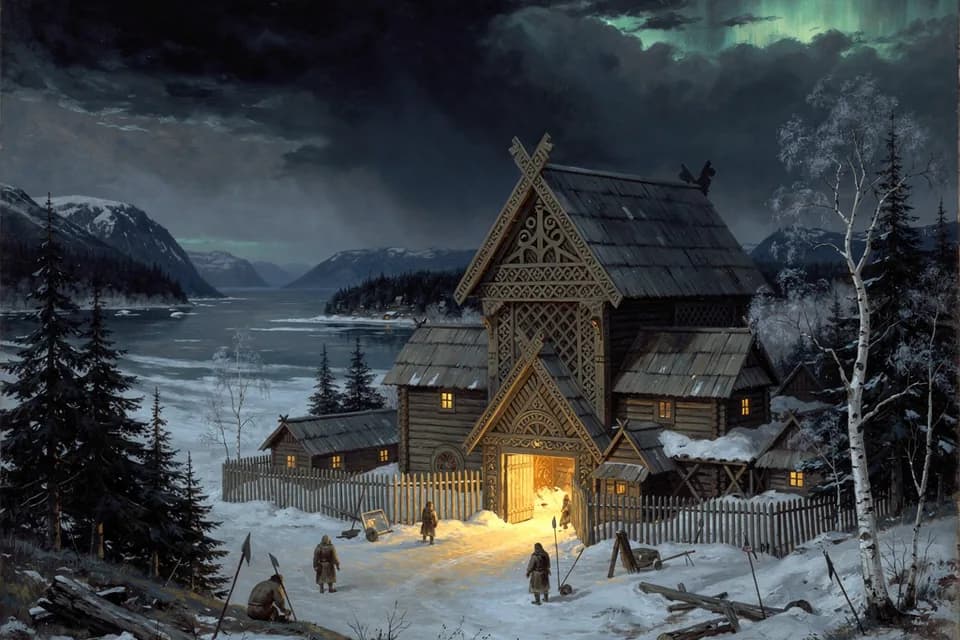
The dark, cold land of the North ruled by Louhi, home of the Sampo and of the maidens the Kalevala heroes seek as brides, a hostile and magical realm opposite the heroes' home of Kalevala.
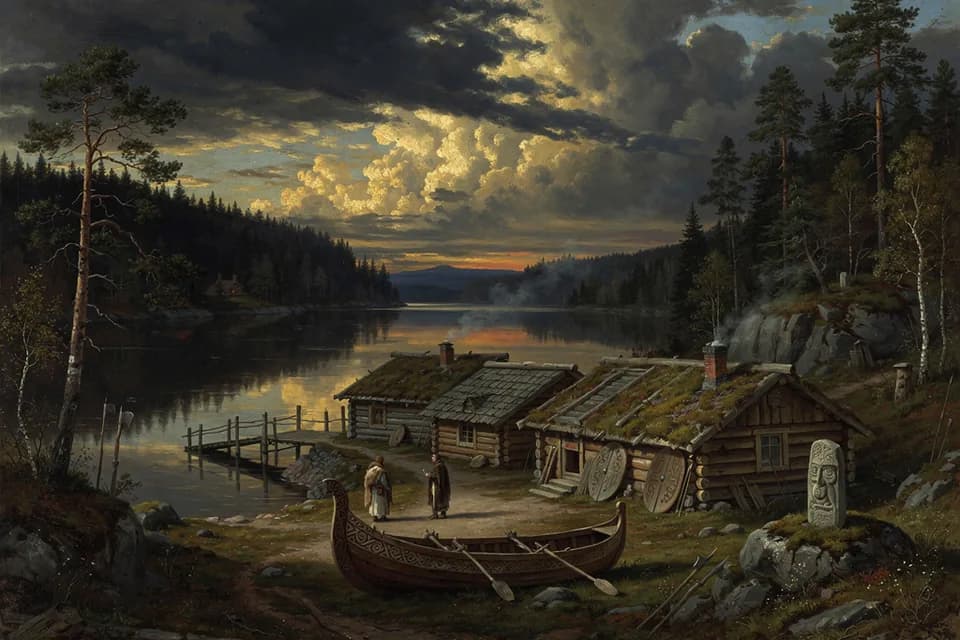
The heroes' homeland in the Kalevala, the land of Kaleva's descendants where Väinämöinen, Ilmarinen, and Lemminkäinen live, and which Lönnrot's title names; a mythic counterpart to the dark North of Pohjola.
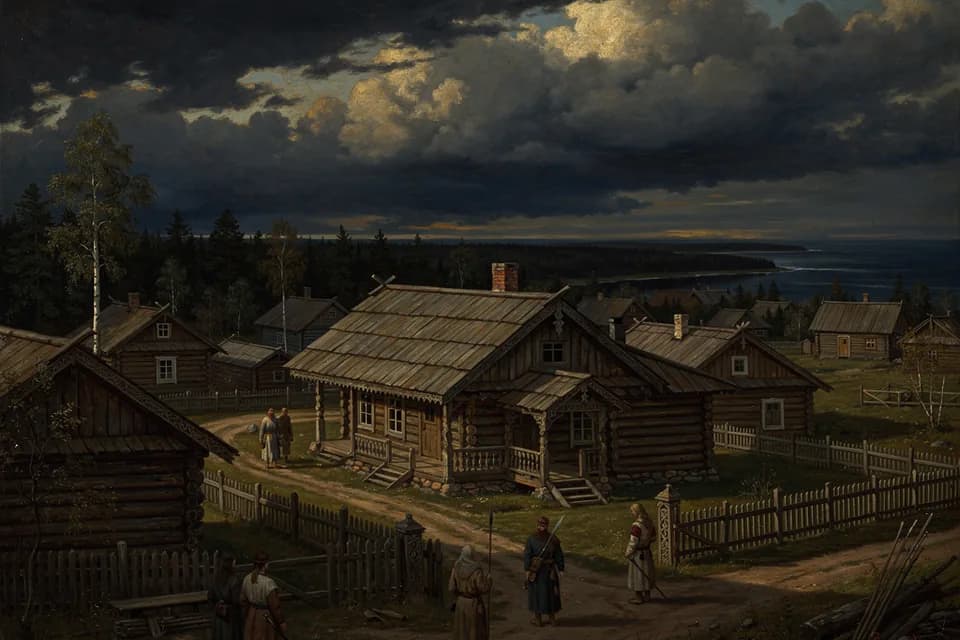
The village and parish in Viena (White Sea) Karelia, now in the Russian Republic of Karelia, whose runo-singers, above all Arhippa Perttunen of nearby Latvajärvi, sang thousands of lines to Elias Lönnrot in 1834.
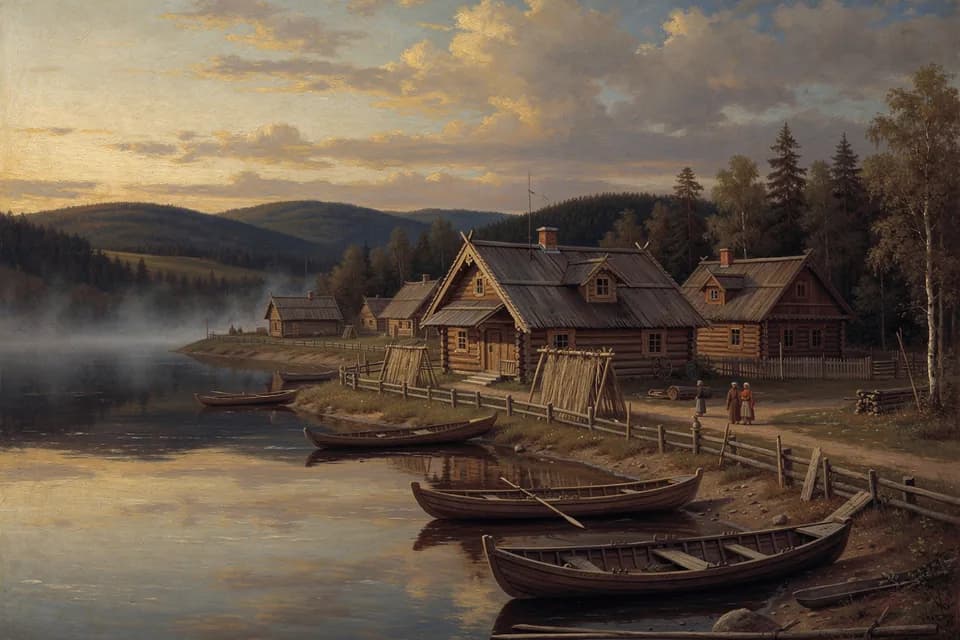
The Viena Karelian village formerly called Uhtua, visited by Lönnrot and other collectors of runo-song, and renamed Kalevala in 1963 in honor of the epic; now the center of the Kalevala district of the Republic of Karelia.
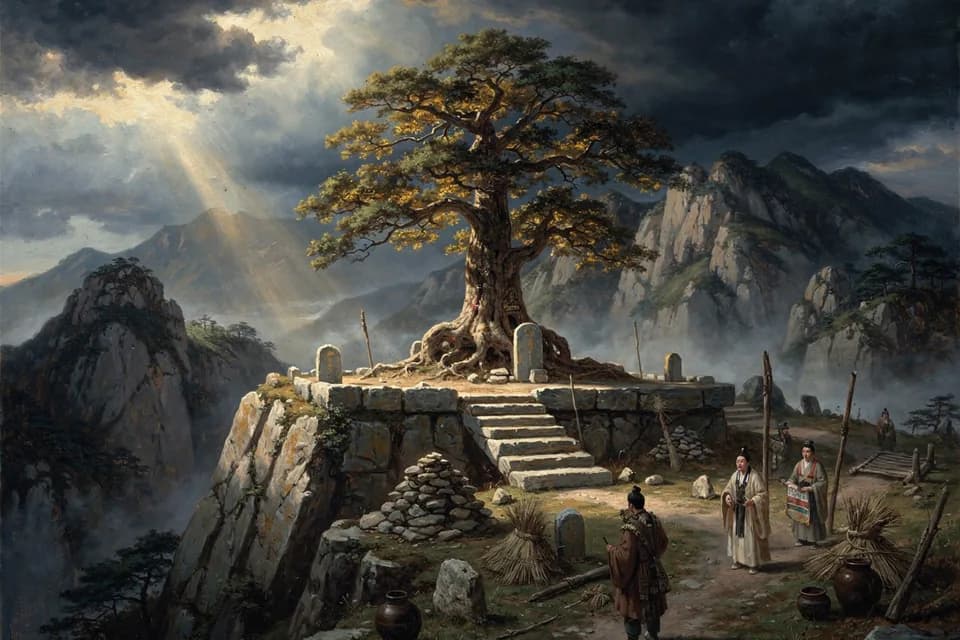
The mountain in North Korea that Iryeon's thirteenth-century note identifies as Mount Taebaek, where Hwanung descended beneath the sacred altar tree; other traditions place Taebaek at Baekdusan or at Taebaeksan in the south.
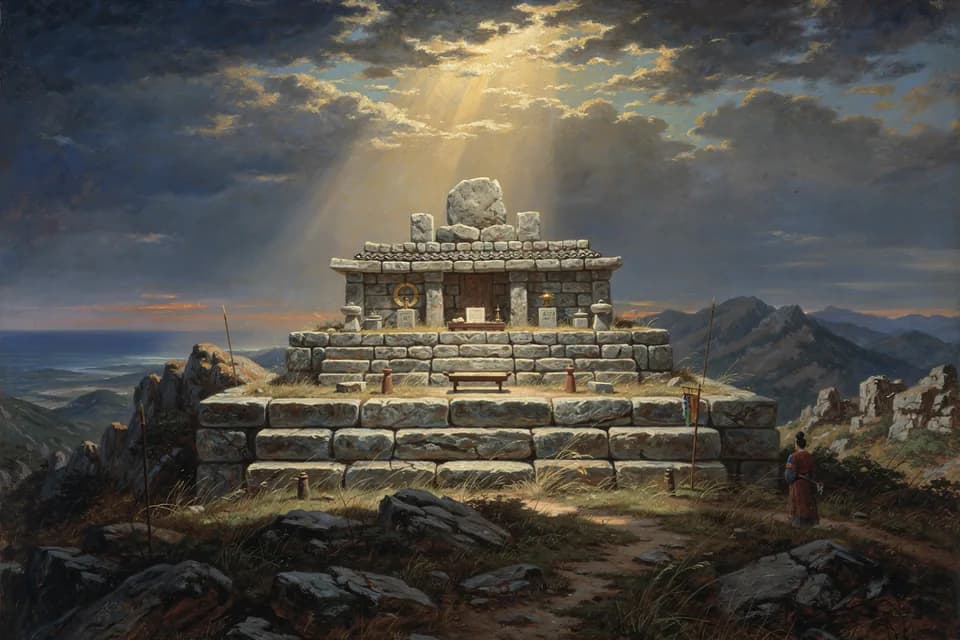
The stone altar on the summit of Mount Mani on Ganghwa Island, traditionally said to have been built by Dangun for sacrifices to heaven, where rites are held on National Foundation Day and the National Sports Festival torch is lit.
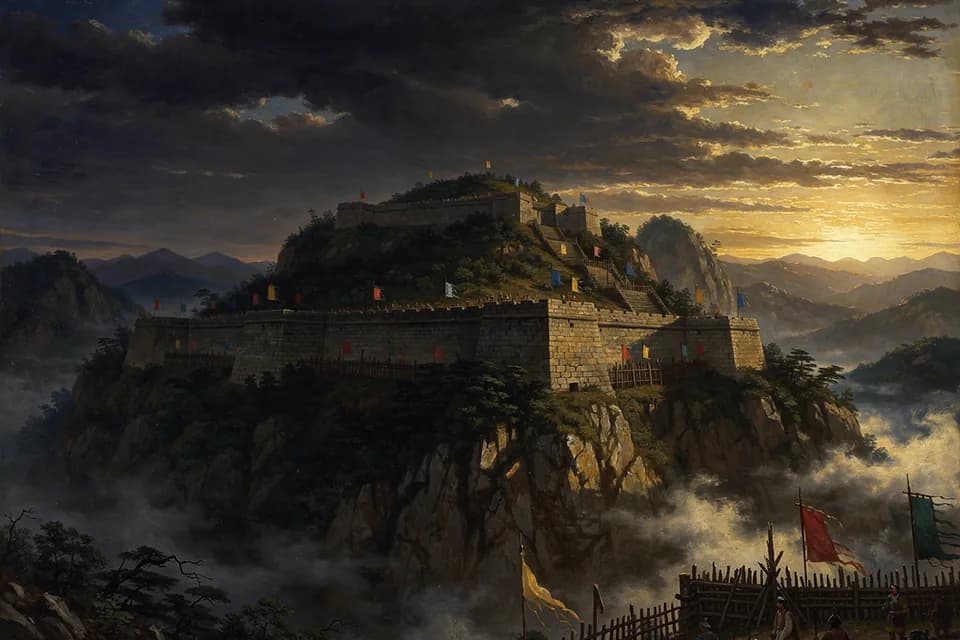
The flat-topped mountain fortress near Huanren, Liaoning, China, widely identified as Holbon or Jolbon, where the Gwanggaeto Stele and the Samguk Sagi say Jumong founded Goguryeo's first capital.
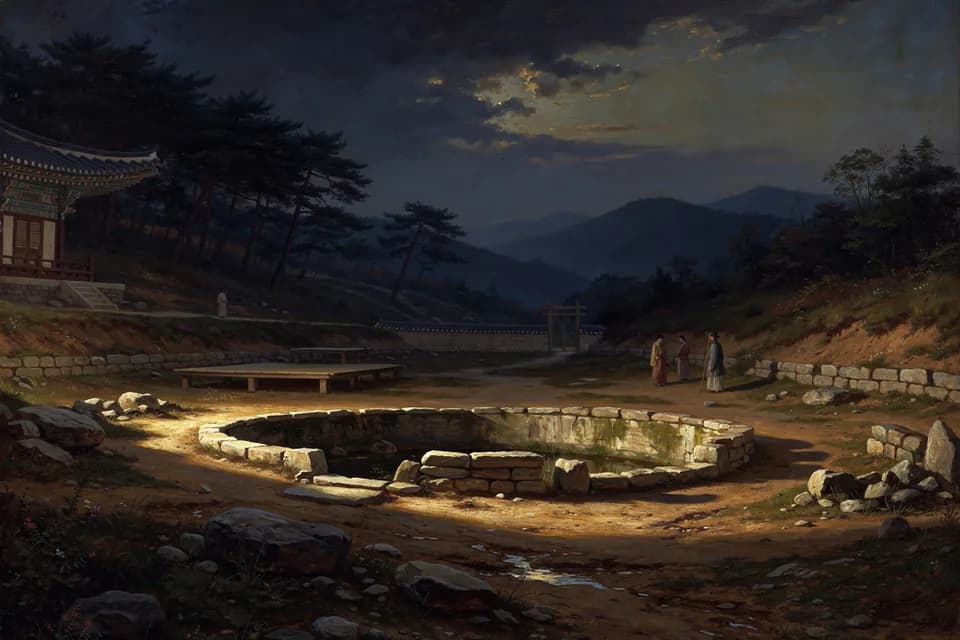
The well site in Gyeongju where, in the Samguk Yusa and Samguk Sagi, a white horse knelt beside the egg from which Silla's founder Bak Hyeokgeose was born; excavated as the site of an ancient shrine.
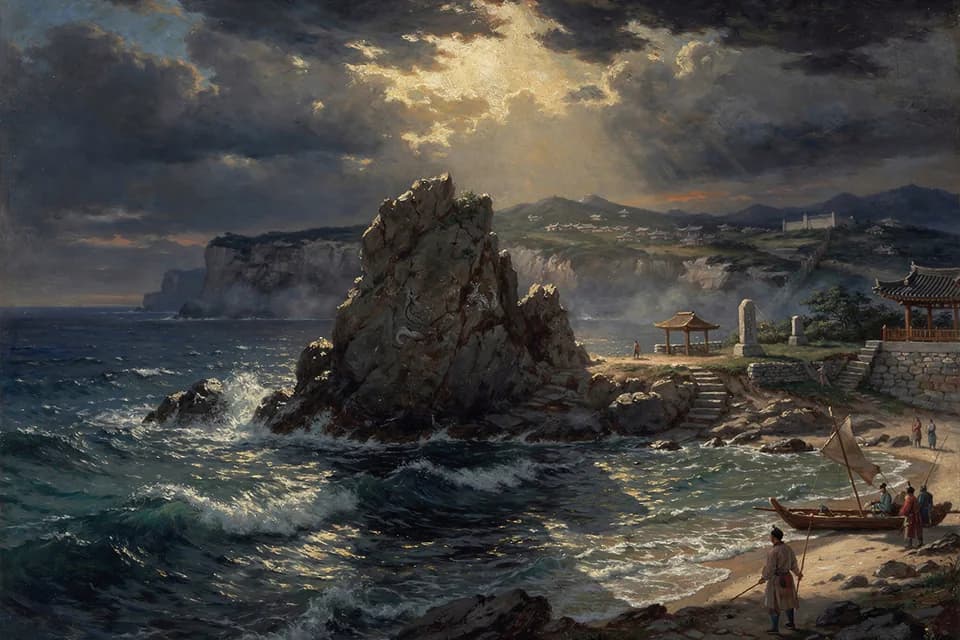
The rocky islet off the Gyeongju coast traditionally identified as the underwater tomb of King Munmu of Silla, who asked to be buried in the East Sea so that he could become a dragon and guard the kingdom.
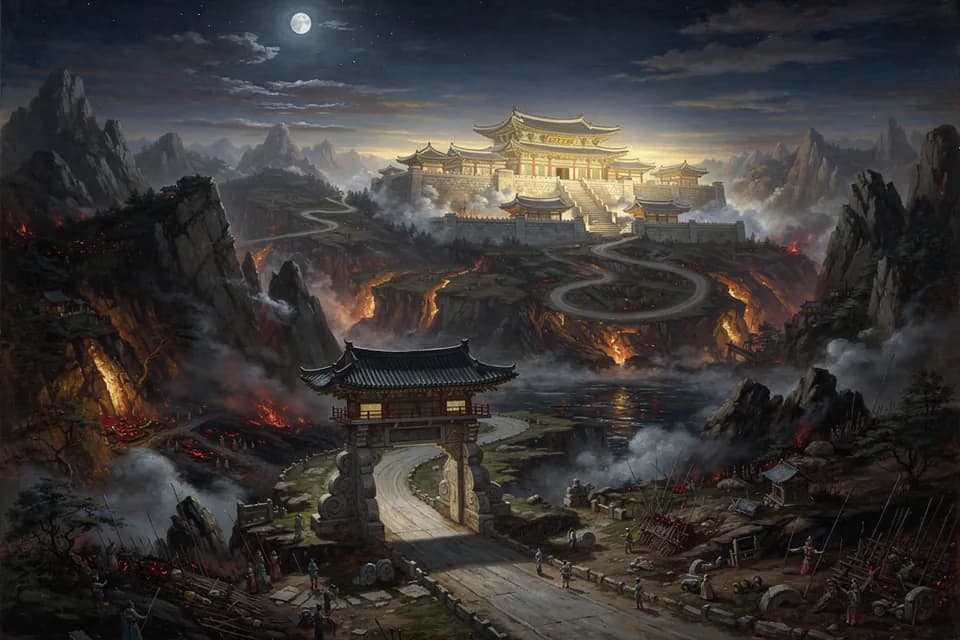
The 'other world' of the dead in Korean belief, reached by a long road across mountains, rivers, and hells, beyond which lies the Western Heaven where Princess Bari found the water of life; the realm to which she guides the souls of the dead.
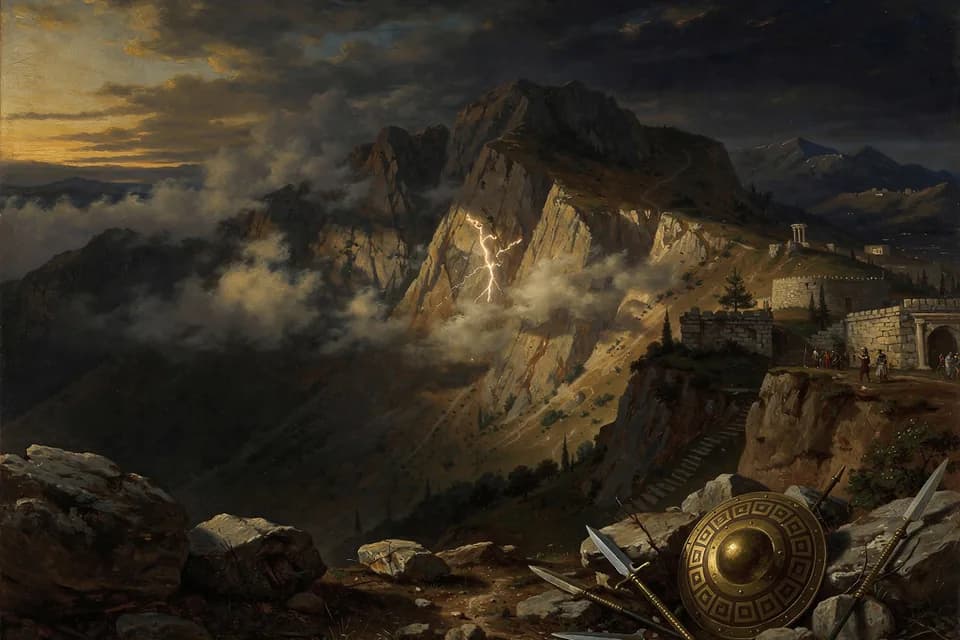
The mountain range in central Greece, south of the Thessalian plain, from which Hesiod says the Titans fought their ten-year war against the Olympian gods on Olympus.
Showing 169–184 of 184