Finnish Tradition (Kalevala)Creature
Swan of Tuonela
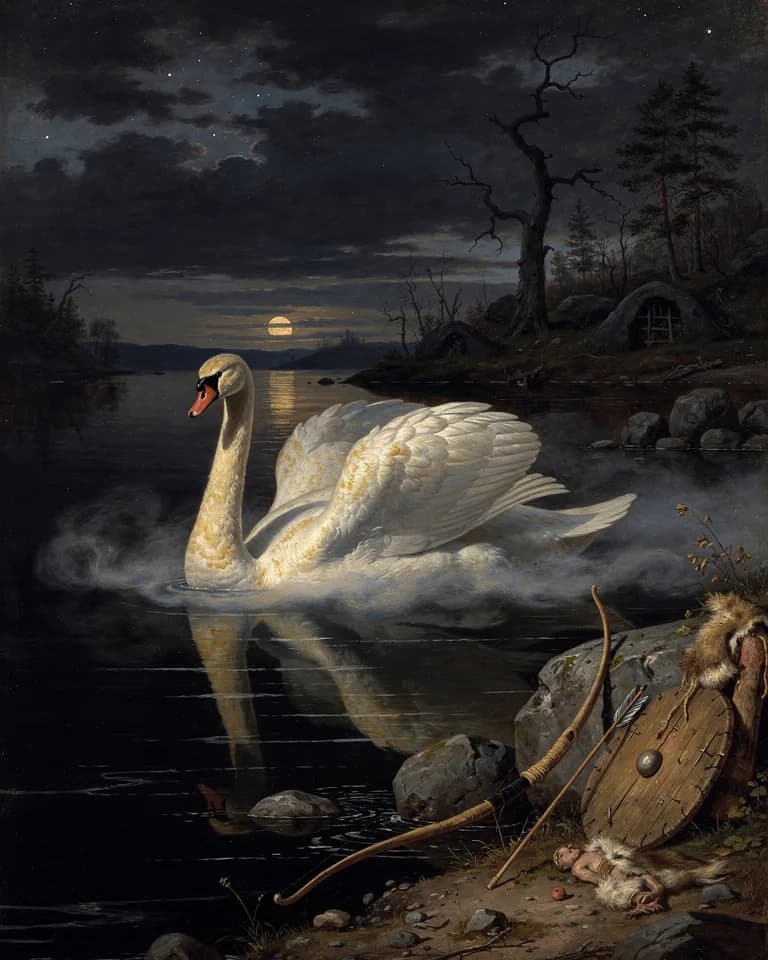
- dwelling at the boundary of death
- luring the living to the river of the dead
The swan that swims on the black river of Tuonela, the river of the dead, which Louhi orders Lemminkäinen to shoot with a single arrow; the task leads to his death.
About Swan of Tuonela
The third task
In Rune 14, Louhi's last task for Lemminkäinen is to shoot the swan on the river of Tuonela with a single arrow. He goes to the black river, but the blind herdsman he insulted at Pohjola is waiting there and kills him with a water-serpent before he can shoot; his body is thrown into the river and cut apart by Tuoni's son. The swan itself does nothing in the story; it is the sign of the boundary between the living and the dead, and a target no living man should seek.
Swans and death
Swans were regarded as sacred or taboo birds in parts of Finnish and Karelian tradition, and killing one was thought to bring misfortune. The swan of the river of the dead joins that respect to the image of the river crossing.
Sibelius
Jean Sibelius's tone poem The Swan of Tuonela (1895), part of his Lemminkäinen Suite, with its famous cor anglais solo representing the swan's song over the dark river, made the image internationally known.
Sources and further reading
Source notes
These references are recorded in the catalog. Their passage wording and translation have not been checked, so quotations are not displayed here.
- Kalevala, Rune 14 (paraphrase)
About this entry
By Elizabeth Stein for Mythos Atlas. About the author. Editorial notes are grounded in the site's cited sources and can be challenged through the contact page.
The danger rating is an editorial shorthand for how the myths portray the creature, not a claim made by the sources.