Canaanite Pantheon (Ugarit)
Athtart (Astarte)
ʿṯtrt(ʿAṯtartu)
Also known as Astarte, Ashtart, Name of Baal (šm bʿl)
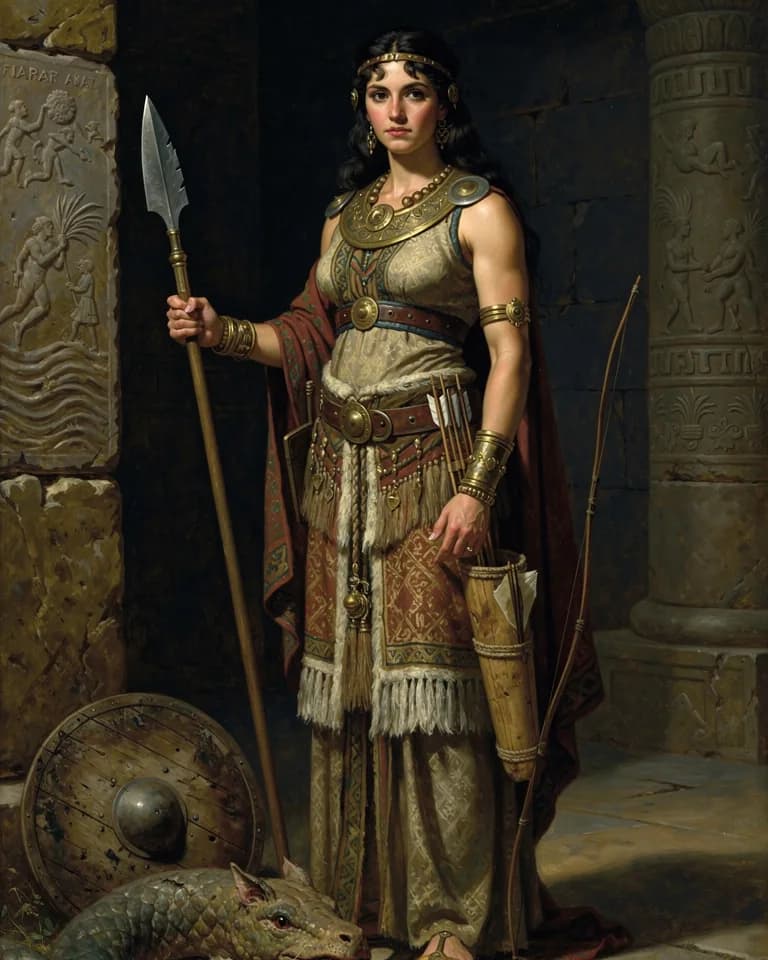
- war
- hunting
- love (in later Phoenician cult)
A warrior and hunting goddess who, with Anat, holds Baal back from attacking Yam's messengers and then urges him to finish Yam off; better known in later centuries as the Phoenician Astarte.
About Athtart (Astarte)
Holding Baal back
In the Baal Cycle, when Yam's messengers demand that Baal be surrendered, Baal seizes a weapon to strike them, and two goddesses restrain him: Anat takes his right hand and Athtart his left (KTU 1.2 I). They remind him that messengers are not to be harmed.
Urging him on
After Baal's second club fells Yam, it is Athtart who calls out to Baal, rebuking him or urging him to "scatter" the defeated Sea, since Yam is now their captive (KTU 1.2 IV). The passage is damaged and translators differ on its exact tone, but it shows her as a warrior at Baal's side.
A hunter
In a separate Ugaritic text (KTU 1.92) Athtart goes hunting in the steppe, and she appears in Ugaritic ritual texts with an equestrian aspect. In Egyptian New Kingdom texts she is a war goddess associated with horses and chariots.
Astarte
In the first millennium BCE, Athtart became Astarte, a major goddess of the Phoenician cities, especially Sidon and Tyre, where the royal inscription of Eshmunazar calls her "Astarte, name of Baal". Greek writers identified her with Aphrodite. The Ugaritic Athtart is a less prominent and more martial figure than that later goddess.
Across traditions
Parallel figures
Figures who play a role like Athtart (Astarte)'s in other traditions.
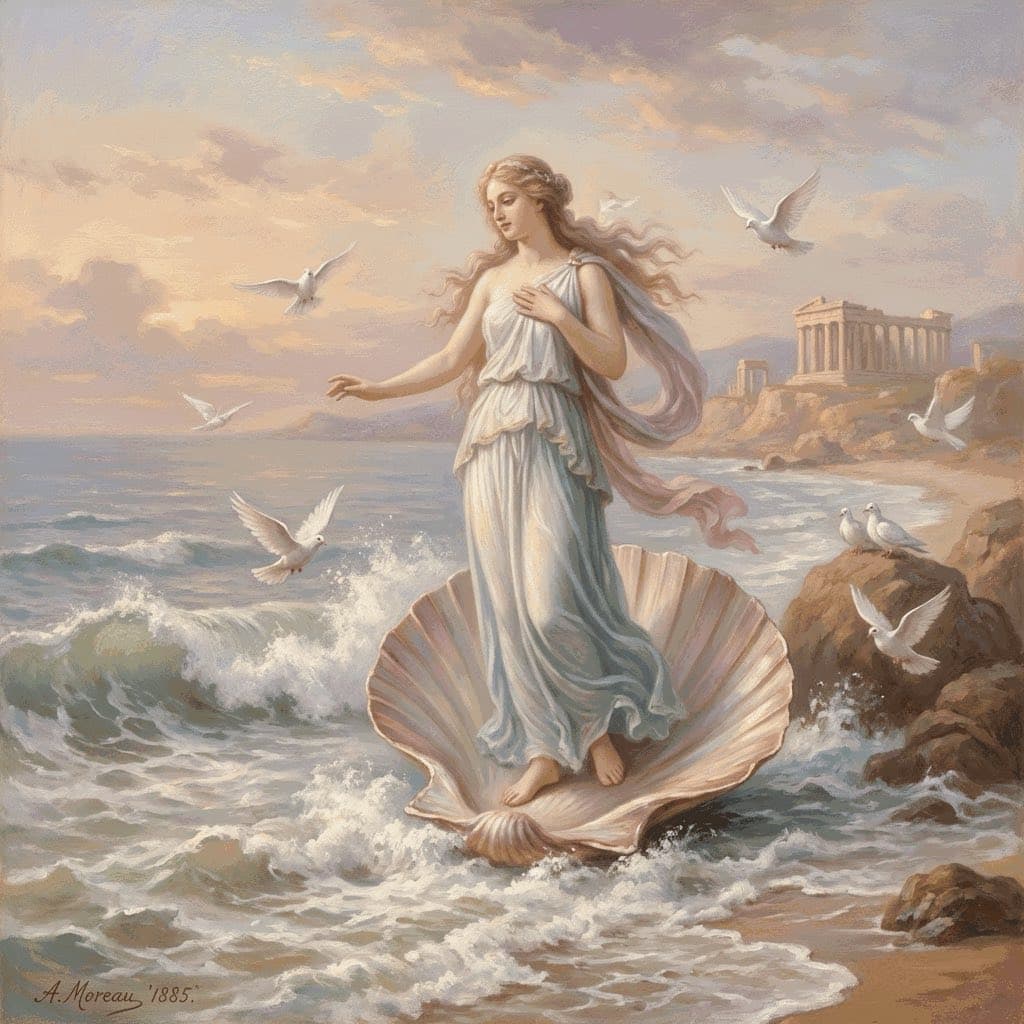 GreekAphrodite
Greek writers identified the Phoenician Astarte with Aphrodite; the Ugaritic Athtart is mainly a warrior and huntress.
Compare Athtart (Astarte) and Aphrodite side by side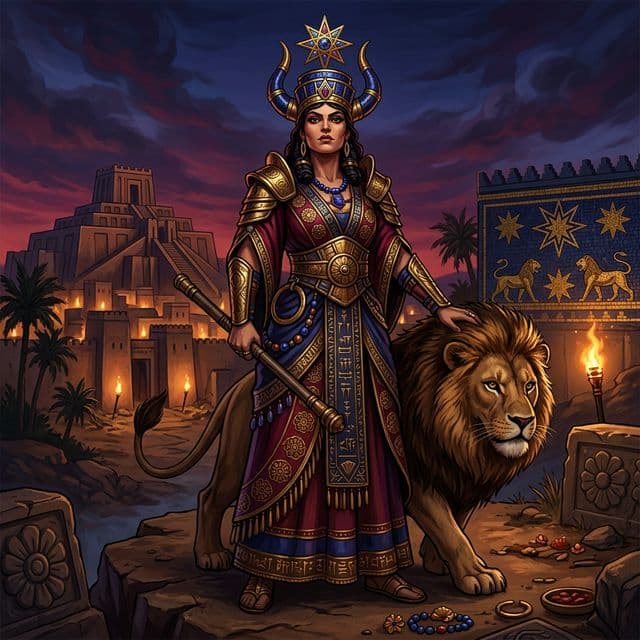 MesopotamianInanna
Athtart's name is cognate with Ištar's, and both combine war with, in later periods, love.
Compare Athtart (Astarte) and Inanna side by side
In the atlas
Where Athtart (Astarte) appears
Sources and further reading
Source notes
These references are recorded in the catalog. Their passage wording and translation have not been checked, so quotations are not displayed here.
- Baal Cycle, KTU 1.2 I
Appears in
Ancient and classical works featuring this figure.
restrains Baal and later urges him to finish Yamm (KTU 1.2 I, IV)
Further reading
Athtart in the conflict with Yam
About this entry
By Elizabeth Stein for Mythos Atlas. About the author. Editorial notes are grounded in the site's cited sources and can be challenged through the contact page.
Parallels are editorial comparisons across traditions: a shared role does not, by itself, establish a shared origin.
Genealogy
Family tree
Athtart (Astarte)'s parents, consorts, children and rivals, as recorded in the atlas.