Canaanite
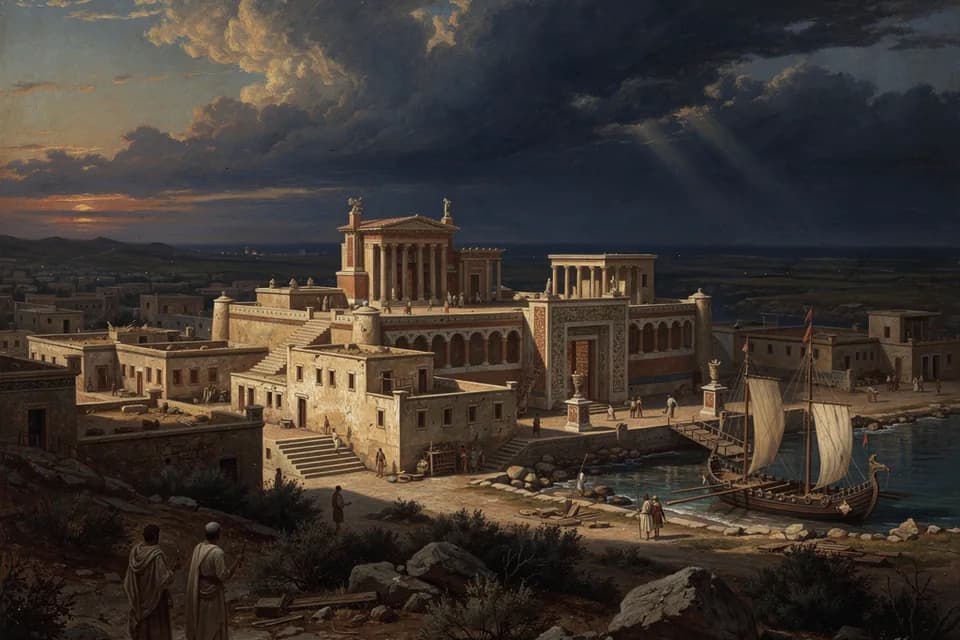
Ugarit (Ras Shamra)
The Late Bronze Age port city on the Syrian coast whose archives of alphabetic cuneiform tablets preserve the Baal Cycle and the epics of Aqhat and Kirta; destroyed around 1185 BCE.
Sacred Geography
Temples, realms and sacred sites, on the map and by tradition, type or era.
Catalog pictures are illustrations, not historical artworks. About our images
The Late Bronze Age port city on the Syrian coast whose archives of alphabetic cuneiform tablets preserve the Baal Cycle and the epics of Aqhat and Kirta; destroyed around 1185 BCE.
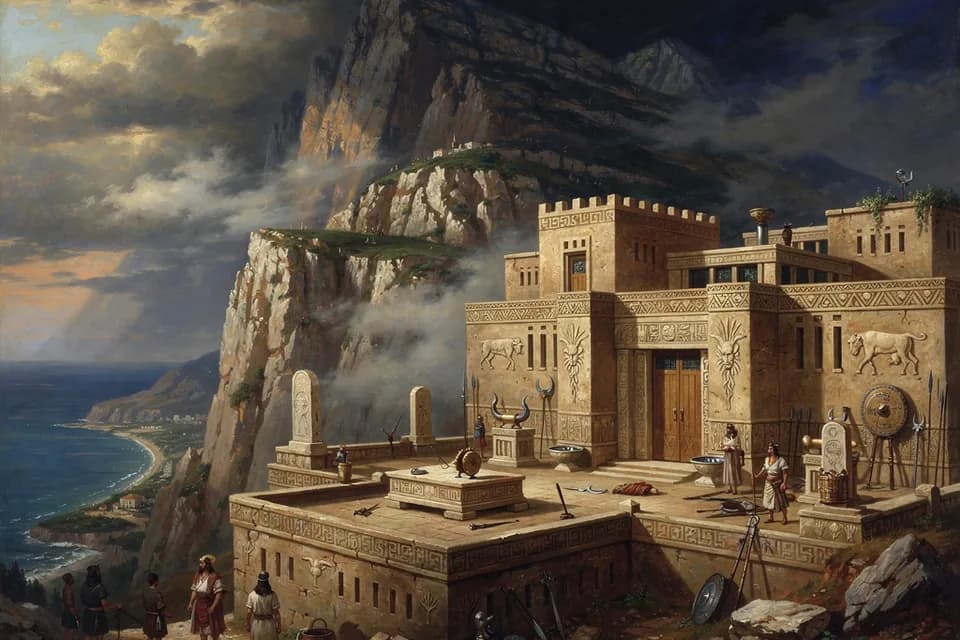
The mountain north of Ugarit, now Jebel Aqra on the Syrian-Turkish border, where Baal's palace stands in myth; the Hurrian-Hittite Mount Hazzi and the Greek Mount Kasios.
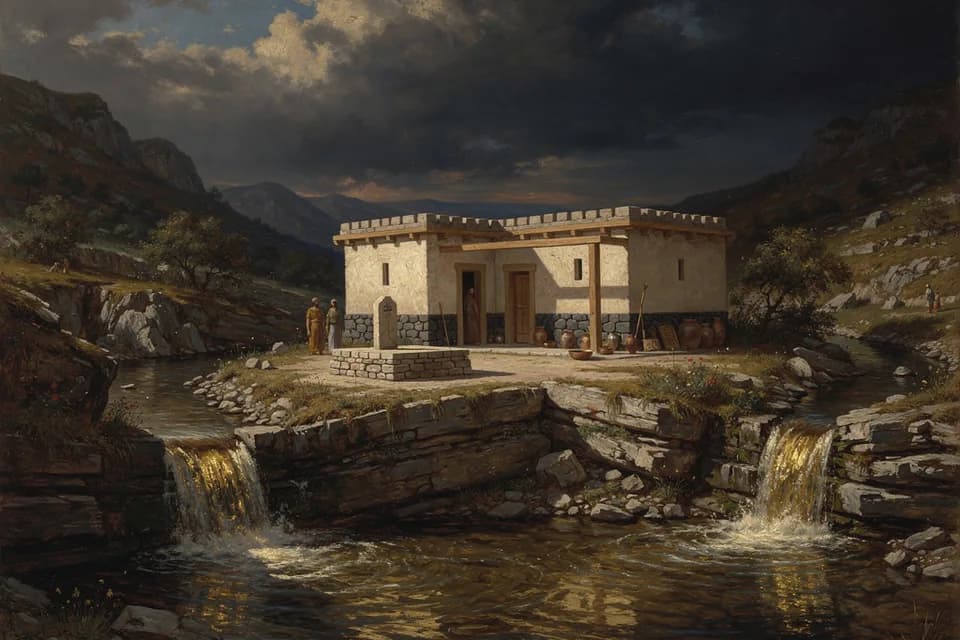
El's remote dwelling 'at the source of the two rivers, in the midst of the springs of the two deeps', where gods and messengers go to seek his decisions; a mythical place without a known earthly location.
The deep inlet on the east coast of Baffin Island, Nunavut, where Franz Boas recorded the story of Sedna and her father Anguta in 1883-84; home of the community of Pangnirtung.
The island community in the Foxe Basin, Nunavut, whose people told Knud Rasmussen about the Sea Woman, the Moon Spirit, and Sila in the 1920s, and whose elders continue to share that knowledge.

The Iñupiaq whaling village on a gravel spit in the Chukchi Sea, northwest Alaska, whose land, in the community's tradition, is the body of a sea creature harpooned by Raven Man.
The mountains of northern Labrador and Nunavik whose name is usually explained as 'place of spirits', from the Inuktitut tuurngait; now a national park co-managed with the Inuit of Nunatsiavut and Nunavik.
Stone fish traps in the Barwon River at Brewarrina, New South Wales, whose design the ancestral creation being Baiame revealed; National Heritage listed in 2005 and cared for by the Ngemba people and their neighbours.
A rock shelter in the Black Range near Stawell, Victoria, on Djab Wurrung Country, holding the only known rock painting of Bunjil.
The river that runs through Perth, Western Australia, whose course Whadjuk Noongar tradition attributes to the Wagyl; its resting places, including Goonininup below Kaarta Gar-up (Kings Park), are important Noongar places.
The great sandstone monolith in Uluṟu-Kata Tjuṯa National Park, Northern Territory, shaped by the actions of Aṉangu ancestral beings, including Kuniya and the Liru; jointly managed by Aṉangu and Parks Australia.
The sacred mountain of the east bounding Diné Bikéyah, in the Sangre de Cristo Range of southern Colorado, associated with white shell and the dawn.
The sacred mountain of the south, in New Mexico, associated with turquoise; near it the Hero Twins killed Yéʼiitsoh, whose blood is said to have become the lava flows of the region.
The sacred mountain of the west, near Flagstaff, Arizona, associated with abalone shell; sacred to many Native nations, and the subject of long legal disputes over a ski resort.
The sacred mountain of the north, usually identified with Hesperus Mountain in the La Plata Mountains of southwestern Colorado, associated with jet.
A small peak in the Dinétah region of northern New Mexico where, in many tellings, First Man found the infant Changing Woman.
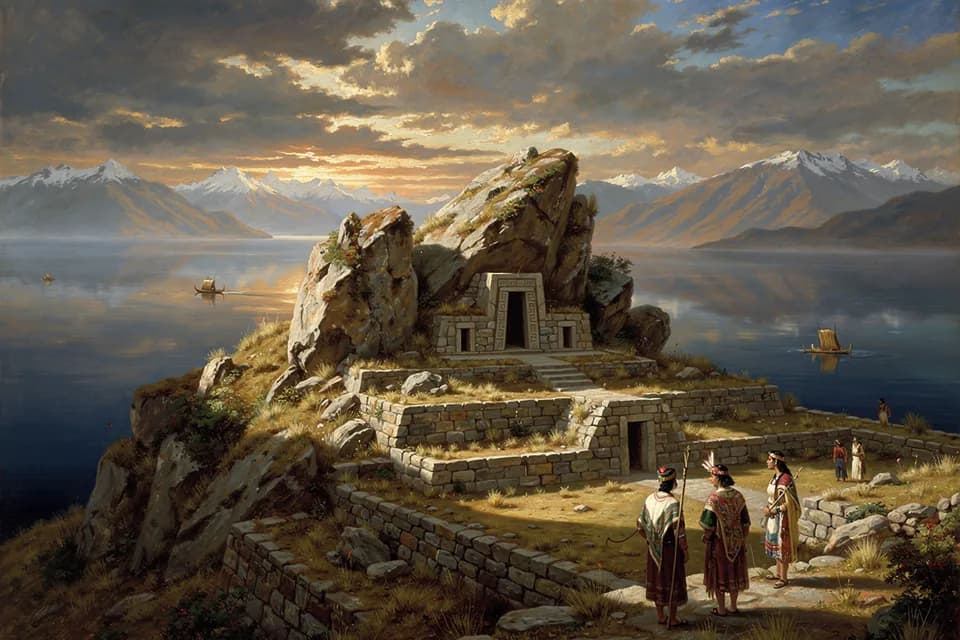
The island in the Bolivian part of Lake Titicaca honored in Inca times as the place where the Sun first rose, site of a major Inca pilgrimage sanctuary centered on a sacred rock.
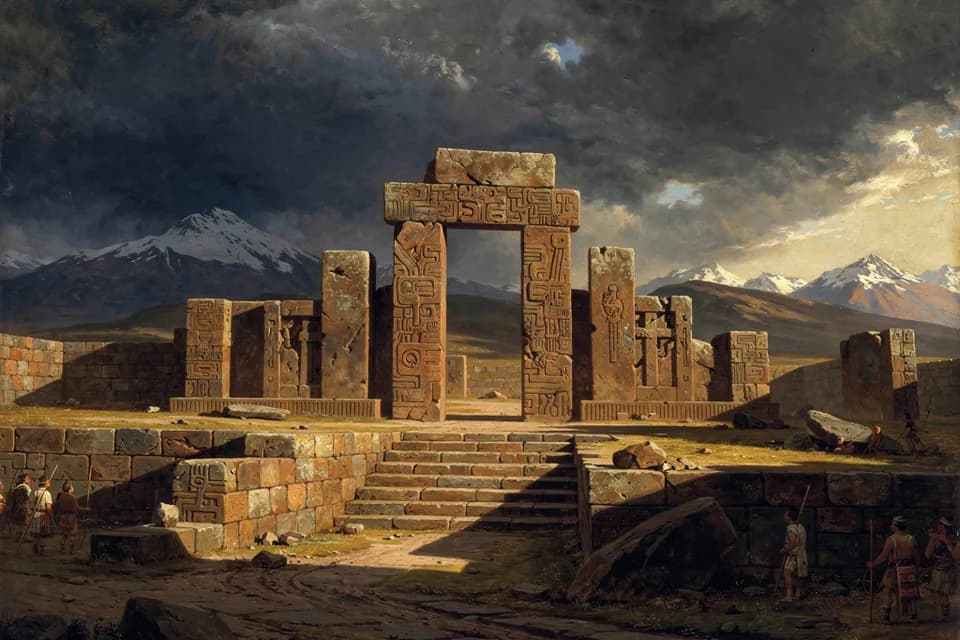
The ruined ceremonial city south of Lake Titicaca, capital of an Andean civilization of about 500-1000 CE, which the Incas claimed as the place where Viracocha made the sun, moon, and peoples.
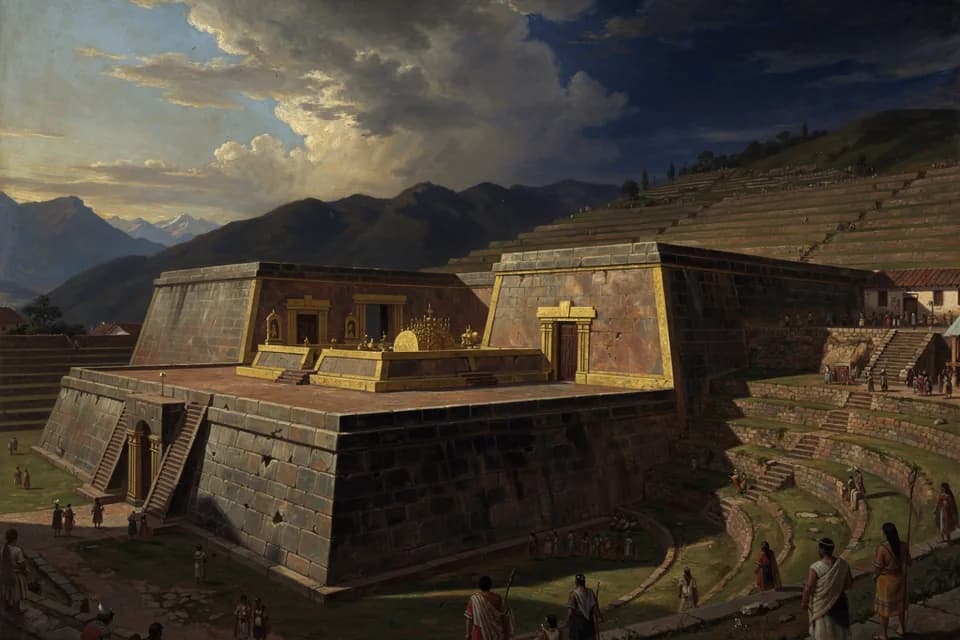
The 'golden enclosure', chief temple of the Sun in Cusco, where the images of the Creator, Sun, Moon, Thunder, and other powers were kept; its Inca stonework survives beneath the church and convent of Santo Domingo.
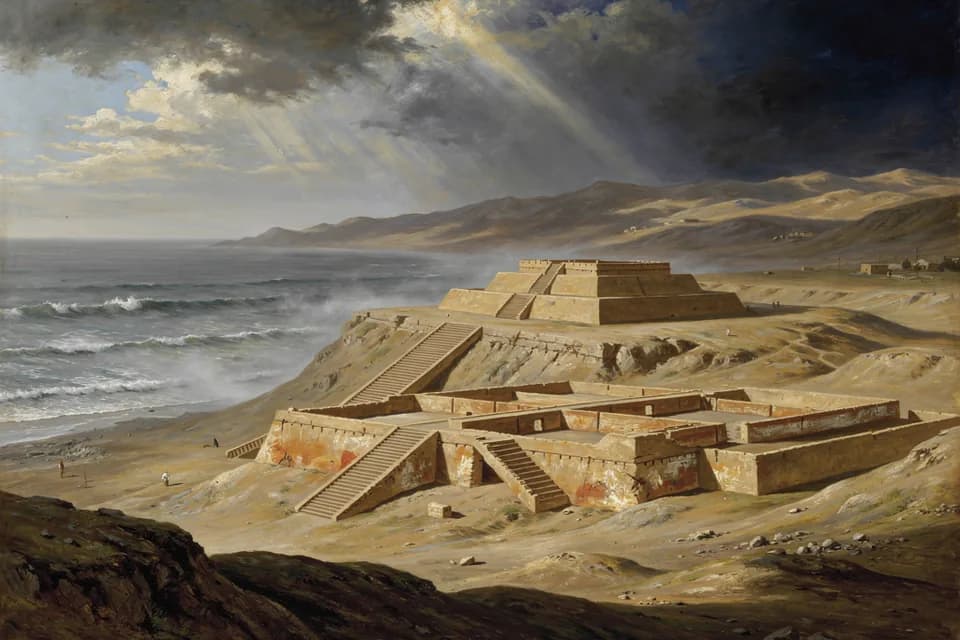
The great oracle sanctuary near the mouth of the Lurín River south of Lima, center of Pachacamac's cult for over a thousand years, where the Incas added a Temple of the Sun and Hernando Pizarro broke the idol in 1533.
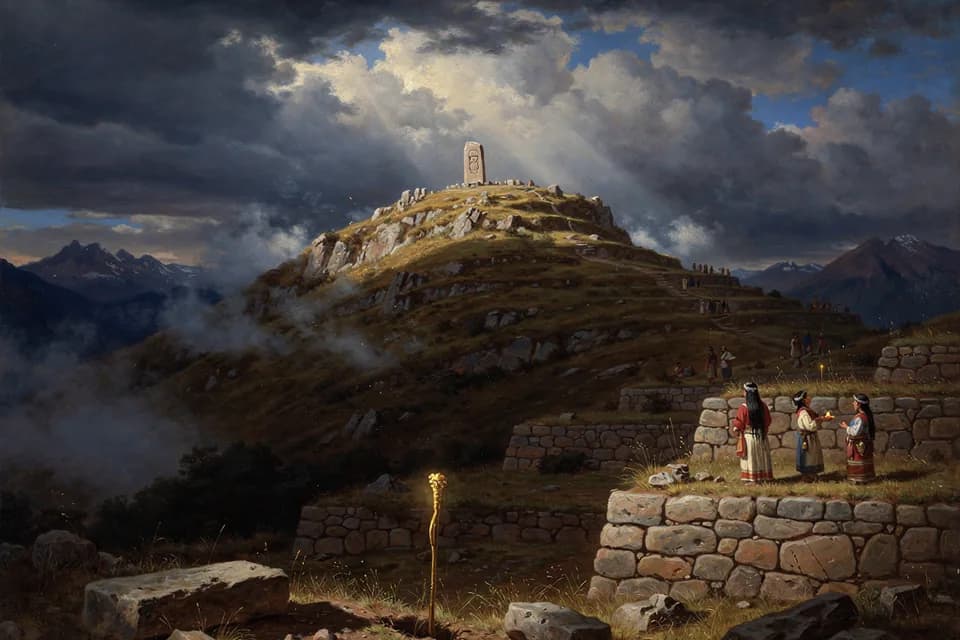
The sacred hill southeast of Cusco where, in Garcilaso's account, the Sun's golden rod sank into the earth, and where in the Pacaritambo tradition Ayar Uchu turned to stone; one of the holiest huacas of the Inca capital.
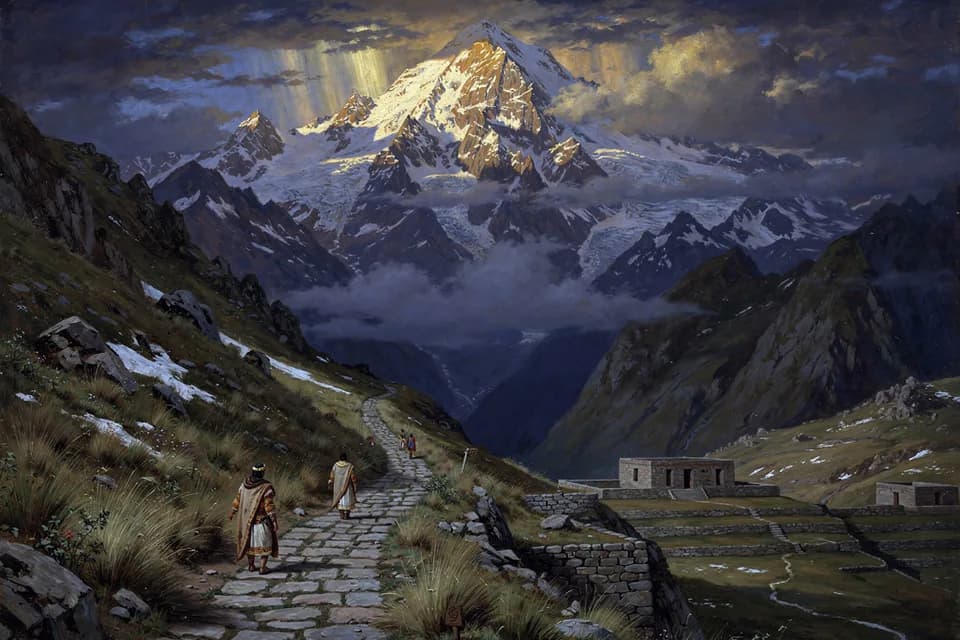
The glaciated peak on the border of Peru's Lima and Junín regions that was, and was the home of, the god Pariacaca of the Huarochirí Manuscript, crossed by an Inca road from Jauja to the coast.
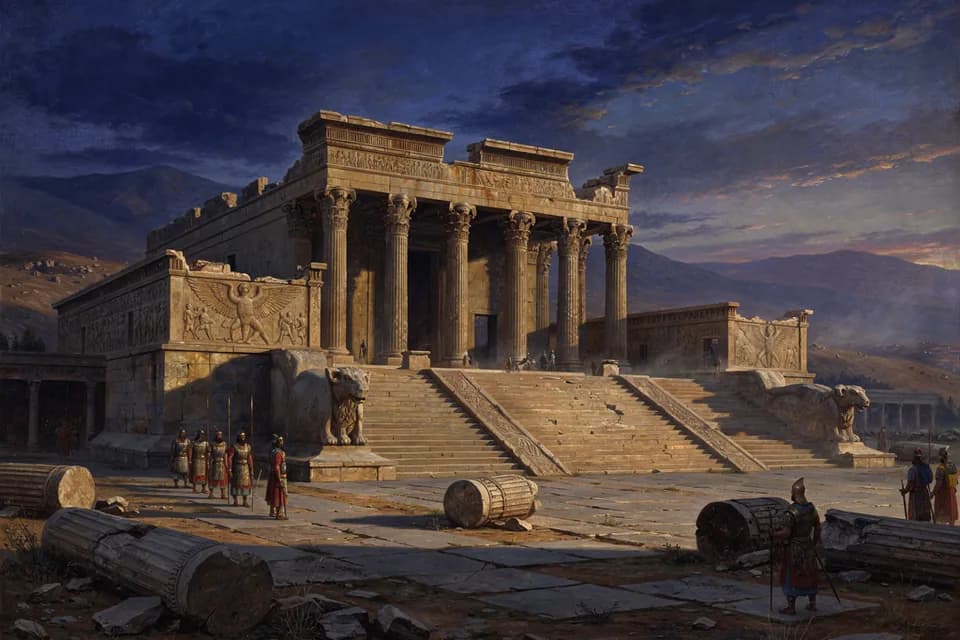
The ceremonial capital of the Achaemenid kings in Fars, begun by Darius I around 518 BCE and burned by Alexander in 330 BCE, whose reliefs show the winged figure in a disc; later called Takht-e Jamshid, 'the Throne of Jamshid'.
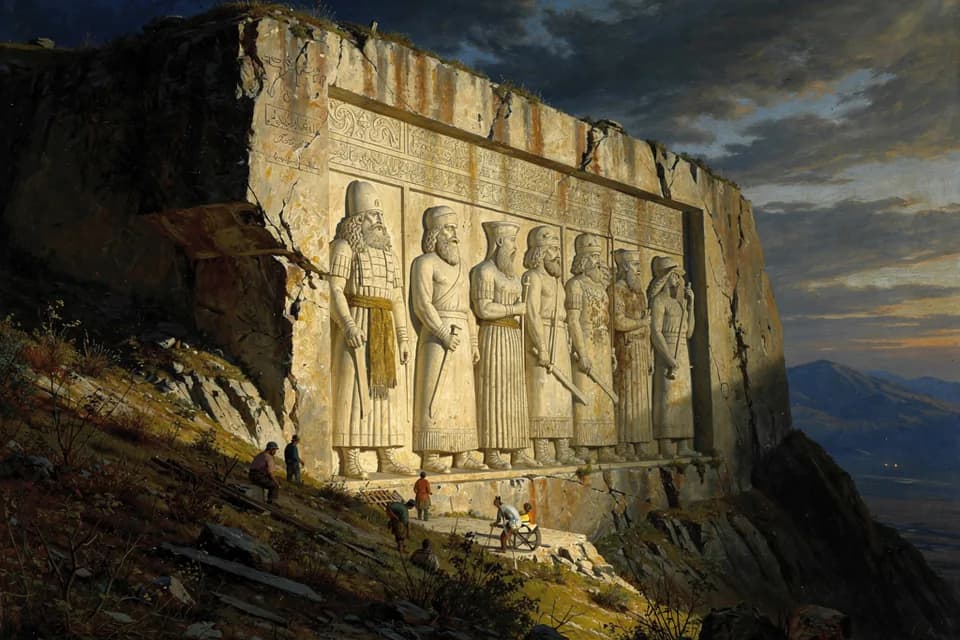
The cliff at Bisotun in western Iran where Darius I carved a trilingual inscription and relief around 520 BCE, attributing his rise to 'the favor of Ahuramazda'; the key to the decipherment of cuneiform.
Showing 145–168 of 184