Mythos Atlas

Side by sideParent and child

Tarhunna (the Storm-god of Hatti) vs Telipinu

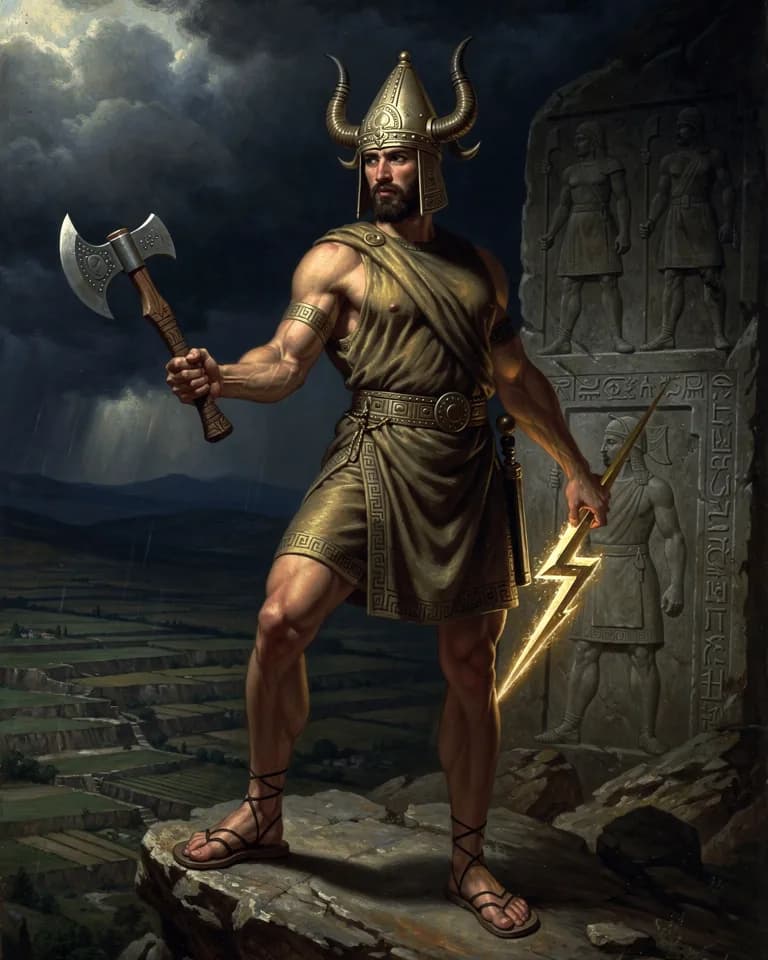
Tarhunna (the Storm-god of Hatti)
Tarhunna (the Storm-god of Hatti)Hittite
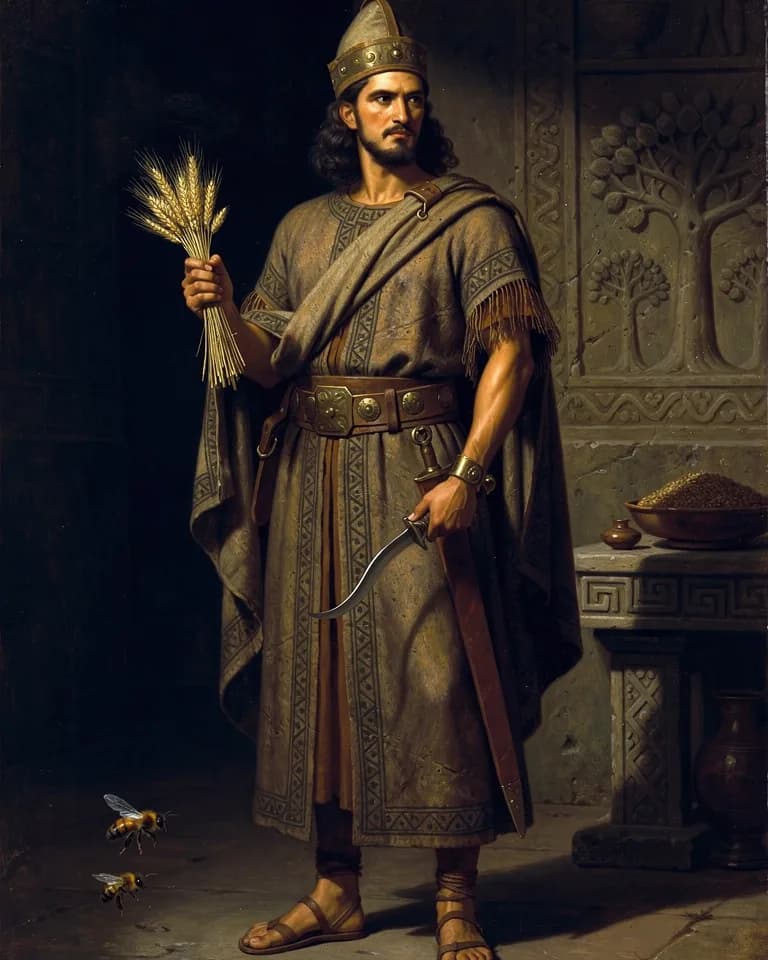
Telipinu
TelipinuHittite

Tarhunna (the Storm-god of Hatti) and Telipinu are recorded as parent and child in the Hittite Pantheon.

At a glance

Tarhunna (the Storm-god of Hatti) and Telipinu compared
Tarhunna (the Storm-god of Hatti)Telipinu
TraditionHittite PantheonHittite Pantheon
Domainsstorms, rain, kingship, the fertility of the landagriculture, the growth of crops, fertility of herds
Symbolsbull, mace and lightning, mountainthe eya tree, the kurša hunting bag, the bee
Also calledStorm-god of Hatti, Teššub (Hurrian), Taru (Hattian), Tarḫunt (Luwian), TeshubTelepinu, Telepinus

Where they meet

The atlas records no domain or symbol that Tarhunna (the Storm-god of Hatti) and Telipinu share.

They are compared because of how the myths connect them, not because of what they rule.

Where they part

Only Tarhunna (the Storm-god of Hatti)

Associated with storms, rain, kingship, and the fertility of the land.

Only Telipinu

Associated with agriculture, the growth of crops, and fertility of herds.

How each was worshipped

Tarhunna (the Storm-god of Hatti)

Cult sites
Great Temple (Temple 1) at Hattusa, shared with the Sun-goddess of Arinna; Temple of the Storm-god of Nerik at Oymaağaç Höyük
Festivals
Purulli festival at Nerik; AN.TAḪ.ŠUM (spring) and nuntarriyašḫa (autumn) state festivals

The king served as the storm-god's priest and steward, offering bread, beer, and animals at state festivals; the Illuyanka story was recited at the Purulli festival of Nerik.

Telipinu

Cult sites
Temples at Kašḫa, Tawiniya, and Hanḫana (sites not securely identified)

Invocation rituals (mugawar) recited the story of his disappearance and used honey, fragrant oils, and sweet foods to draw him home; an evergreen eya tree hung with a fleece bag stood before him.

The two figures

Hittite Pantheon

Tarhunna (the Storm-god of Hatti)

The chief god of the Hittite state: a storm-god of rain and thunder who gives the land its fertility, fights the serpent Illuyanka, and, under his Hurrian name Teššub, wins kingship in heaven in the Kumarbi cycle.

Hittite scribes usually wrote the storm-god's name with a Sumerian word-sign (dU or dIŠKUR, "the Storm-god"), so the Hittite reading is partly reconstructed; Tarḫunna is the most widely accepted reading, and the Luwian form Tarḫunt survived into the first millennium BCE. The same logogram covered the Hattian storm-god Taru and, from the fifteenth century onward, the Hurrian storm-god Teššub, whom the later Hittite royal family, closely tied to Hurrian Kizzuwatna, promoted to the head of the state cult. On this site these are treated as one entry because the Hittite sources themselves write them with one sign, but readers should know that the Hattian, Hittite, and Hurrian storm-gods had separate origins and were brought together by scribes and kings.

Read the full Tarhunna (the Storm-god of Hatti) entry

Hittite Pantheon

Telipinu

A Hattian god of farming and growth, son of the Storm-god, whose angry departure makes the whole land barren until a bee finds him asleep and a ritual soothes his rage.

Telipinu is a Hattian deity of agriculture and growth, called in the myth the son of the Storm-god. He is best known from the Disappearance of Telipinu (CTH 324), one of several Hittite "vanishing god" texts in which a deity leaves in anger and the world begins to die. The same pattern is told of the Storm-god, the Sun-god, the mother goddess Hannahanna, and others; Telipinu's version is simply the best preserved.

Read the full Telipinu entry
About this comparison

Comparisons pair figures that play a similar role across traditions, or that the myths connect within one. A shared role does not, by itself, establish a shared origin.