Canaanite Pantheon (Ugarit)
Kothar-wa-Khasis
kṯr w ḫss(Kôṯaru-wa-Ḫasīsu)
Also known as Kothar, Kothar-and-Khasis, Chousor (in Philo of Byblos)
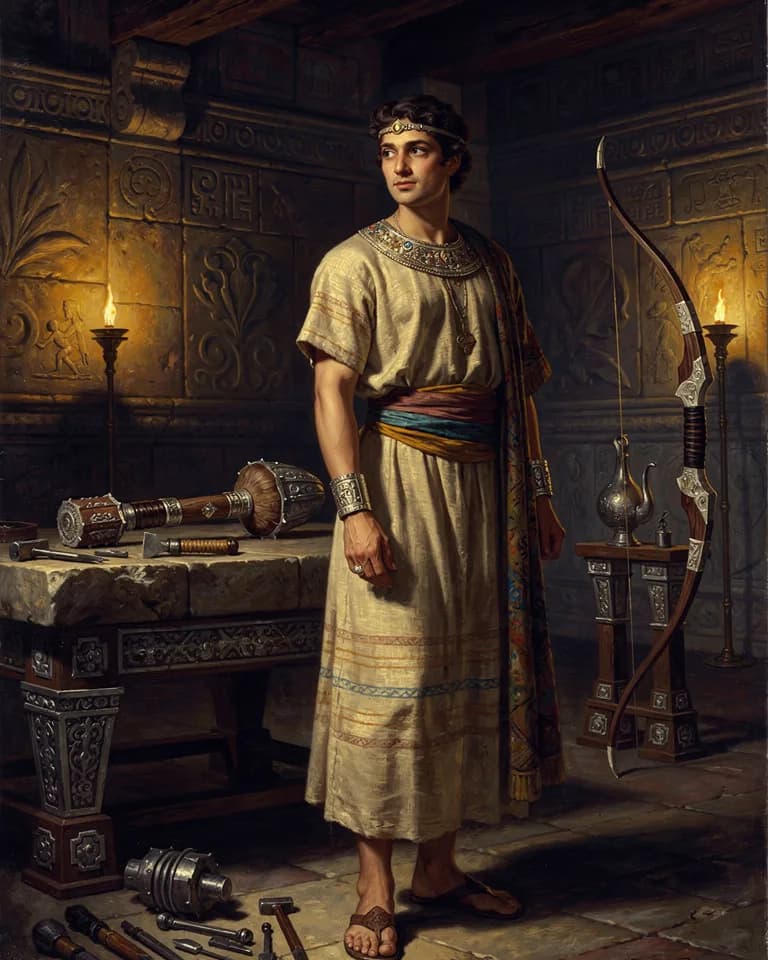
- craftsmanship
- metalwork
- building
- magic and incantation
The craftsman god, 'Skilful and Wise', who makes Baal's two clubs, builds his palace of cedar and silver, and brings the fateful bow to the house of Danel.
About Kothar-wa-Khasis
Skilful and Wise
Kothar-wa-Khasis has a double name, "Skilful and Wise", and is treated as a single god. He is the divine smith and builder, and he also knows incantations: when he names Baal's clubs he speaks words of power over them. His homes are far away, in Kaphtor (Crete) and Ḥkpt (Memphis, the city of the Egyptian craftsman god Ptah), which reflects Ugarit's position in a trading world that reached from the Aegean to Egypt.
Maker of weapons
In the Baal Cycle he makes two clubs for Baal and names them Yagrush ("Driver") and Ayyamur ("Expeller"); the second fells Yam (KTU 1.2 IV). He also forges the lavish gifts Baal and Anat take to Athirat (KTU 1.4 I), and the silver and gold palace on Zaphon.
The window
While building the palace, Kothar-wa-Khasis twice proposes a window and Baal twice refuses; at last Baal agrees, and the window becomes the rift in the clouds through which his thunder sounds (KTU 1.4 V-VII). The exchange is a small comic scene, with the craftsman patiently saying "you will come back to my words".
The bow of Aqhat
In the Epic of Aqhat he arrives at Danel's house carrying a bow and arrows; Danel's wife serves him food and drink, and the bow passes to Aqhat, setting off the tragedy (KTU 1.17 V).
Across traditions
Parallel figures
Figures who play a role like Kothar-wa-Khasis's in other traditions.
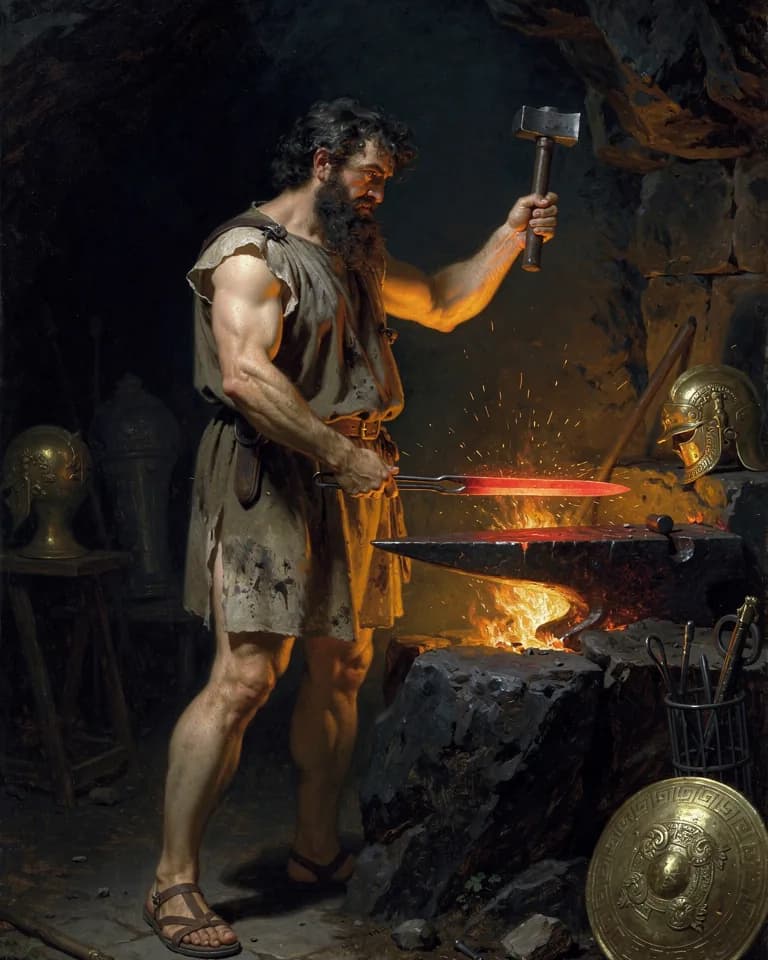 GreekHephaestus
Philo of Byblos's Phoenician History equates the craftsman Chousor with Hephaestus; both are divine smiths who make the weapons and houses of the gods.
Compare Kothar-wa-Khasis and Hephaestus side by side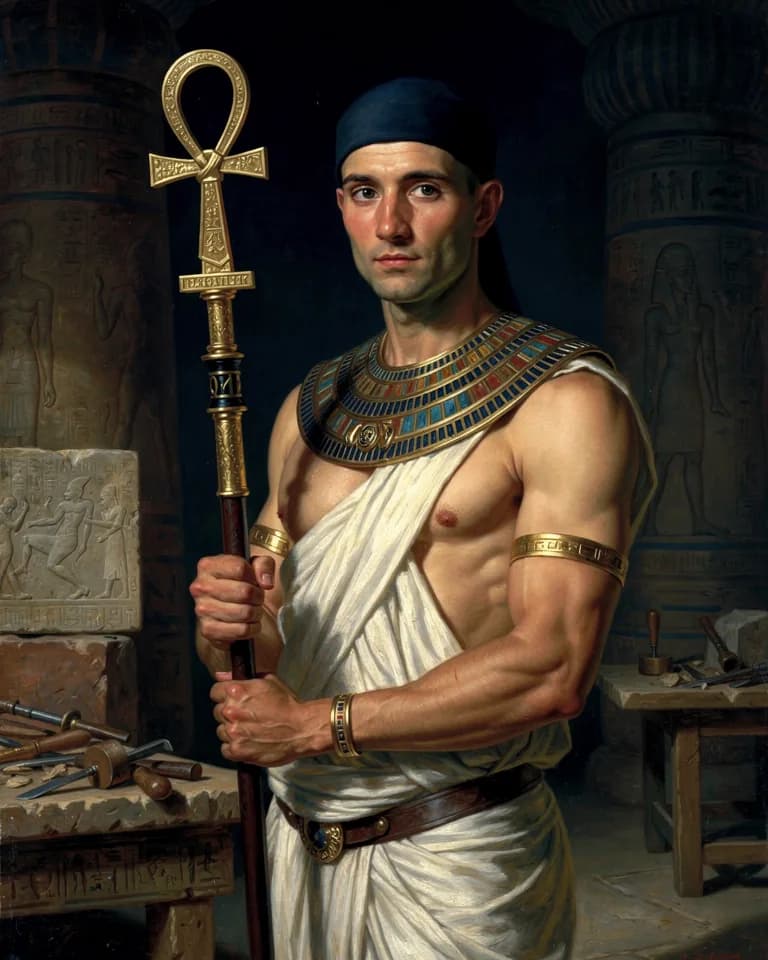 EgyptianPtah
Kothar's seat is at Ḥkpt, Memphis, the city of Ptah, the Egyptian patron of craftsmen; the Ugaritic poets appear to have linked the two.
Compare Kothar-wa-Khasis and Ptah side by side
In the atlas
Where Kothar-wa-Khasis appears
Sources and further reading
Source notes
These references are recorded in the catalog. Their passage wording and translation have not been checked, so quotations are not displayed here.
- Baal Cycle, KTU 1.4 V-VI
Appears in
Ancient and classical works featuring this figure.
craftsman who makes Baal's clubs and builds his palace (KTU 1.2 IV; 1.4 V-VII)
The Epic of Aqhat (KTU 1.17-1.19)
brings the bow to Danel's house (KTU 1.17 V)
Further reading
The clubs and the palace
The Epic of Aqhat (KTU 1.17-1.19)
The gift of the bow
About this entry
By Elizabeth Stein for Mythos Atlas. About the author. Editorial notes are grounded in the site's cited sources and can be challenged through the contact page.
Parallels are editorial comparisons across traditions: a shared role does not, by itself, establish a shared origin.
Genealogy
Family tree
Kothar-wa-Khasis's parents, consorts, children and rivals, as recorded in the atlas.