Mesoamerican
Palenque
Maya city of Pakal's dynasty — temples of the sun, cross, and inscriptions that map royal myth onto stone.
Sacred Geography
Temples, realms and sacred sites, on the map and by tradition, type or era.
Catalog pictures are illustrations, not historical artworks. About our images
Maya city of Pakal's dynasty — temples of the sun, cross, and inscriptions that map royal myth onto stone.
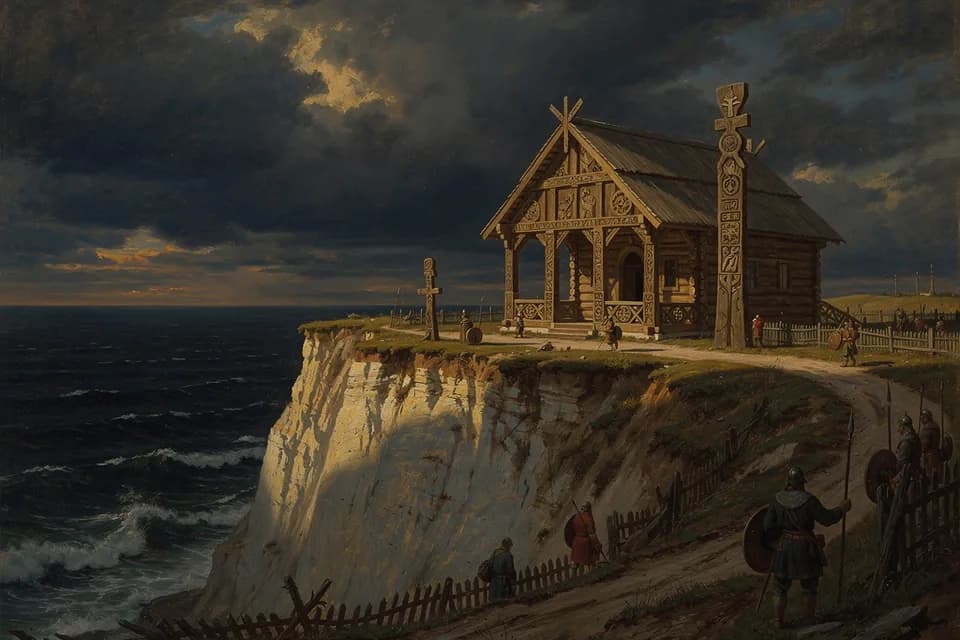
The temple of Svantevit on Cape Arkona, the northern tip of the island of Rügen, the last great pagan shrine of the Baltic Slavs before its destruction by the Danes in 1168.
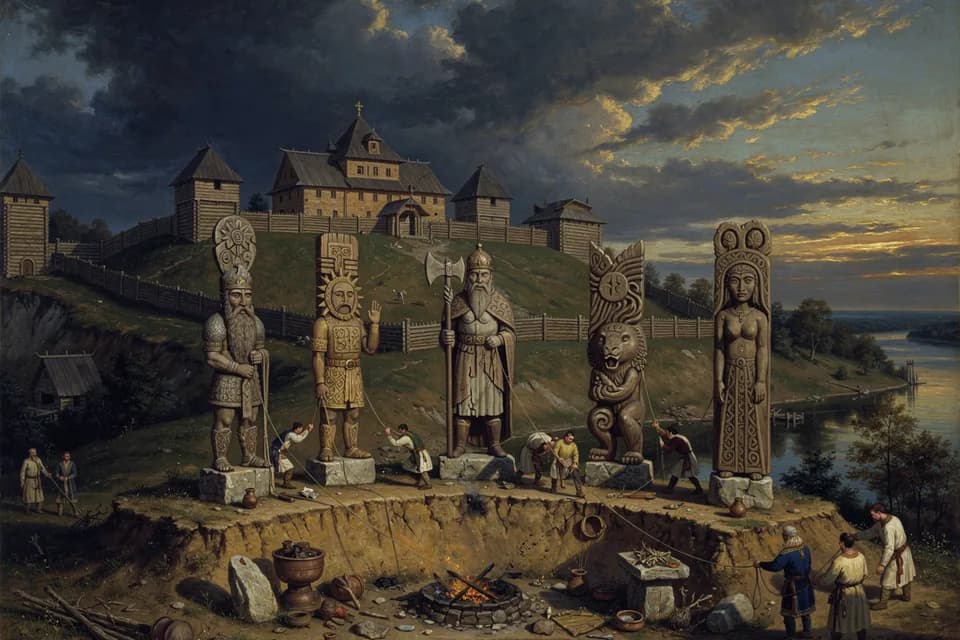
The hill outside Prince Vladimir's palace in Kiev where, per the Russian Primary Chronicle, six idols — Perun, Khors, Dazhbog, Stribog, Simargl, and Mokosh — were raised in 980 and pulled down again in 988.
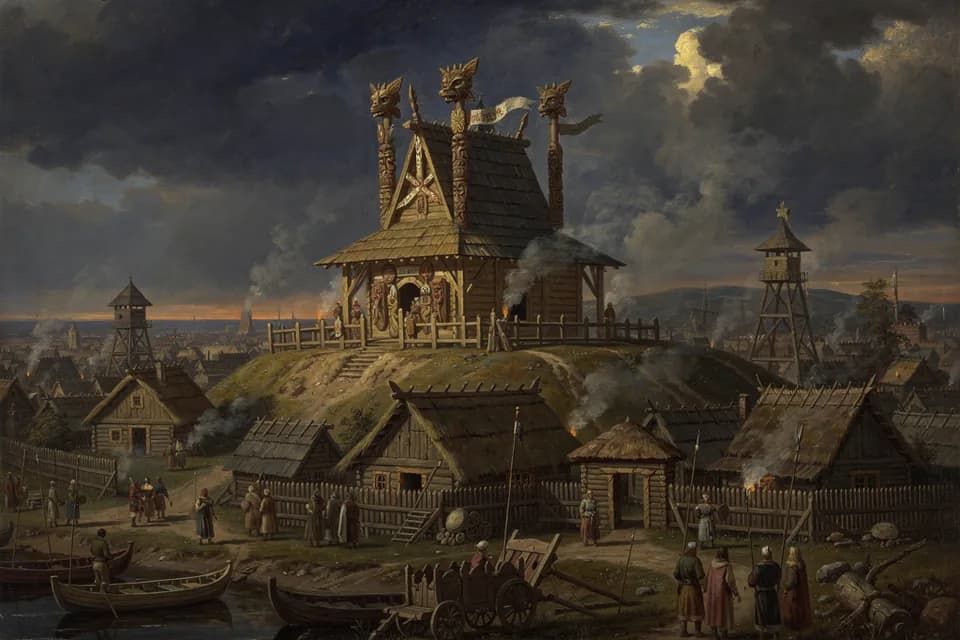
The Pomeranian city where Bishop Otto of Bamberg's mission of 1124–1128 destroyed the temple of the three-headed god Triglav, according to the near-contemporary Lives of Otto written by Ebbo and Herbord.
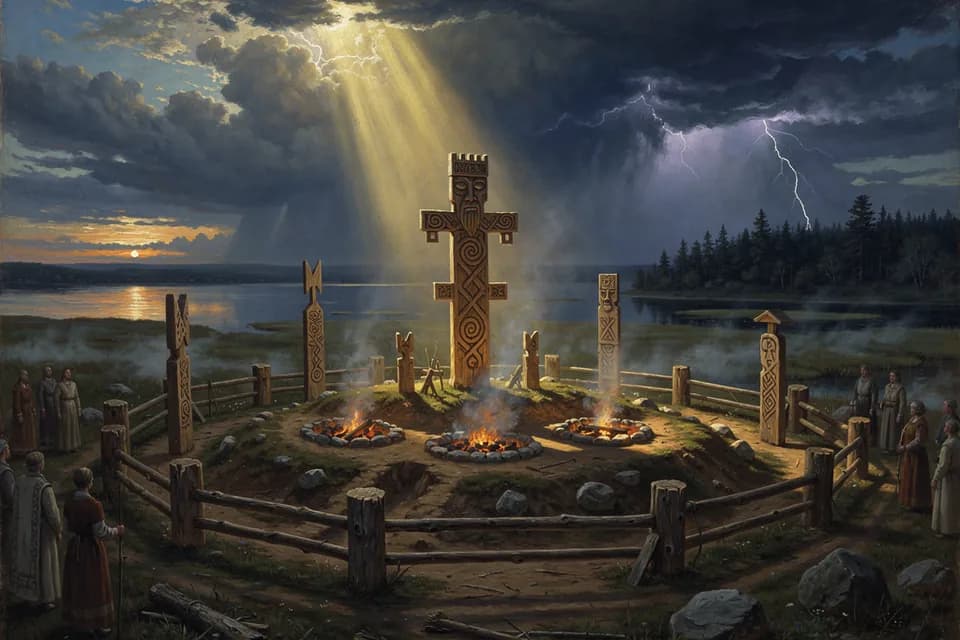
An open-air sanctuary south of Novgorod on the Volkhov river, identified by archaeologists as a likely Perun cult site and named by the First Novgorod Chronicle as the place where his idol was thrown into the river in 989.

The lake near present-day Syracuse, New York, where, in the account the Onondaga Nation and the Haudenosaunee Confederacy publish today, the Peacemaker and Hiawatha united the warring nations and planted the Great Tree of Peace.
The archipelago off the coast of British Columbia, formerly called the Queen Charlotte Islands, that is the Haida nation's homeland, and the setting of the story of Raven and the clamshell of the first people at Rose Spit.

The world above the sky in Haudenosaunee cosmology, with its people, lodges, and a great light-giving tree, from which Sky Woman fell through the hole left when the tree was uprooted.

The great falls on the Mohawk River near its meeting with the Hudson, where, in the account the Onondaga Nation publishes, the Mohawk tested the Peacemaker by felling the tree he stood in over the water.
The river of northern British Columbia at whose head, in the Tlingit Raven cycle, the wealthy old man kept the stars, moon, and sun in boxes; it is also one of the rivers Raven made from Petrel's stolen water.
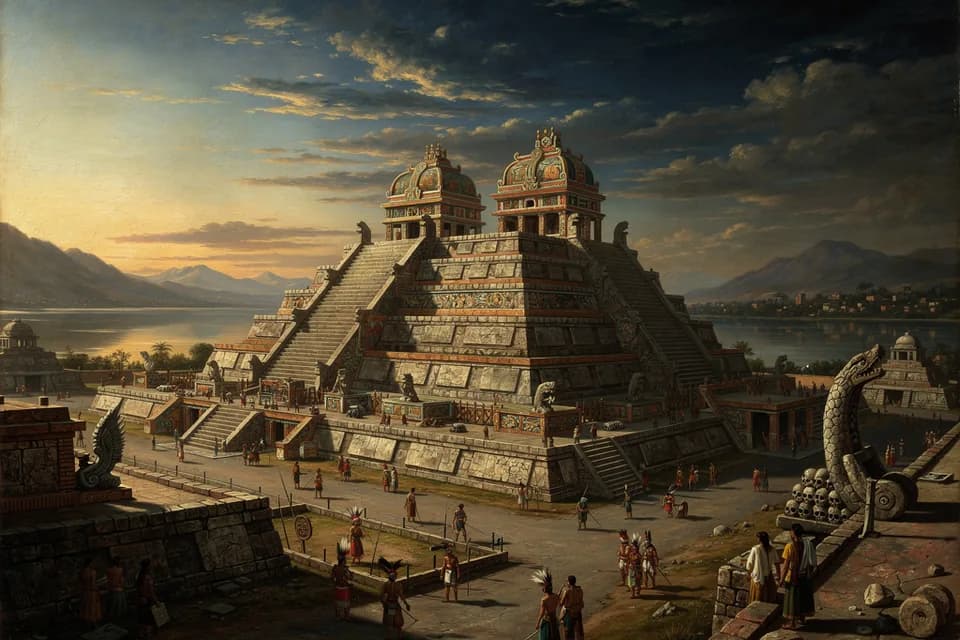
The great twin temple at the heart of Tenochtitlan, dedicated to Huitzilopochtli and Tlaloc, built as an image of the mountain Coatepec where Huitzilopochtli was born; excavated since 1978 in the centre of Mexico City.
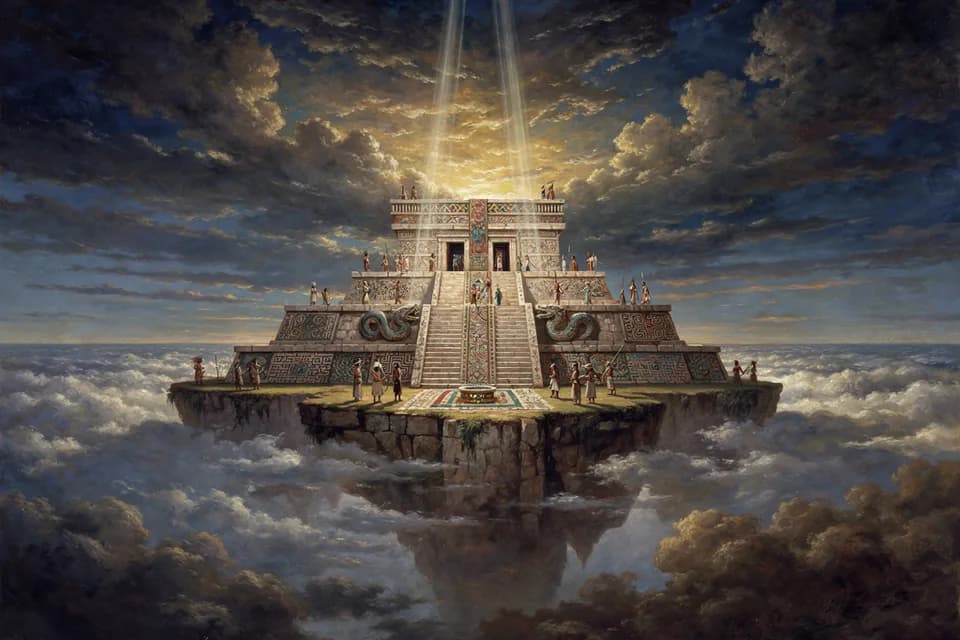
The 'place of duality', the highest of the thirteen heavens in Nahua cosmology, home of the creator pair Ometecuhtli and Omecihuatl (Ometeotl), from which the souls of children were said to descend.
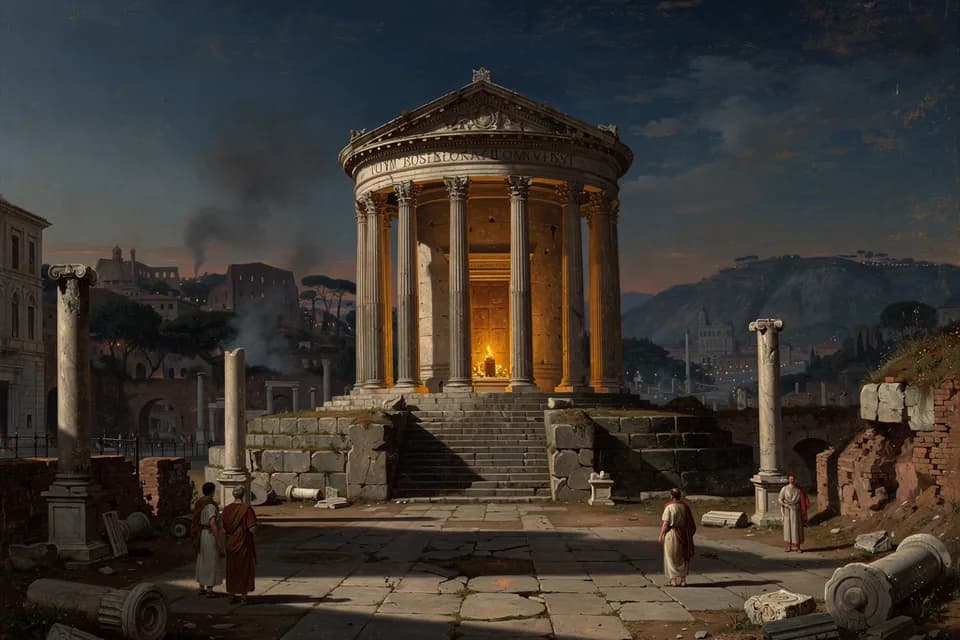
The small round temple in the Roman Forum where the Vestal Virgins kept the eternal fire of the state burning and guarded sacred objects, among them, tradition said, the Palladium brought from Troy.
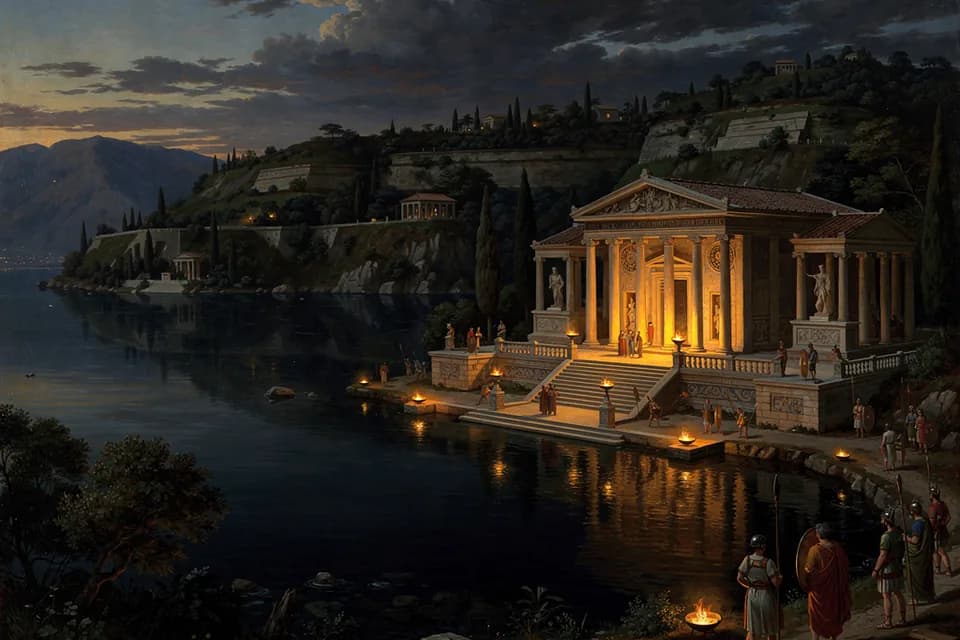
The volcanic crater lake in the Alban Hills called Diana's Mirror, beside the sanctuary of Diana Nemorensis, whose priest, the rex Nemorensis, won his office by killing his predecessor.
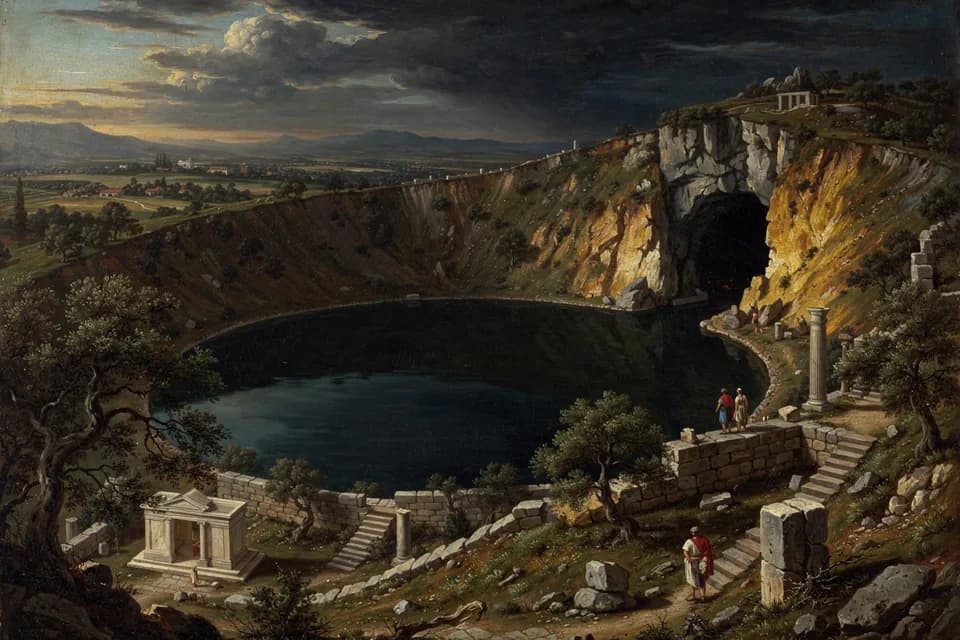
The crater lake near Cumae in Campania that Roman poets placed at the entrance to the underworld; in the Aeneid, the Sibyl leads Aeneas down to the dead through the cave beside it.
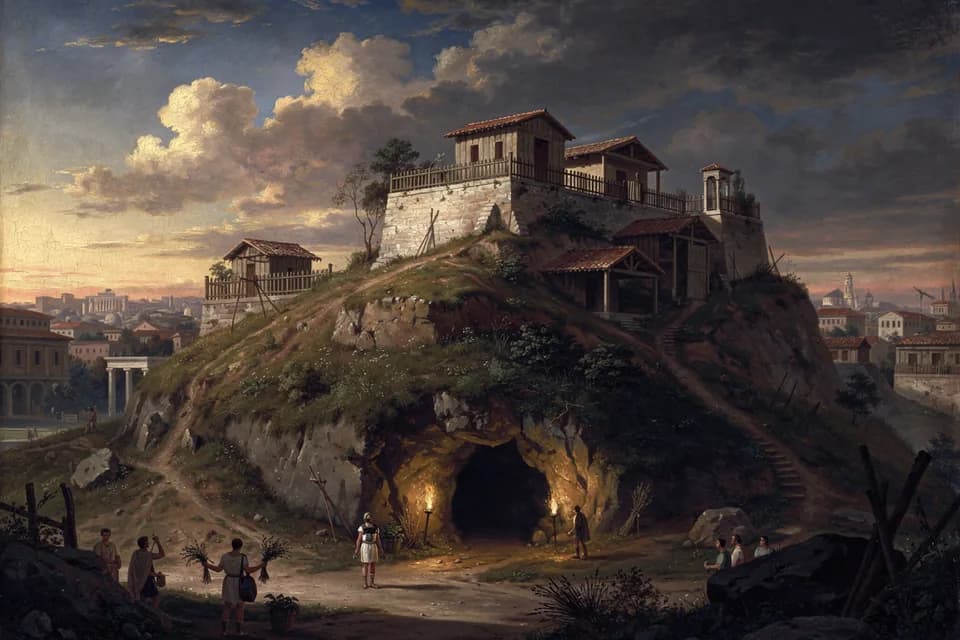
The hill where Romulus founded his city, with the Lupercal cave at its foot where tradition said the she-wolf nursed Romulus and Remus, and where the Lupercalia began each February.
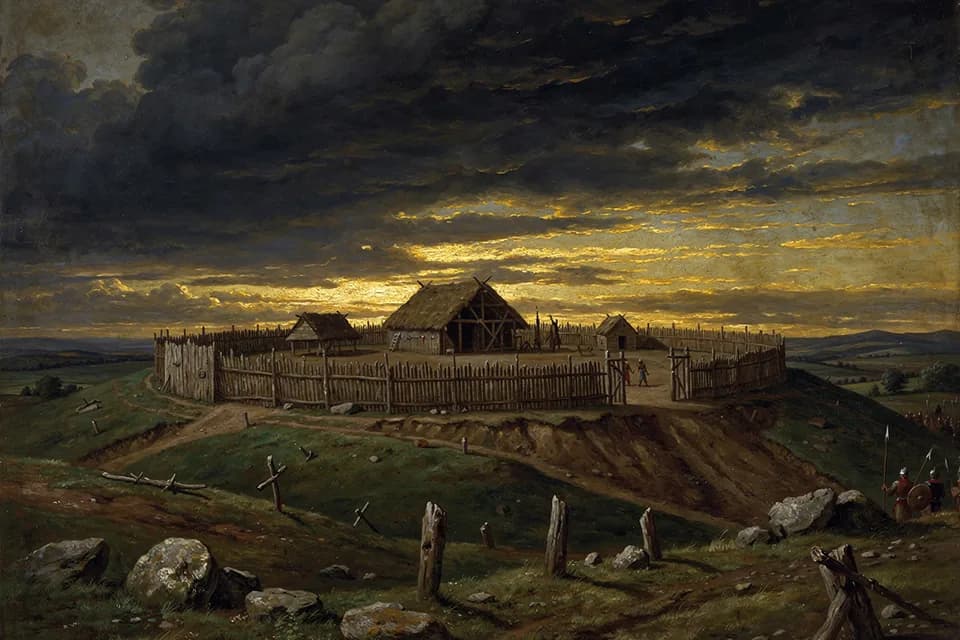
Navan Fort in County Armagh, the royal seat of Ulster in the Ulster Cycle, where King Conchobar held court and where Macha, forced to race while pregnant, cursed the men of Ulster.
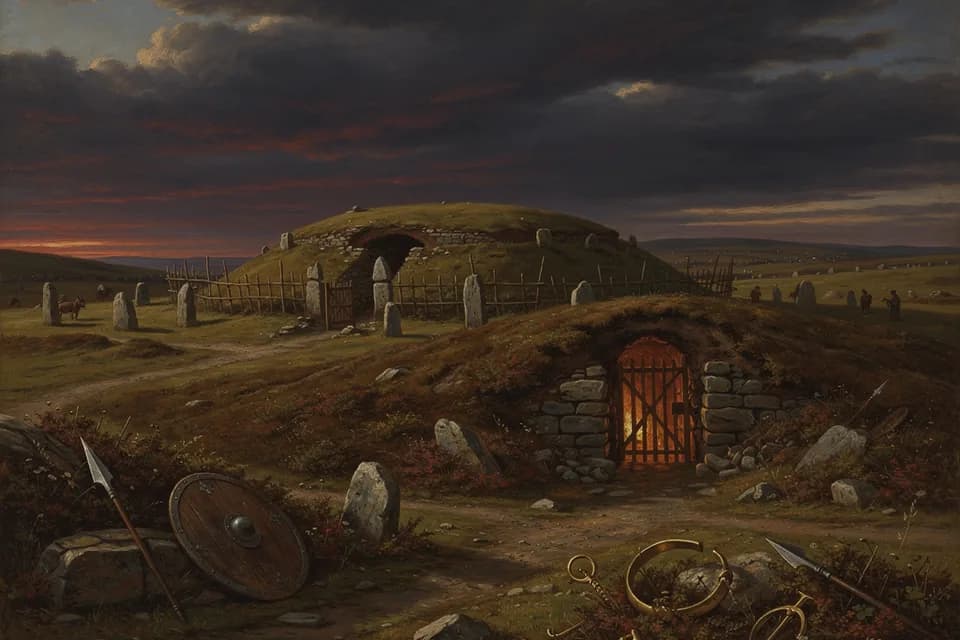
The royal complex of Connacht in County Roscommon, seat of Queen Medb and King Ailill in the Táin, whose cave Oweynagat was said to be a door to the otherworld.
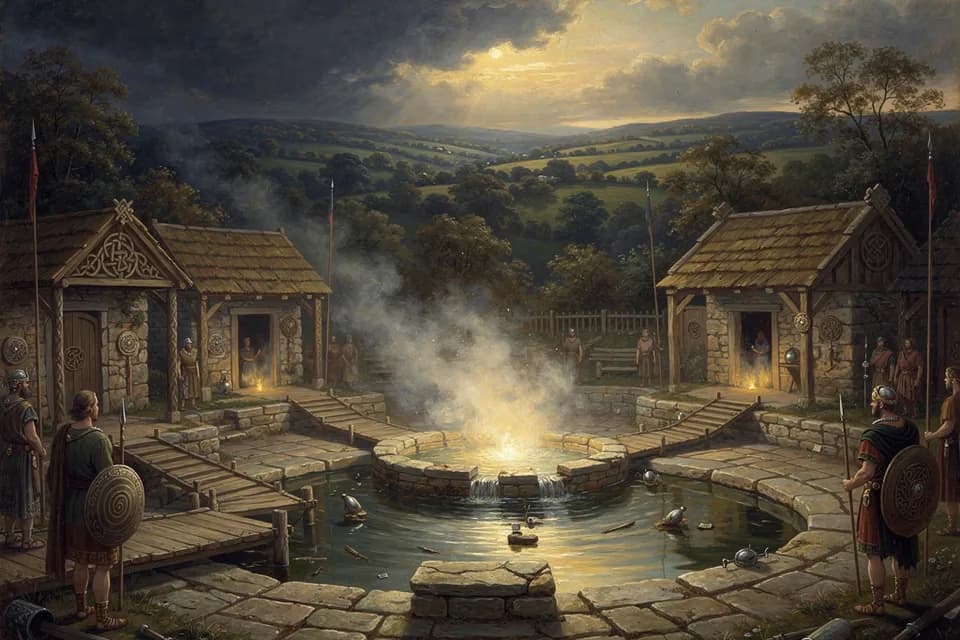
The hot springs at Bath in southwest England, sacred to the British goddess Sulis, whom the Romans identified with Minerva; worshippers cast curse tablets into the sacred spring asking her to punish thieves.
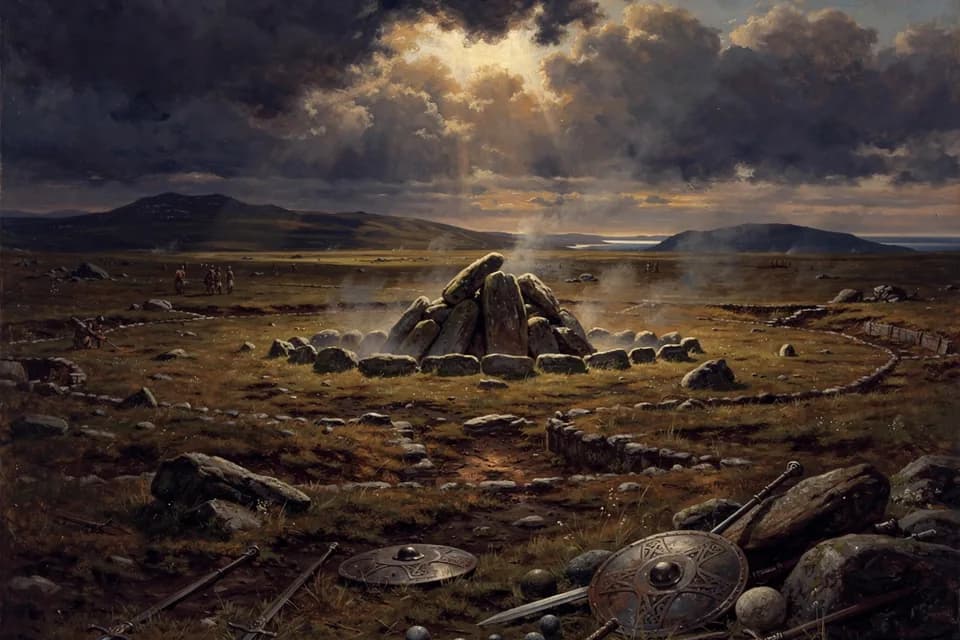
The plain in County Sligo identified with the second Battle of Mag Tuired, where, in Irish mythic history, the Túatha Dé Danann defeated the Fomorians and Lug killed Balor with a sling-stone.
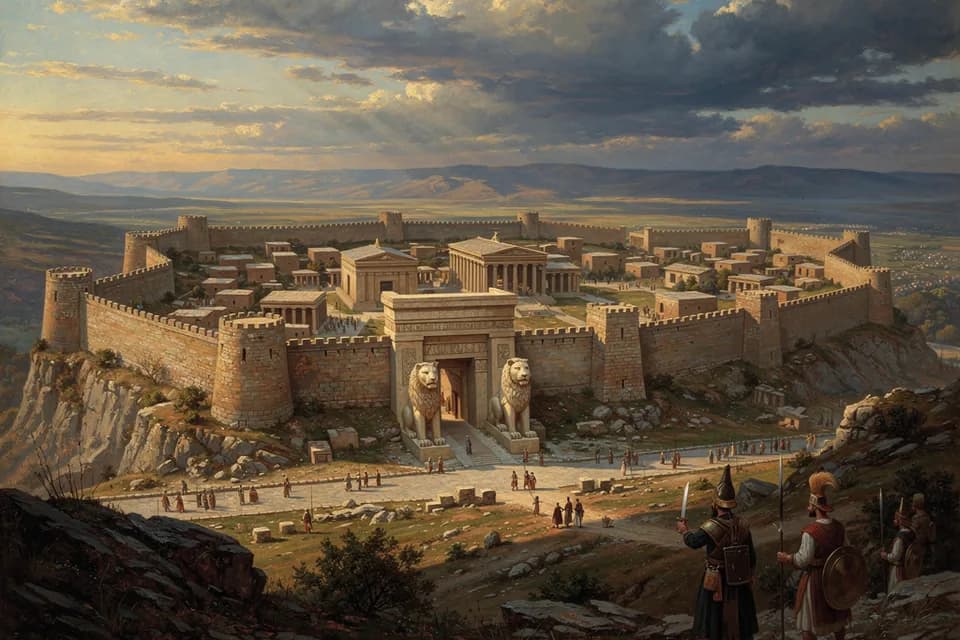
The Hittite capital near modern Boğazkale in central Türkiye, whose temple archives preserved almost every Hittite myth known today.
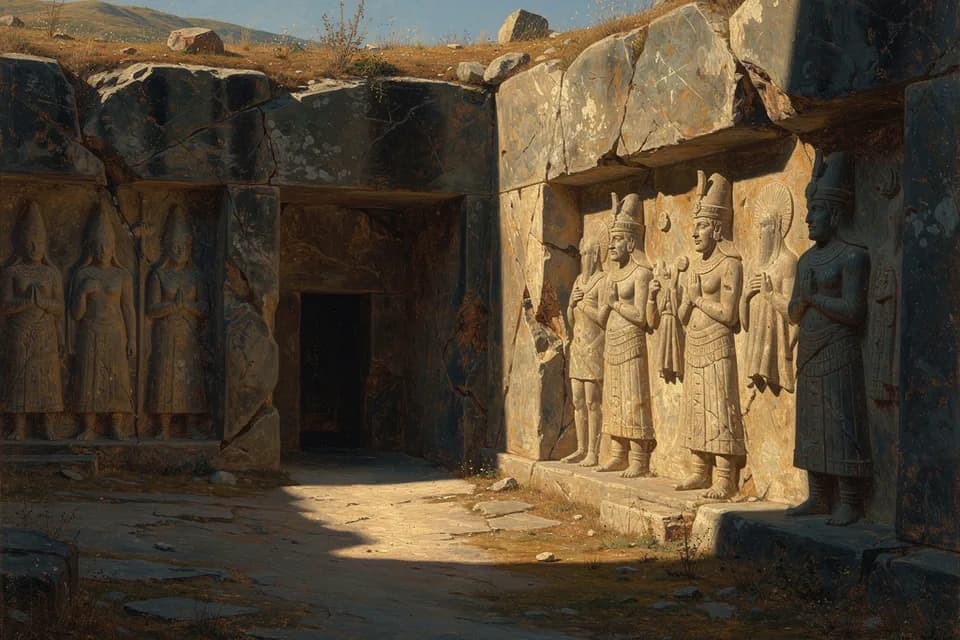
An open-air rock sanctuary just outside Hattusa whose carved procession of gods and goddesses, labelled in Hieroglyphic Luwian, shows the Hurrian-influenced pantheon of the thirteenth century BCE.
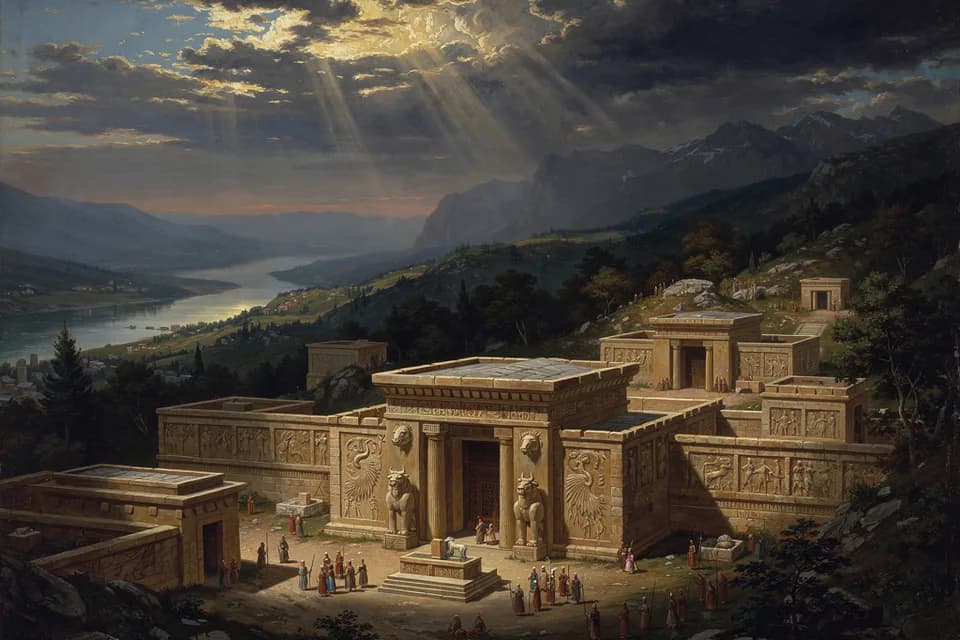
The holy city of the Storm-god of Nerik in the north of the Hittite lands, where the Illuyanka story was recited at the Purulli festival; identified with Oymaağaç Höyük near Vezirköprü.
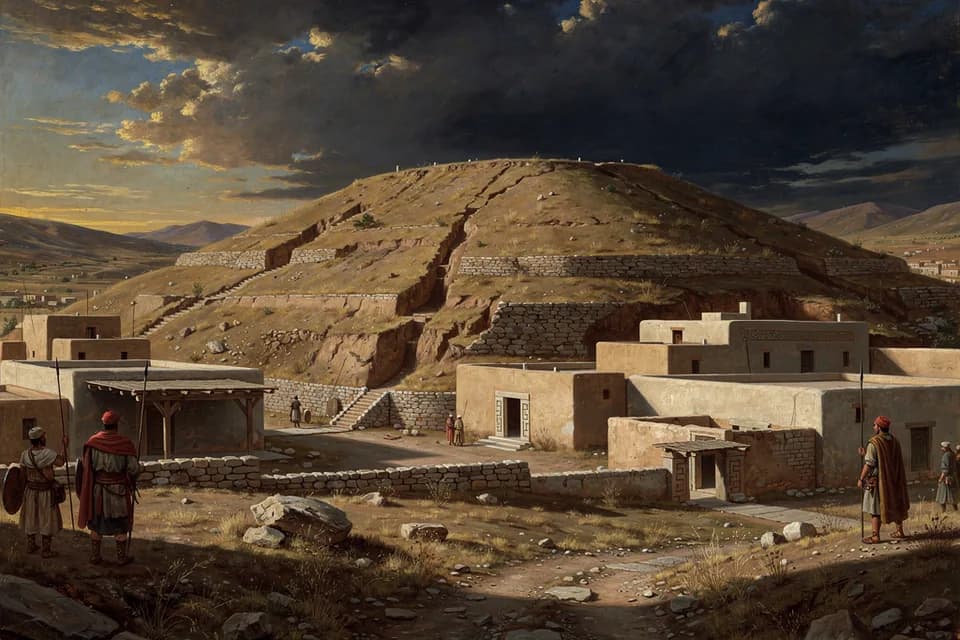
The ancient Hurrian city in northeastern Syria that the Kumarbi cycle names as Kumarbi's home, identified with the mound of Tell Mozan.
Showing 121–144 of 184