West Africa and the Americas
Yoruba Tradition
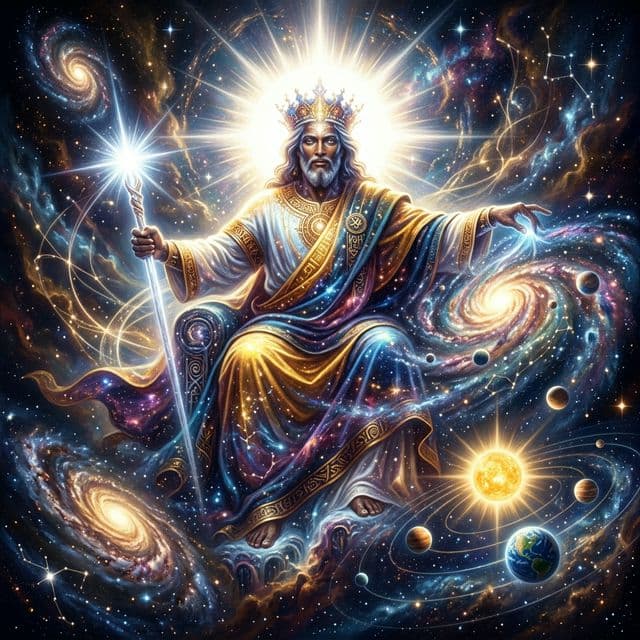
The orisha of Yoruba religion, a living tradition centred on Ile-Ife: Olodumare above, Obatala and Oduduwa at the making of the land, Orunmila and Ifa divination, and orisha such as Ogun, Shango, Oshun, and Yemoja who crossed the Atlantic into Santería, Candomblé, and related faiths.
History and context
A living religion
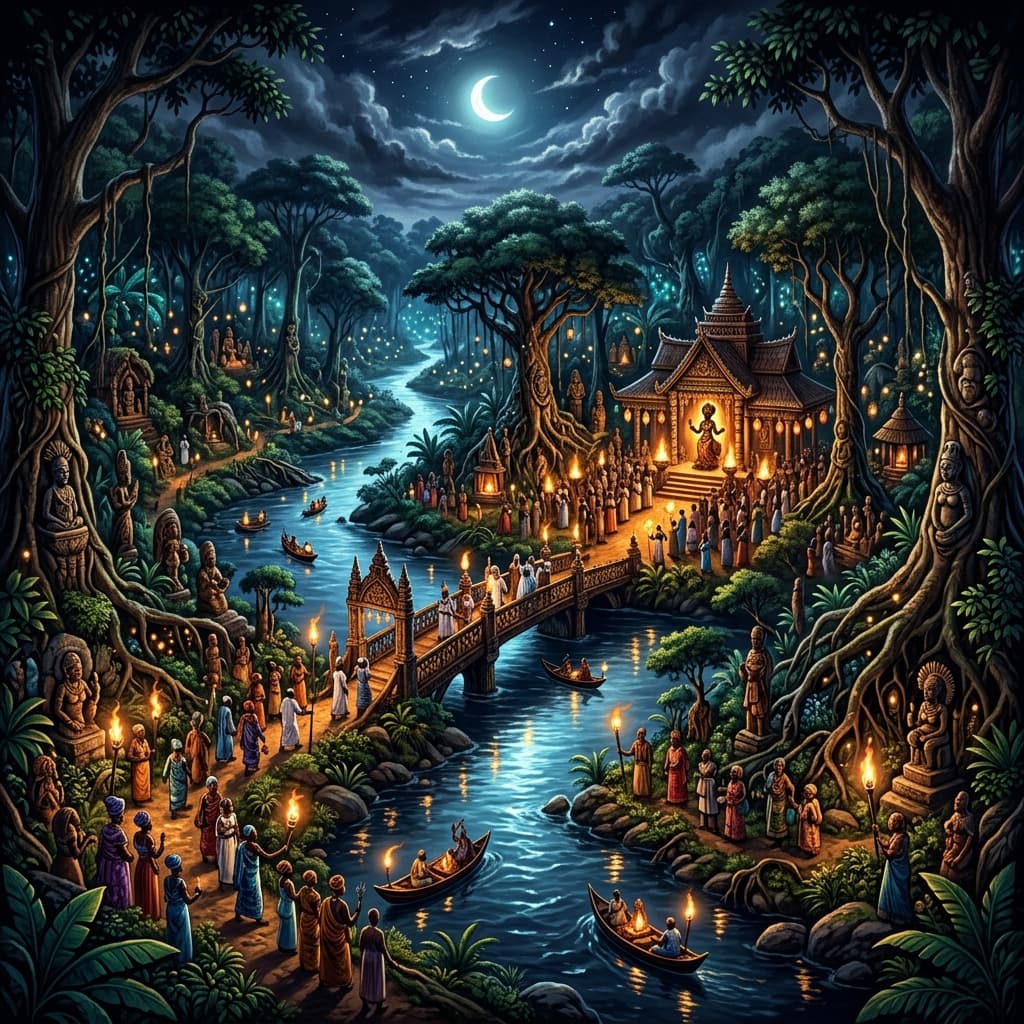
Yoruba religion is practised today in Nigeria, Benin, and Togo, and, through the forced migration of the Atlantic slave trade, in Cuban Santería (Regla de Ocha), Brazilian Candomblé, Trinidadian Orisha worship, and communities across the Americas. It has no single scripture and no single orthodoxy: each orisha is worshipped through particular lineages, towns, and houses, and practice differs from one to the next. This page presents what published sources and practitioners share publicly, and notes where houses and tellers disagree.
Olodumare and the orisha
Olodumare (also Olorun, 'owner of the sky') is the supreme being, remote from daily worship and approached through the orisha. The orisha are many (tradition speaks of 401, or of 'countless') and include deities who were present at creation, such as Obatala, and deified ancestors and kings, such as Shango, remembered as a king of Oyo. Eshu carries sacrifice and messages between people and the orisha and must be acknowledged first; Orunmila is the witness of destiny whose wisdom speaks through Ifa.
Ile-Ife and the making of the land
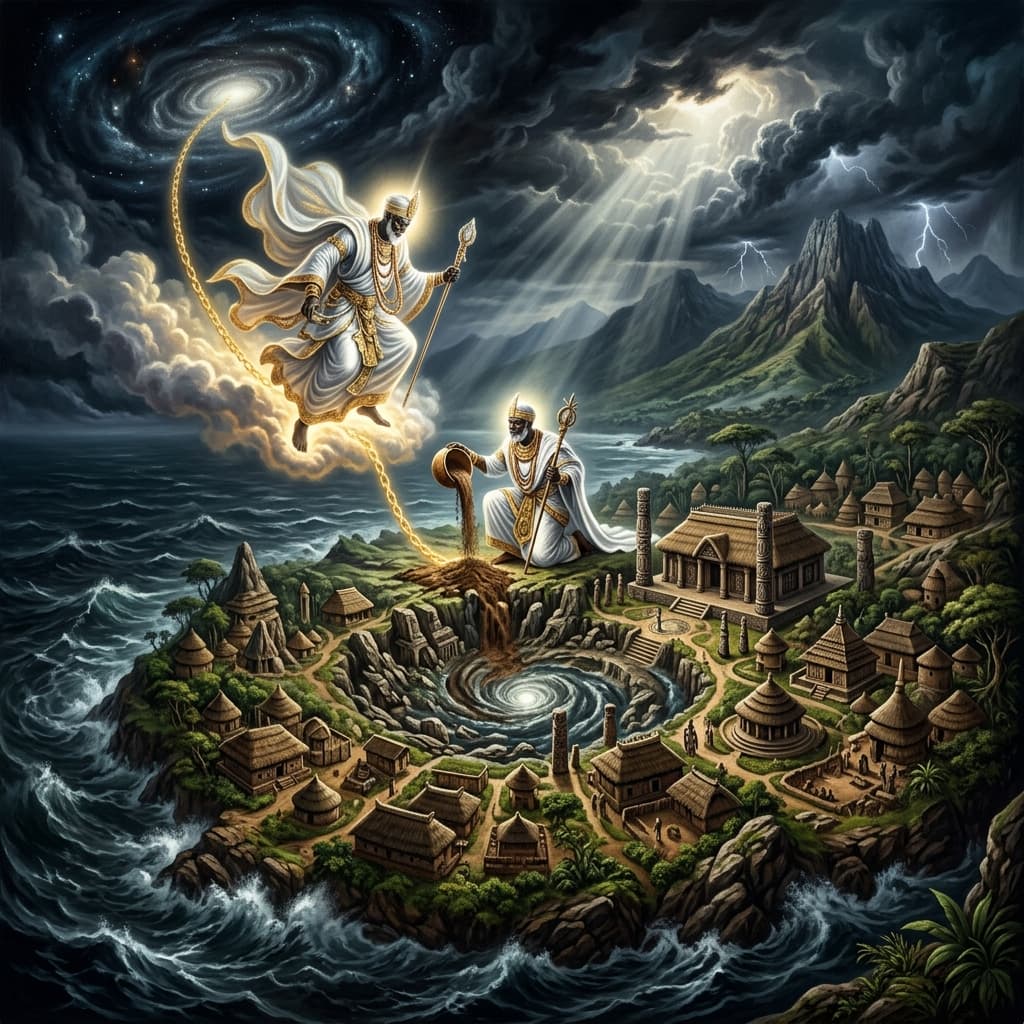
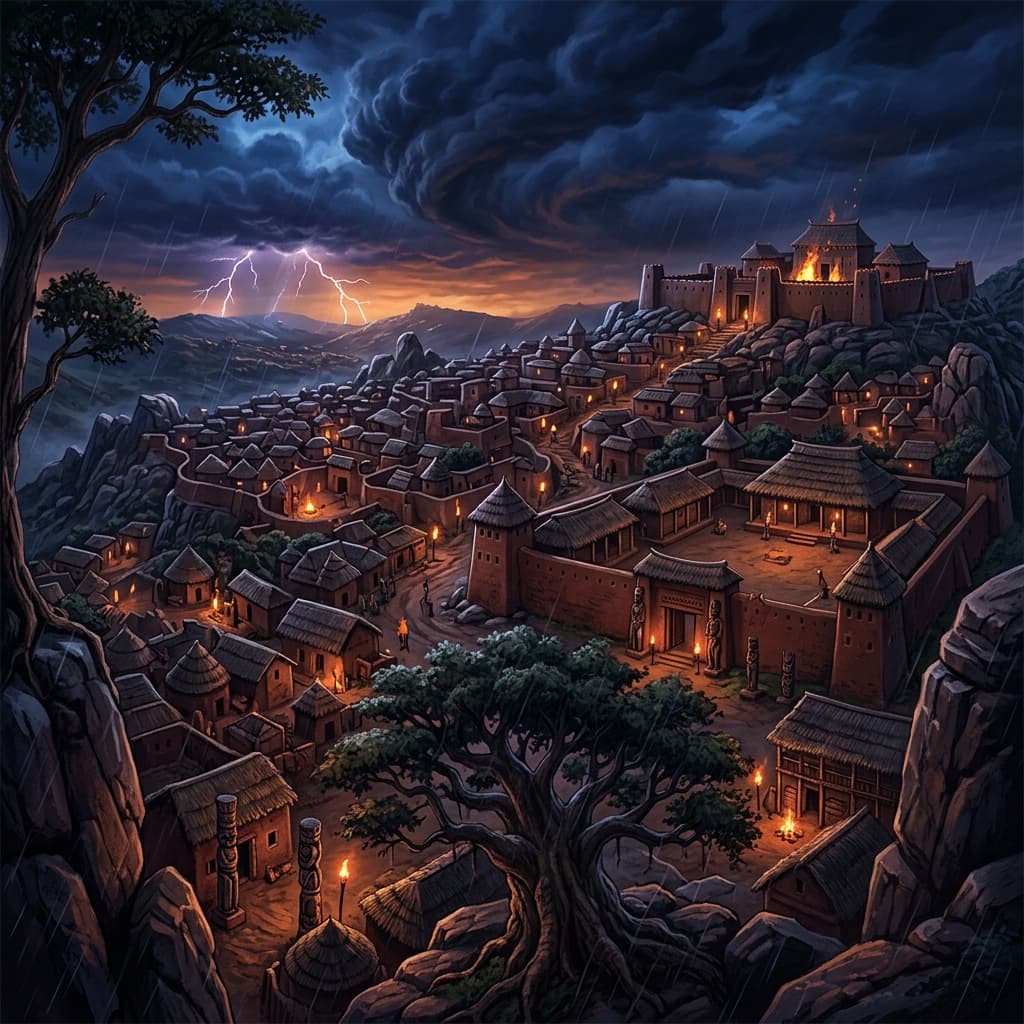
Creation stories centre on Ile-Ife, regarded as the place where the land was first spread over the primordial waters. Tellings disagree on the central actor: in many, Obatala is sent down a chain from the sky with earth in a snail shell and a five-toed hen to scatter it, but falls asleep drunk on palm wine, and Oduduwa completes the task and becomes the first ruler of Ife. Samuel Johnson's The History of the Yorubas (completed 1897, published 1921) records the Oyo tradition; Ife's own traditions give Oduduwa greater weight. The disagreement is itself historical evidence of rival centres, and this site presents both.
Ifa
Ifa divination, inscribed by UNESCO on the Representative List of the Intangible Cultural Heritage of Humanity (2008), is a vast oral literature of verses (ese) organised into 256 signs (odu). A babalawo casts palm nuts or a divining chain and recites the verses of the resulting sign, many of which contain the myths summarised on this site. Wande Abimbola's editions and translations of Ifa verses (1970s onward) are among the most important published records.
Dates
The tradition has no founding date. Ile-Ife was a major urban and artistic centre by about the 11th to 15th centuries CE, the period of its celebrated copper-alloy and terracotta heads, but those dates belong to the city and its art, not to the beginning of the religion.
Cosmology
Ọ̀run and Ayé
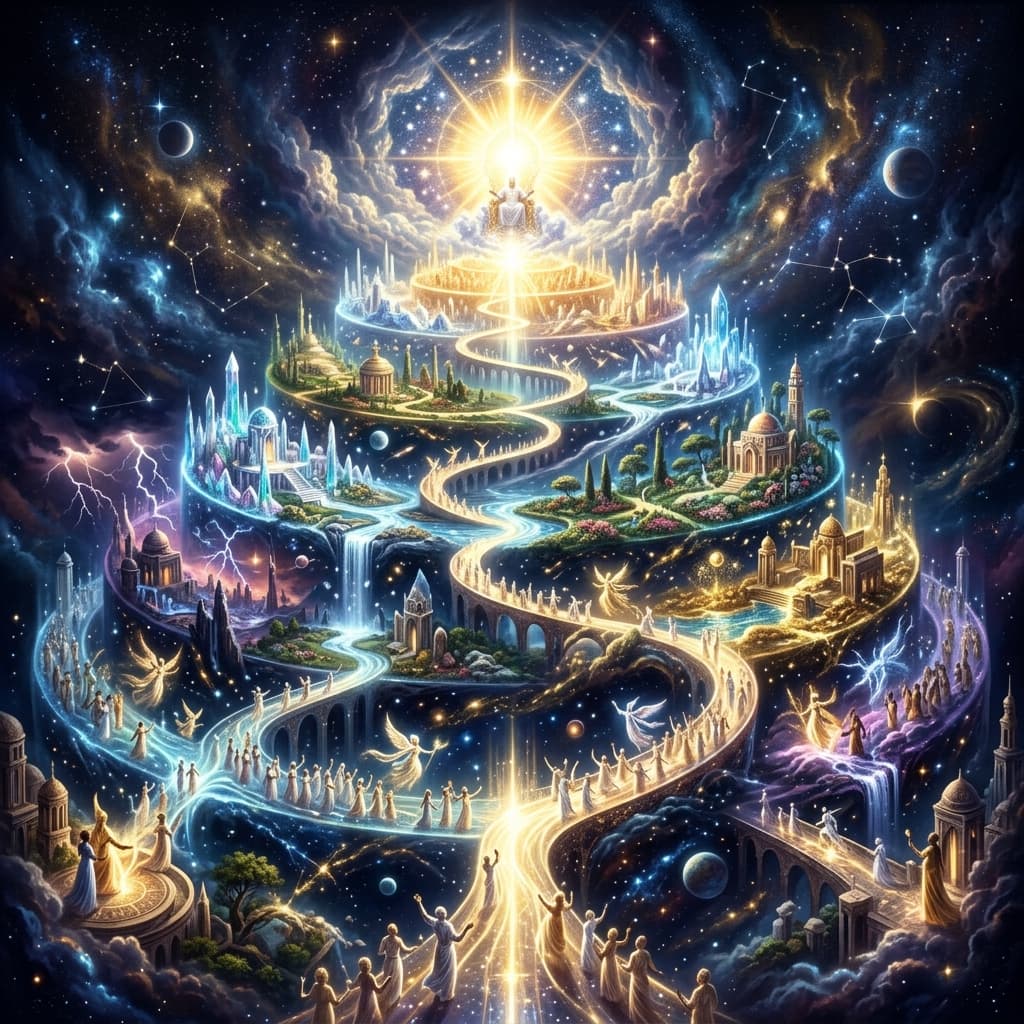
In Yoruba thought, Ọ̀run, the invisible realm of Olodumare, the orisha, and the ancestors, sits above Ayé, the visible world. Obatala came down a chain from Ọ̀run to create land on the primordial waters at Ile-Ife.
The chain from Ọ̀run: · The chain by which Obatala (or Oduduwa, in other versions) descended to create the land.
Ọ̀run, the invisible realm
AboveỌ̀run
Home of the supreme being Olodumare, the orisha, and the ancestors. Each person chooses their destiny (ori) here before birth.
Visit Orun (Heaven)
The crossroads
BeyondThe messenger's road
Eshu carries offerings and messages between Ọ̀run and Ayé and guards the crossroads between them.
Ayé, the visible world
MiddleThe deep waters
Waters
 Olodumare
 Obatala
 Orunmila
 Ori
Ori Eshu
Eshu Oduduwa
 Ogun
Ogun Shango
 Oya
Oya Oshun
Oshun Osanyin
 Aganju
 Ibeji
Ibeji Aje
Aje Shopona
 Nana Buruku
 Olokun
 Yemoja
 Mami Wata
Sources
Works cited
UNESCO
The History of the Yorubas
Samuel Johnson
Ifá: An Exposition of Ifá Literary Corpus
Wande Abimbola
Ifa Divination: Communication between Gods and Men in West Africa
William Bascom
About this guide
By Elizabeth Stein for Mythos Atlas. About the author. Editorial notes are grounded in the site's cited sources and can be challenged through the contact page.
The catalog period is the span of the sources this atlas draws on, not the age of the tradition itself. Many traditions are older than their first written record, and many are still practised.
18 in the atlas
Olodumare & the Orisha
 Olodumarecreation, supreme power
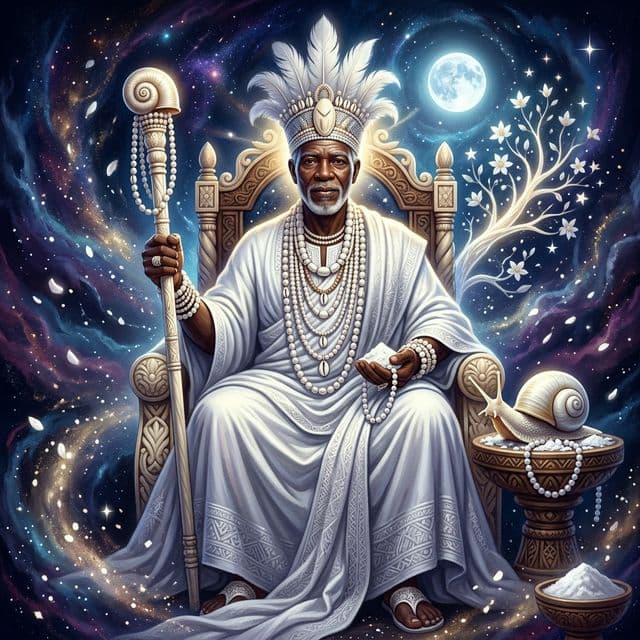 Obatalacreation, purity
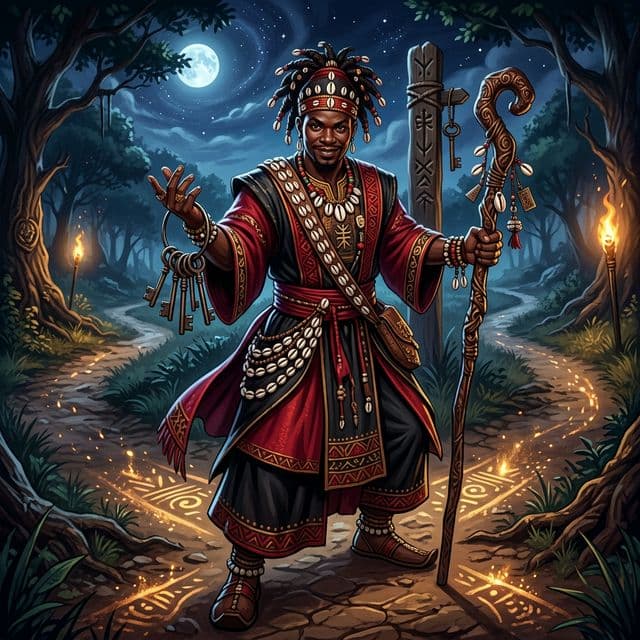 Eshucrossroads, communication
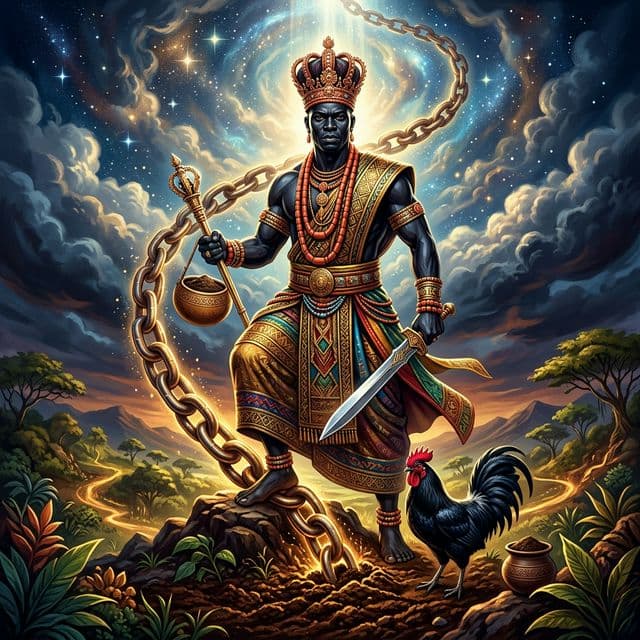 Oduduwacreation, earth
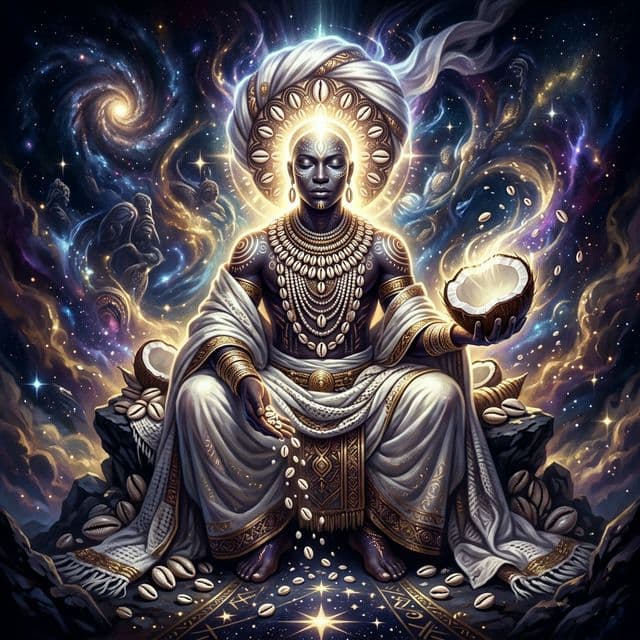 Oridestiny, consciousness
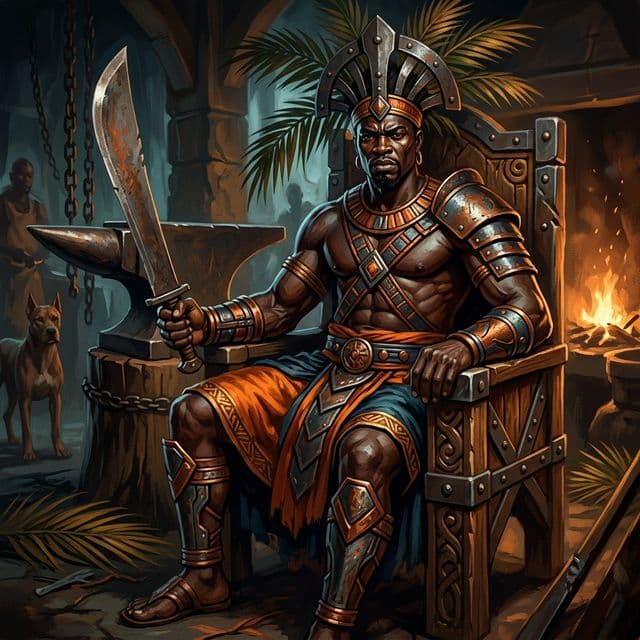 Oguniron, war
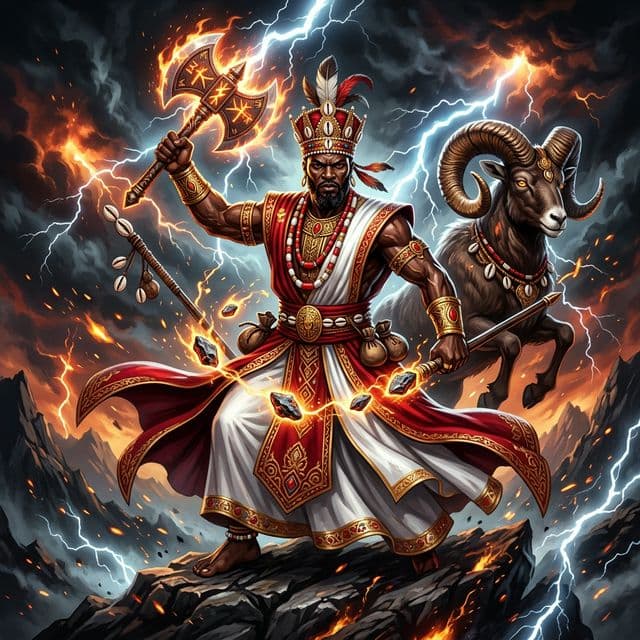 Shangothunder, lightning
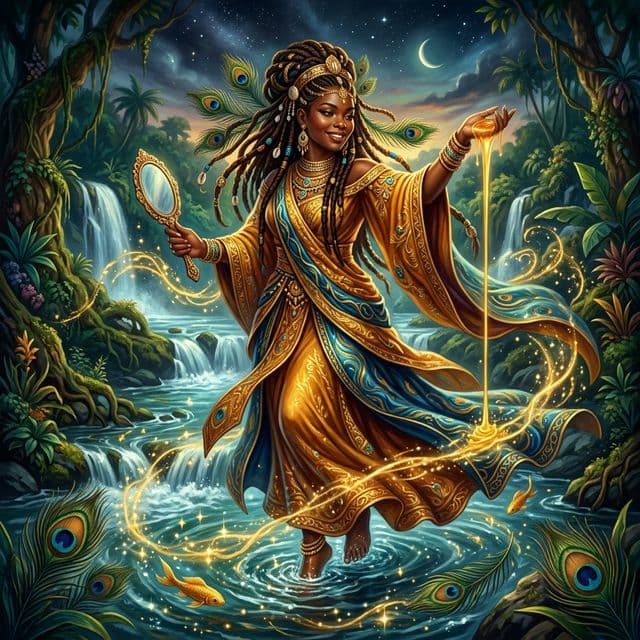 Oshunlove, beauty
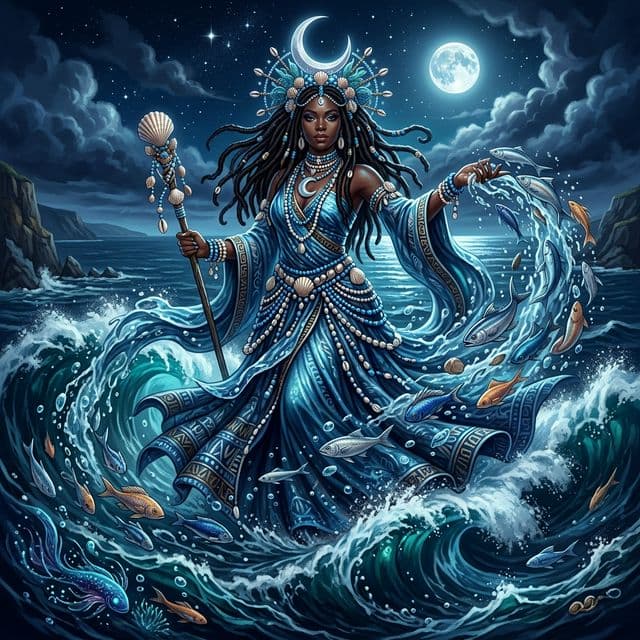 Yemojaocean, motherhood
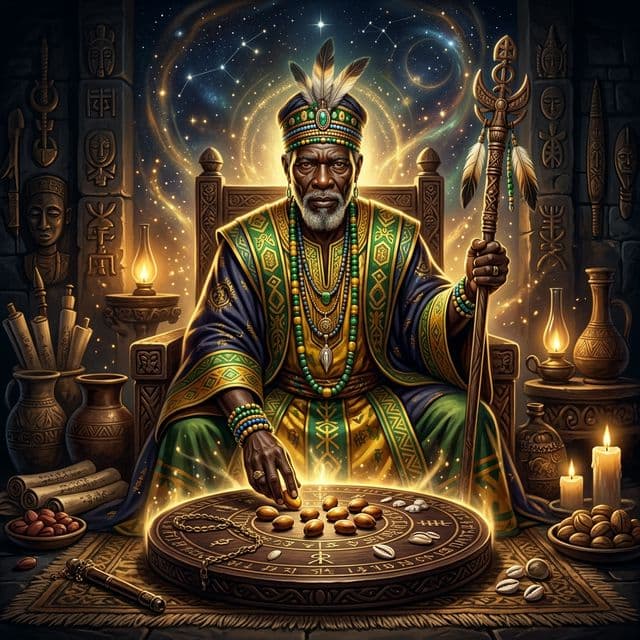 Orunmilawisdom, divination
 Olokunsea, ocean depths
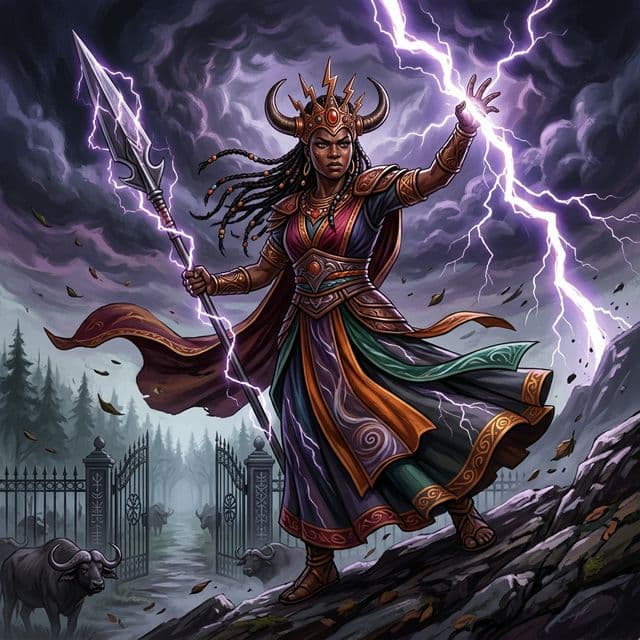 Oyawind, storms
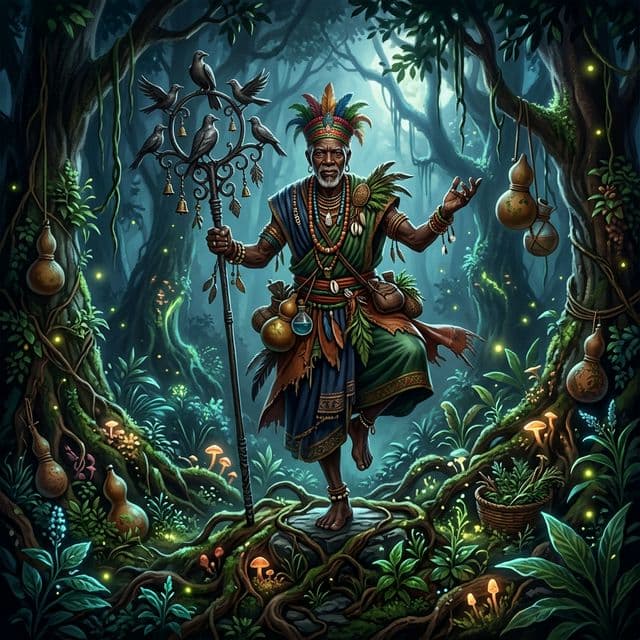 Osanyinherbs, healing
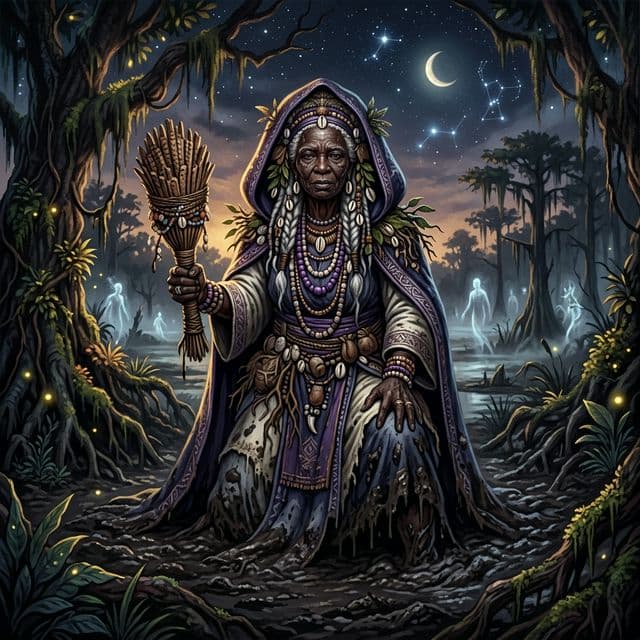 Nana Burukuswamps, ancestors
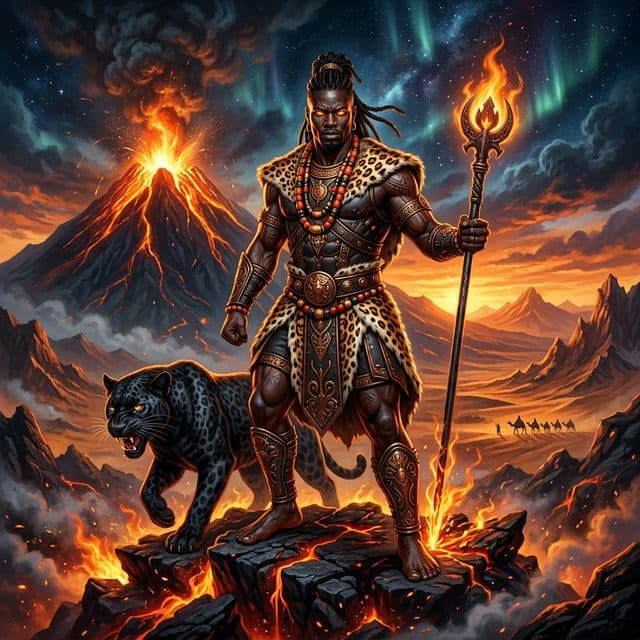 Aganjuvolcanoes, wilderness
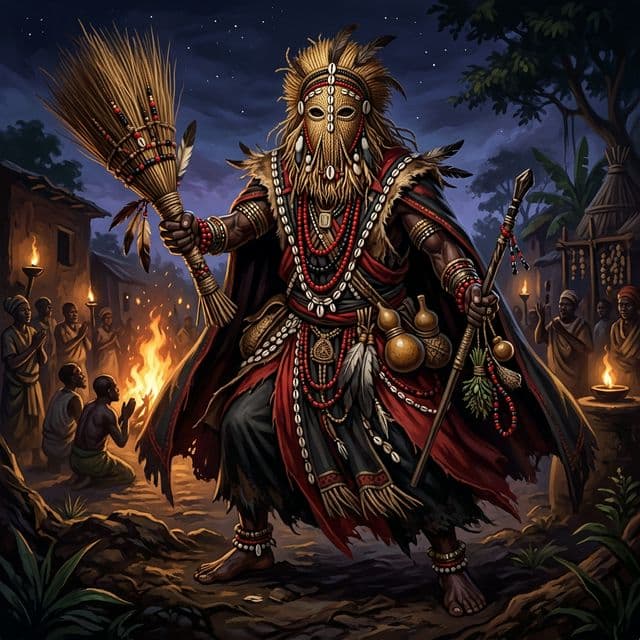 Shoponadisease, healing
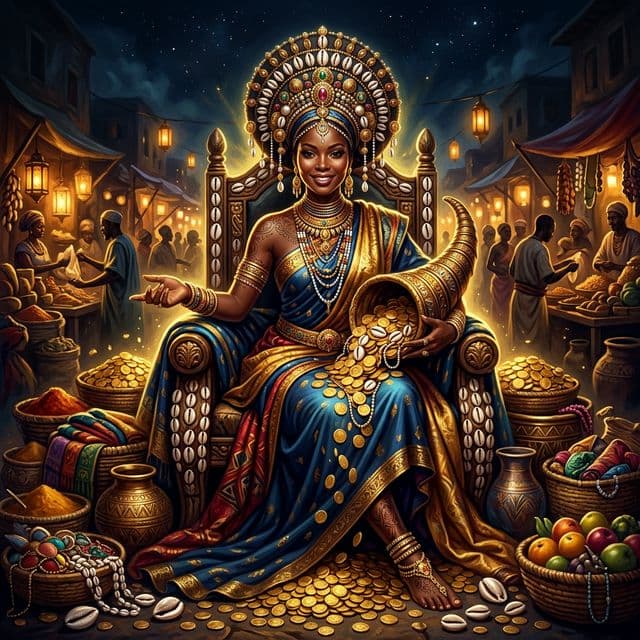 Ajewealth, prosperity
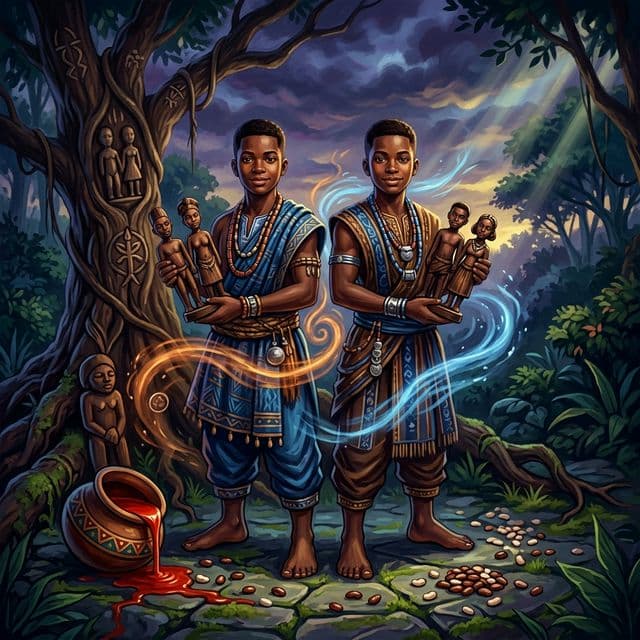 Ibejitwins, childhood
7 retold
Stories and myths
 The Creation of Ile-IfecreationHow Obatala descended from heaven with a snail shell of sand and a white hen to create land from the primordial waters, founding the sacred city of Ile-Ife.
 How Shango Became an OrishatransformationThe story of the fourth king of Oyo, who mastered thunder and lightning but faced tragedy, only to be elevated to divine status after his death.
 Oshun Saves the WorldheroicWhen the world was dying and all the male Orishas had failed, Oshun transformed herself into a peacock and flew to heaven, sacrificing her beauty to save creation.
 Eshu and the Two FriendstricksterA classic trickster tale in which Eshu teaches two best friends a painful lesson about the dangers of perspective and assumption.
 The Contest Between Ogun and ShangorivalryA tale of rivalry between two great Orishas - Ogun of iron and Shango of thunder - who compete for supremacy with unexpected results.
 Oduduwa and the Creation of the EarthcreationAfter Obatala fails his divine mission, Oduduwa descends from heaven to create dry land and establish the sacred city of Ile-Ife.
 Ibeji and the Care of TwinsafterlifeAn introduction to Yoruba twin commemoration and the carved figures known as ere ibeji, based on a documented museum object.
6 in the atlas